USDT Buy and Sell in India: How to Buy & Sell Tether | Unitic Exchange
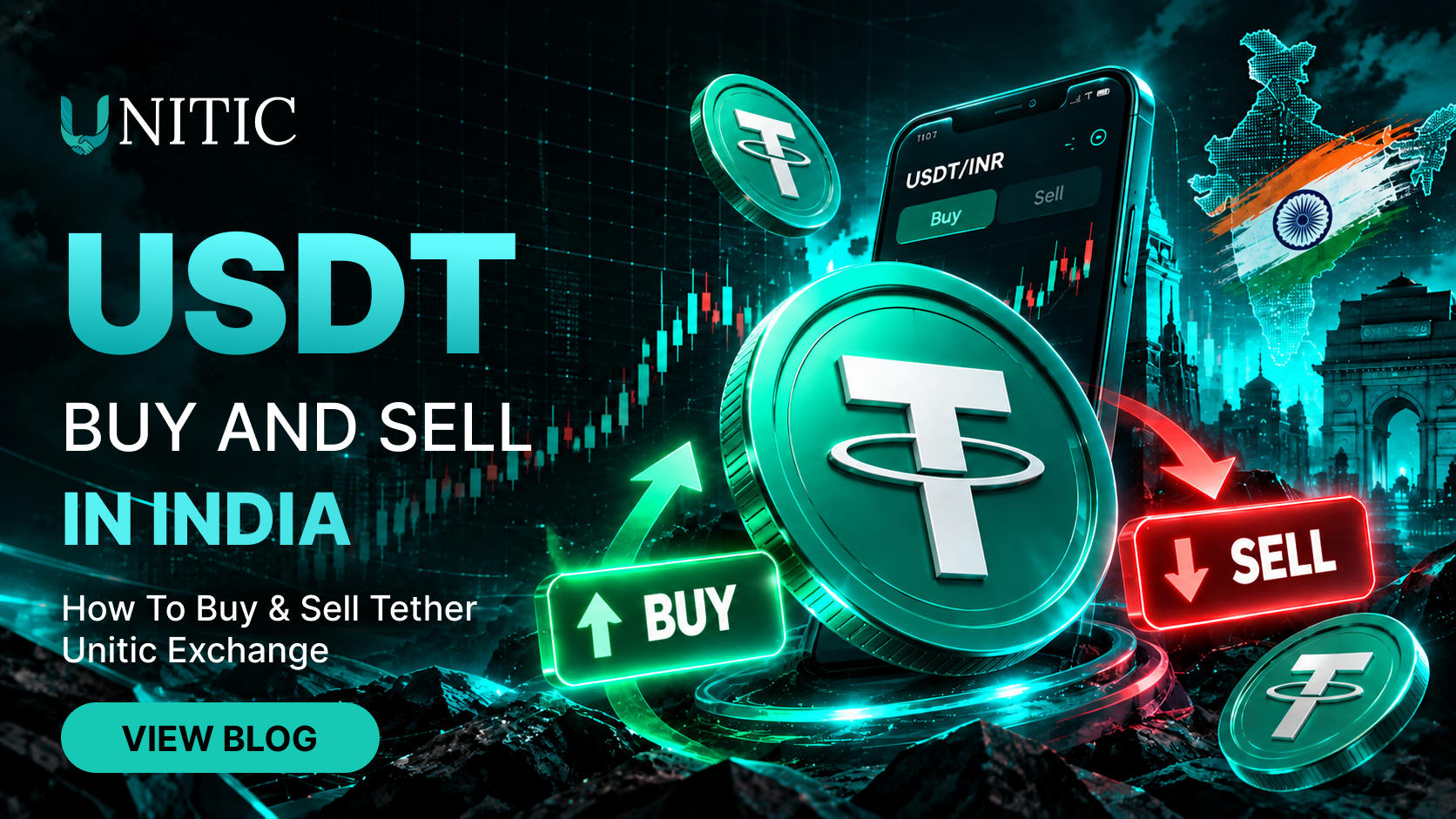
If you have spent any time around crypto in India, you have heard the word "USDT." Traders use it to park profits, freelancers use it to receive payments from abroad, and first-time investors often buy it before anything else. Yet many people still have basic questions. What exactly is USDT? Is it legal to buy and sell it in India? How do you do it safely? And what should you know about taxes?
This guide answers all of that in plain language. Whether you are buying your first USDT or looking for a more reliable place to trade it, you will find the steps, the risks, and the practical tips here. We also explain how USDT trading works on Unitic Exchange, an Indian digital asset trading platform.
What Is USDT?
USDT stands for Tether. It is a type of cryptocurrency called a stablecoin. Most cryptocurrencies, like Bitcoin or Ethereum, swing in price by the hour. A stablecoin is designed to avoid that. USDT is meant to stay close to the value of one US dollar, so 1 USDT should be worth roughly $1.
Think of it as a digital dollar that lives on the blockchain. You can send it to anyone in the world within minutes, hold it in a crypto wallet, or trade it for other digital assets.
Why Does USDT Stay Close to $1?
Tether Limited, the company behind USDT, says each token is backed by reserves. These include cash, cash equivalents, and other assets. Because people can trade USDT for dollars and vice versa, market forces help keep the price near $1. Small movements, such as $0.998 or $1.002, are normal.
Which Blockchains Does USDT Run On?
USDT is not tied to a single blockchain. It exists on several networks, including:
- Tron (TRC-20): Popular for low transfer fees and fast speeds.
- Ethereum (ERC-20): The oldest and most widely supported, but fees can be higher.
- BNB Smart Chain (BEP-20): Another low-cost option.
- Solana, Polygon, and others: Available on some platforms.
This matters when you send or receive USDT. The network you choose when withdrawing must match the network of the wallet receiving it. Sending USDT on the wrong network can lead to permanent loss of funds. We come back to this in the safety section.
Why Do People in India Buy USDT?
USDT has grown in popularity in India for several practical reasons.
1. A Stable Store of Value Inside Crypto
Crypto prices can drop sharply. When traders want to step away from volatility without leaving the crypto market entirely, they convert their holdings into USDT. Your money stays in the digital asset ecosystem, but its value does not swing with Bitcoin or Ethereum.
2. Trading Other Cryptocurrencies
Most crypto trading pairs on global markets are quoted in USDT, such as BTC/USDT or ETH/USDT. To trade many coins, you first need USDT. It works as the "base currency" of the crypto world.
3. International Payments and Remittances
Freelancers, exporters, and people with family abroad often use USDT to move value across borders. A transfer that might take days through traditional channels can happen in minutes, often with lower fees.
4. Protection from Rupee Depreciation
Some people hold USDT as a way to keep part of their savings linked to the US dollar. If the rupee weakens against the dollar over time, the value of a dollar-linked asset measured in rupees can rise. This is not guaranteed, and USDT is not a risk-free savings tool, but it is a common reason people cite.
5. Access to Global Opportunities
USDT opens doors to decentralised finance, global trading pairs, and other digital asset products that use dollar-based tokens as their foundation.
Is It Legal to Buy and Sell USDT in India?
This is the question most readers want answered first, so here is the honest, current picture.
Owning and trading cryptocurrency is not illegal in India. In 2020, the Supreme Court of India set aside the Reserve Bank of India's earlier banking restriction on crypto businesses. Since then, buying, holding, and selling digital assets has been permitted. However, crypto is not recognised as legal tender, meaning you cannot use it as official currency to pay for goods the way you use rupees.
Some important points to understand:
- Crypto is regulated for taxation and compliance, but a full framework is still evolving. The government has brought virtual digital assets under tax rules and anti-money-laundering requirements.
- Platforms that operate in India are expected to follow compliance rules. This includes registering with the Financial Intelligence Unit (FIU-IND) and completing KYC (Know Your Customer) checks on users.
- Rules can change. Government policy on digital assets continues to develop, so it is smart to check the latest guidance before making large transactions.
Disclaimer: This article is for educational purposes only and does not constitute legal, tax, or financial advice. Please consult a qualified professional for advice specific to your situation.
How USDT Is Taxed in India
Understanding tax is essential, because it applies whether you make a profit or not in some cases. Here are the main rules for virtual digital assets, which include USDT, as they stand under Indian tax law.
30% Tax on Gains
Profits from selling or transferring virtual digital assets are taxed at a flat rate of 30%, plus applicable surcharge and cess. This applies regardless of how long you held the asset.
No Deduction for Expenses (Except Purchase Cost)
You can subtract the cost of acquiring the asset when calculating your gain. You generally cannot deduct other expenses such as internet costs or electricity.
No Set-Off of Losses
Losses from one virtual digital asset cannot be used to offset gains from another, and they cannot be carried forward to future years.
1% TDS on Transfers
Tax Deducted at Source (TDS) of 1% applies to transfers of virtual digital assets above certain thresholds. On most exchanges, this is deducted automatically when you sell. It is not an extra tax. It is an advance collection you can claim credit for when you file your return.
Why Does This Matter for USDT?
Because USDT is pegged to the dollar, your profit on a USDT trade may look tiny. But there is a catch. If you buy USDT at ₹86 and sell at ₹88, the rupee difference counts as a gain. Also, when you swap USDT for another crypto, that swap can be a taxable event. Keep clear records of every transaction.
Tax rules are updated regularly. Always verify current rates and thresholds with the Income Tax Department or a chartered accountant.
How to Buy USDT in India: Step by Step
Buying USDT in India is straightforward once you know the process. Here is how it typically works on a regulated exchange.
Step 1: Choose a Trustworthy Platform
Your choice of platform matters more than anything else. Look for:
- Registration with the relevant Indian authorities
- Clear KYC and compliance processes
- Support for INR (Indian rupee) deposits and withdrawals
- Transparent fees
- Strong security practices such as two-factor authentication
- Responsive customer support
Step 2: Create Your Account
Sign up with your email address or mobile number and set a strong, unique password. Turn on two-factor authentication (2FA) immediately.
Step 3: Complete KYC Verification
Indian exchanges must verify your identity. You will usually need:
- PAN card
- Aadhaar or another government ID
- A selfie or live photo check
- Bank account details
KYC protects you and the platform from fraud. It is a good sign, not an inconvenience. Be wary of any platform that lets you trade large amounts with no verification at all.
Step 4: Deposit Indian Rupees
Add funds using methods such as IMPS, NEFT, or bank transfer. Always use a bank account in your own name. Payments from third-party accounts can trigger compliance problems and account freezes.
Step 5: Place Your Buy Order
Go to the USDT/INR market. You will typically see two order types:
- Market order: Buys USDT immediately at the best available price. Simple and fast.
- Limit order: Lets you set the exact price at which you want to buy. The order fills only if the market reaches your price.
For beginners, a market order is easiest. If you want to control your price, use a limit order.
Step 6: Check Your Balance
Once your order is filled, the USDT appears in your exchange wallet. You can now hold it, trade it for other assets, or withdraw it.
How to Sell USDT in India: Step by Step
Selling is the mirror image of buying.
Step 1: Make Sure Your USDT Is on the Exchange
If your USDT is in an outside wallet, deposit it to your exchange account first. Double-check the deposit address and select the correct network.
Step 2: Go to the USDT/INR Market
Choose the sell side and decide between a market or limit order.
Step 3: Enter the Amount and Confirm
Review the quantity, the price, and the fees before you confirm. Once an order is executed, it cannot be reversed.
Step 4: Withdraw Rupees to Your Bank
After the sale, the INR balance appears in your account. You can then withdraw it to your verified bank account. Withdrawal times depend on the method and your bank.
A Note on TDS
When you sell, remember that 1% TDS may be deducted from the transaction value. Your sale proceeds will reflect this. Keep the TDS certificate or statement for tax filing.
Understanding USDT Prices in India
New buyers are often surprised to see USDT trading at ₹85, ₹88, or even higher, rather than at the exact dollar exchange rate. Here is why.
- The official dollar-rupee rate is one factor. USDT tracks the dollar, so it follows the USD/INR movement in general.
- Local demand and supply matter. If more Indians want to buy USDT than sell it, the price on Indian platforms can rise above the standard exchange rate. This gap is sometimes called a premium.
- Fees and taxes add cost. Trading fees, and TDS on sales, affect what you actually pay or receive.
- Liquidity plays a role. On platforms with deep order books, the gap between buying and selling prices (the spread) is tighter, and you get closer to fair value.
Before you trade, compare the USDT/INR price on more than one platform and check the spread. Even a small difference adds up if you trade often or in large amounts.
Where Can You Buy and Sell USDT?
There are three common routes in India. Each has its own strengths and risks.
1. Centralised Exchanges
These are platforms like Unitic Exchange, where a company runs the marketplace and holds your funds while you trade. They offer a smooth experience, INR support, customer service, and regulated compliance processes. For most people, especially beginners, this is the safest and simplest route.
2. Peer-to-Peer (P2P) Marketplaces
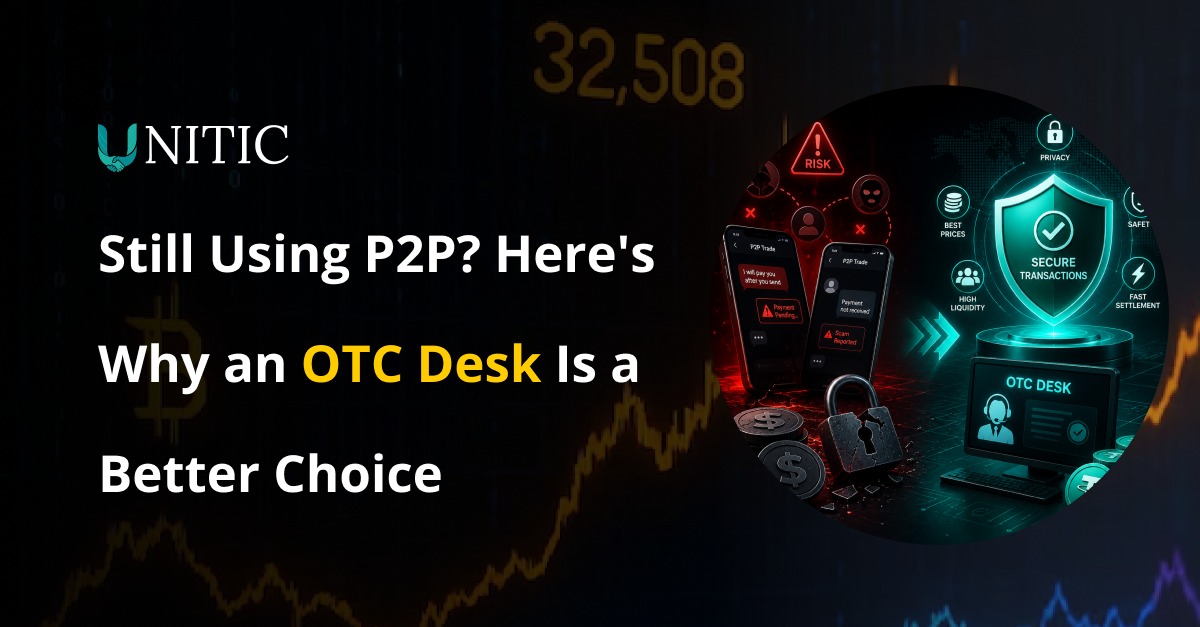
Here you trade directly with other individuals, and the platform acts as a middleman. P2P can offer flexible payment methods, but it carries added risks, including payment fraud and scam buyers or sellers. A significant number of account-freeze complaints in India come from P2P payments, because the money you receive may be linked to someone else's dispute or fraud case.
3. Over-the-Counter (OTC) Desks
OTC is meant for large trades. Instead of placing an order on the open market, you negotiate with a desk. It keeps big trades from moving the market price. Not needed if you are trading small amounts.
Avoid informal channels. Buying USDT from strangers on social media, messaging apps, or through unverified agents is a common source of scams and bank account problems.
Trading USDT on Unitic Exchange
Unitic Exchange is an Indian digital asset trading platform built to make crypto trading simple, secure, and accessible. For people looking to buy and sell USDT, it brings the essentials together in one place.
Note: The product details below describe the general experience of using an exchange like Unitic. Please confirm the current pairs, fees, limits, and features on the official Unitic Exchange website or app before publishing or relying on them.
Why Traders Choose Unitic Exchange for USDT
- A Simple Experience for Beginners and Experts
The platform is designed so a first-time user can buy USDT in a few clear steps, while active traders still get the order types and market data they need. - INR Support
You can trade using Indian rupees, so there is no need to route money through complicated foreign channels. This makes buying and selling USDT direct and familiar. - Compliance and Trust
Operating as an Indian platform means following the country's compliance framework, including identity verification and anti-money-laundering practices. That gives users more confidence than dealing with anonymous counterparties. - Security Features
Security is central for any exchange. Features such as two-factor authentication, account protection settings, and secure withdrawal processes help keep your assets safer. - USDT as a Trading Base
On Unitic Exchange, USDT works as a core trading asset. You can use it to move between different digital assets, trade popular pairs, and manage your portfolio without repeatedly converting back to rupees. - Support When You Need It
Every trader eventually has a question, whether it is a stuck deposit or a doubt about fees. Having a support team you can reach makes a real difference.
How to Get Started with USDT on Unitic Exchange
- Register: Create your account on the Unitic Exchange website or app.
- Verify: Complete KYC with your PAN, ID, and bank details.
- Secure: Enable two-factor authentication and set a strong password.
- Deposit: Add INR from your own bank account.
- Trade: Open the USDT market and buy or sell using a market or limit order.
- Withdraw: Send USDT to your wallet or withdraw INR to your bank when you are ready.
Using USDT Smartly on the Platform
Once you hold USDT, you have options:
- Hold it as a stable balance while you wait for a better time to enter the market.
- Trade other assets by using USDT as the base currency.
- Take profits by converting volatile positions into USDT, protecting gains from sudden drops.
- Exit to rupees whenever you want to withdraw your money.
The goal is flexibility. USDT lets you stay active in the market without being fully exposed to its ups and downs.
Benefits of Trading USDT
Here is a quick summary of what makes USDT attractive:
- Price stability compared with most other cryptocurrencies
- Speed: transfers settle in minutes
- Low cost: especially on networks like Tron
- Wide acceptance: listed on nearly every major exchange
- Flexibility: useful for trading, saving, and payments
- 24/7 availability: crypto markets never close
Risks You Should Know About
No investment or trading tool is risk-free, and it is important to be honest about the downsides of USDT.
1. Depegging Risk
USDT is designed to hold its $1 value, but there is no absolute guarantee. During periods of market stress, stablecoins have temporarily traded below their peg. If confidence in the issuer weakens, the price can fall further.
2. Issuer and Reserve Risk
USDT depends on Tether Limited holding sufficient reserves. Users rely on the company's disclosures and management. Questions about transparency have followed Tether in the past, so it is wise not to put all your funds in a single stablecoin.
3. Regulatory Risk
Crypto rules in India can change, including tax treatment and platform requirements. A change in policy could affect how easy or costly it is to trade.
4. Scam and Fraud Risk
Scams around USDT are common. Fake platforms, fake buyers, fake "investment schemes," and phishing links all target people in the crypto space.
5. Wrong-Network Transfers
Sending USDT on the wrong blockchain network is one of the most frequent and costly mistakes. Funds sent this way are often unrecoverable.
6. Account Freezes from P2P Trades
As mentioned earlier, receiving rupees from unknown buyers in P2P deals can lead to your bank account being frozen if that money is connected to a fraud investigation.
7. Tax Non-Compliance
Ignoring tax obligations can lead to penalties. Keep records and files correctly.
Safety Tips for Buying and Selling USDT in India
Follow these practical habits to protect yourself.
Use a regulated, reputable exchange. Check registration, reviews, and how the platform handles compliance.
Always complete KYC on the platform you use. It protects you from impersonation and fraud.
Turn on two-factor authentication. Use an authenticator app rather than SMS where possible.
Verify wallet addresses carefully. Copy and paste, then check the first and last few characters. Send a small test amount first when moving large sums.
Double-check the network. Match TRC-20, ERC-20, or BEP-20 between sender and receiver every single time.
Never share your password, OTP, or private keys. No genuine support agent will ask for them.
Be suspicious of guaranteed returns. Anyone promising fixed, high, risk-free profits on USDT is almost certainly running a scam.
Avoid third-party payments. Trade only with your own verified bank account.
Don't click unknown links. Type the exchange address yourself or use the official app.
Diversify. Do not keep all your savings in any one asset, stablecoin included.
Keep transaction records. A simple record of dates, amounts, and prices makes tax filing much easier.
Common Mistakes Beginners Make
- Chasing a slightly cheaper price on unverified platforms. The tiny saving is rarely worth the risk.
- Skipping the test transaction. A small trial transfer costs almost nothing and can save you from a large mistake.
- Confusing USDT with an investment that grows. USDT is meant to hold value, not to appreciate. Its price will not "go up" like a growth asset.
- Ignoring fees and spreads. Small charges add up.
- Forgetting taxes. Even small trades count.
- Keeping everything on an exchange forever. For large amounts you plan to hold long term, consider learning about personal wallets and their responsibilities.
USDT vs Other Stablecoins
USDT is the most widely used stablecoin, but it is not the only one. Others include USDC and DAI.
- USDT (Tether): Largest by market size and trading volume, available almost everywhere.
- USDC: Issued by Circle, often noted for regular reserve reporting.
- DAI: A decentralised stablecoin backed by crypto collateral rather than a single company.
For most Indian traders, USDT is the easiest to buy and sell because of its deep liquidity and broad market support. Some people spread their holdings across multiple stablecoins to reduce dependence on one issuer.
Final Thoughts
USDT has become a cornerstone of crypto in India. It offers stability in a volatile market, speed for transfers, and flexibility for trading. But it works best for people who understand what they are buying, how it is taxed, and how to protect themselves from common risks.
The key steps are simple: pick a reliable, compliant platform, complete your verification, use your own bank account, double-check networks and addresses, keep records for taxes, and never trust anyone promising guaranteed returns.
If you are ready to start, Unitic Exchange gives you a straightforward way to buy and sell USDT in rupees with the security and support that make trading less stressful. Take your time, start small, learn as you go, and build your confidence one trade at a time.
Disclaimer: Cryptocurrency and virtual digital assets are volatile and carry risk, including the possible loss of your entire investment. This article is for general educational purposes only and is not financial, legal, or tax advice. Please do your own research and consult qualified professionals before making decisions.
FAQs
Buying, holding, and selling cryptocurrency, including USDT, is not banned in India. It is not legal tender, and it is subject to taxation and compliance rules. Regulations may change, so stay updated.
Many Indian platforms support UPI for depositing rupees, after which you can buy USDT. Availability and limits depend on the platform and your bank.
This differs by platform. Many exchanges allow small purchases, often starting from a low rupee amount or a fraction of one USDT. Check the platform's stated minimums.
Gains on virtual digital assets are taxed at 30% plus surcharge and cess, and 1% TDS may apply on transfers. Confirm current rules with a tax professional.
It is the same asset on different blockchains. The network affects fees and speed, and you must always match the network on both ends of a transfer.
Once your account is verified and funded, buying takes seconds on a market order. Deposits and withdrawals can take longer depending on the payment method.
Generally no. P2P can be convenient, but exchange trading through a regulated platform lowers your exposure to payment fraud and bank freezes.

Your Crypto Gateway


Unitic Exchange
All rights reserved 2026