Best Crypto Exchanges in India in 2027: What Should Traders Look For?
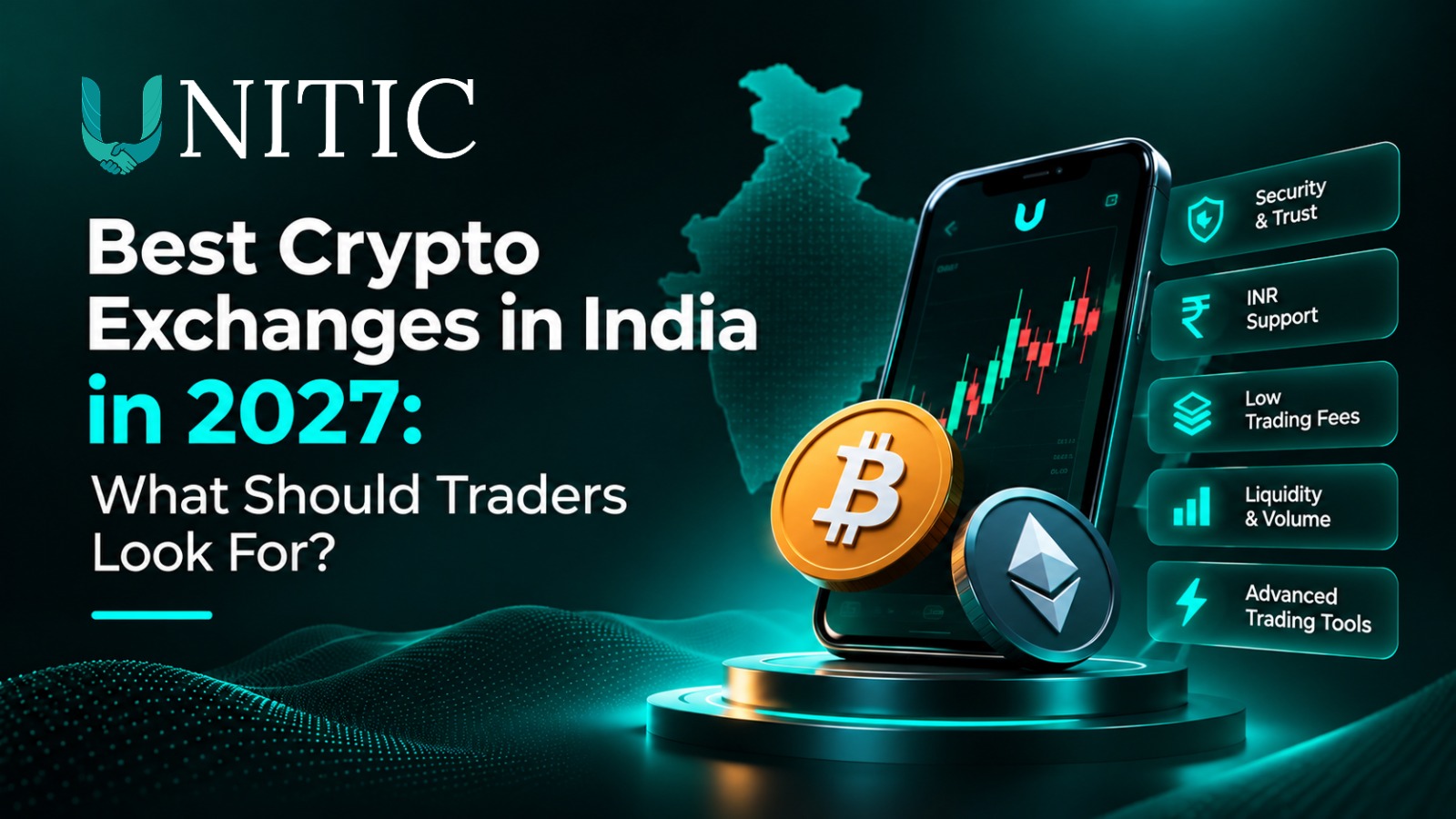
Indian cryptocurrency trading has evolved rapidly over the last few years. What started as a loosely connected network of peer-to-peer (P2P) desks and offshore workarounds has matured into one of the world’s largest and most tightly scrutinized digital asset markets. With more than 119 million crypto participants across the country, Indian traders are no longer asking whether digital assets will survive—they are asking which platforms can protect their capital, simplify tax compliance, and deliver institutional-grade execution.
If you are evaluating the best crypto exchanges in India in 2027, the criteria you used two or three years ago simply will not cut it anymore. Regulatory enforcement has sharpened, global cross-border reporting is kicking into high gear, and retail traders now demand the same speed, liquidity, and product depth found on international venues.
Whether you are a beginner making your first INR deposit or a high-volume derivatives trader managing complex positions, choosing the right venue can make or break your returns. Here is a complete, practical guide to what Indian traders should look for in a crypto exchange in 2027—and how platforms like Unitic Exchange are built to meet those exact standards.
1. The Indian Crypto Landscape in 2027: Why Your Choice of Exchange Matters More Than Ever
Before comparing order books or fee schedules, it helps to understand the regulatory and tax environment shaping Indian crypto trading heading into 2027.
Mandatory FIU-IND Registration and PMLA Compliance
In India, Virtual Digital Assets (VDAs) are legal to buy, sell, and hold, though they do not carry legal tender status. Every exchange serving Indian residents—whether headquartered in Bengaluru, Mumbai, or overseas—must register as a reporting entity with the Financial Intelligence Unit–India (FIU-IND) under the Prevention of Money Laundering Act (PMLA). Unregistered offshore apps face URL blocking, app store takedowns, and banking restrictions. Trading on a non-compliant platform puts your funds at immediate risk of frozen withdrawals or sudden access blackouts.
The 2026–2027 Tax and Reporting Reality
Under the Income-tax Act, 2025 (which took effect on April 1, 2026) and the Finance Act, 2026:
- 30% Flat Tax on Gains: Profits from transferring VDAs are taxed at a flat 30% (plus applicable surcharge and 4% cess, making the effective base rate 31.2%). Only the cost of acquisition is deductible, and losses from one token cannot offset gains from another.
- 1% TDS on Transfers: Exchanges deduct 1% Tax Deducted at Source (TDS) on VDA transfers above prescribed annual thresholds.
- 18% GST on Service Fees: Platform trading fees and service charges attract 18% GST.
- Section 509 Reporting & OECD CARF (April 2027): Exchanges are legally mandated to submit user-level transaction statements to the Income Tax Department under Section 509. Furthermore, India’s adoption of the OECD’s Crypto-Asset Reporting Framework (CARF) starting April 2027 means automatic cross-border exchange of crypto transaction data across participating global jurisdictions.
The takeaway for 2027 is crystal clear: the era of regulatory arbitrage is over. The best crypto exchanges in India in 2027 are fully compliant, transparent platforms that handle TDS deductions accurately, generate clean tax reports, and offer robust trading tools without forcing users into risky offshore grey zones.
2. The 9 Essential Criteria for Choosing a Crypto Exchange in India in 2027
When comparing platforms, look past flashy signup bonuses and evaluate every exchange against these nine core pillars.
1. Verified FIU-IND Registration and Transparent Governance
Never deposit a single rupee into a platform until you verify its FIU-IND Reporting Entity ID (REID). A legitimate Indian exchange prominently displays its compliance status, enforces strict Know Your Customer (KYC) and Anti-Money Laundering (AML) protocols, and follows Travel Rule standards for wallet transfers.
2. Reliable INR On-Ramps and Off-Ramps (Zero P2P Bank Freeze Nightmares)
Ask any veteran Indian crypto trader about their biggest headache over the past few years, and they will tell you about bank account freezes caused by tainted P2P transfers. In 2027, top-tier exchanges prioritize direct, compliant INR banking rails (IMPS, NEFT, RTGS, and verified UPI integrations) alongside audited liquidity desks. Instant deposits and predictable INR withdrawals are non-negotiable.
3. Deep Liquidity and Tight Bid-Ask Spreads
A zero-fee exchange with thin order books actually costs you more through slippage. When you place a market order for ₹2,00,000 worth of Bitcoin or Solana, poor liquidity can cause your execution price to drift by 0.5% to 1.5% instantly. Look for exchanges that aggregate deep liquidity across major pairs so your limit and market orders fill near the global spot price.
4. Automated 1% TDS and Audit-Ready Tax Reporting
Because the Income Tax Department cross-references exchange filings (Section 509) directly against your Annual Information Statement (AIS) and Schedule VDA, manual spreadsheet tracking is an invitation for tax notices. The best platforms automatically deduct 1% TDS where applicable, issue timely Form 16A certificates, and let you download one-click CSV/PDF tax statements showing exact cost of acquisition and net realized gains.
5. Institutional-Grade Security Architecture
Your exchange should treat custody like a vault, not a hot wallet. Look for:
- Multi-signature cold storage for the vast majority of user funds.
- Hardware Security Modules (HSMs) and end-to-end encryption.
- Mandatory Two-Factor Authentication (2FA) via authenticator apps or passkeys, withdrawal address whitelisting, and anti-phishing codes.
- Regular proof-of-reserves attestations and strict segregation between user balances and corporate operating funds.
6. Multi-Product Trading Ecosystem (Spot, Futures, Earn, and OTC)
Different market conditions require different tools. In a raging bull market, simple spot accumulation works well. During sideways chop or macro downturns, you need hedging instruments, yield opportunities, and block-trade capabilities. Rather than splitting your capital across four separate apps—and complicating your tax accounting—look for an all-in-one platform offering spot markets, perpetual futures, staking/earn products, and over-the-counter (OTC) execution under one roof.
7. Transparent, Competitive Fee Structures
Hidden fees quietly erode active trading performance. Check both maker and taker fees on spot and futures pairs, INR deposit/withdrawal charges, crypto network withdrawal fees, and how 18% GST is itemized on fee invoices. Transparent platforms publish a clear fee schedule with volume-based tiers and native fee discounts.
8. Actionable Market Intelligence and Trading Tools
In fast-moving crypto markets, raw price charts aren't always enough. Modern traders benefit from built-in technical charting, real-time price alerts, portfolio analytics, and curated market signals. Platforms that combine execution with education and analyst-backed insights help retail traders avoid emotional decisions.
9. Responsive, India-Based Customer Support
When a bank transfer is pending or a withdrawal needs manual review, waiting 72 hours for an automated email reply from an overseas support desk is unacceptable. Look for exchanges offering 24/7 live chat, clear ticket escalation, and dedicated relationship managers for high-volume or OTC clients.
3. Spotlight: How Unitic Exchange Checks Every Box for Indian Traders in 2027
Among the platforms shaping the next phase of Indian crypto trading, Unitic Exchange has positioned itself as a comprehensive, compliance-first trading ecosystem built specifically around the needs of Indian retail and professional traders.
Rather than forcing users to compromise between Indian regulatory compliance and global-standard trading features, Unitic Exchange brings both together in a single interface.
1. Full FIU-IND Registration and Strict Security Standards
Unitic Exchange is officially registered with the Financial Intelligence Unit–India (FIU-IND) under REID: VA00045700, adhering strictly to Government of India PMLA, KYC, and AML frameworks. For Indian traders, this means peace of mind: your trading activity sits within a recognized compliance perimeter, backed by secure fiat banking workflows and encrypted asset custody.
2. Expansive Spot Markets Across 500+ Trading Pairs
Whether you are dollar-cost averaging into Bitcoin and Ethereum or hunting early momentum in emerging Layer-1, DeFi, and AI tokens, market breadth matters. You can explore live price action, 24-hour volume metrics, and deep order books directly on the Unitic Exchange Markets dashboard, which spans hundreds of spot pairs with real-time charting and advanced order types.
3. High-Liquidity Perpetual Futures (Up to 100x Leverage)
One of Unitic Exchange’s standout advantages in the Indian market is its dedicated derivatives engine. While most domestic apps restrict users to basic buy-and-sell spot screens, Unitic offers USDT-margined perpetual contracts across 350+ futures pairs with up to 125x leverage. Whether you want to hedge your spot holdings during macro volatility or actively trade intraday breakouts on the BTCUSDT Futures Trading terminal, you get low-latency execution, isolated and cross-margin controls, and built-in risk management tools.
4. Dedicated USDT OTC Desk for High-Volume and Institutional Trades
Large trades on public order books often suffer from price slippage and partial fills—and navigating informal P2P channels for large INR-to-USDT conversions carries severe bank-freeze risks. For high-net-worth individuals (HNIs), corporate treasuries, and active arbitrageurs, the Unitic Exchange USDT OTC Desk provides private, high-liquidity block execution with locked-in pricing, fast settlement, and clean banking compliance.
5. TradeIQ Signals, Earn Products, and Educational Insights
Unitic Exchange goes beyond basic order matching with two value-added pillars:
- TradeIQ & Market Research: Traders get access to analyst-curated trading signals, technical breakdowns, and real-time market alerts tailored to Indian trading hours. For ongoing market commentary, Fibonacci setups, and regulatory updates, traders can follow the Unitic Exchange Blog.
- Unitic Earn: Long-term holders can put idle assets to work through flexible staking and auto-compounding yield options without moving funds off-exchange.
4. Comparing Exchange Models in India (2027 Overview)
To make an informed decision, it helps to see how different categories of platforms operating in India compare across the factors that impact your bottom line.
|
Evaluation Factor |
FIU-Registered Full-Suite Exchange (e.g., Unitic Exchange) |
Basic Domestic Broker Apps |
Non-Compliant Offshore Platforms |
|
FIU-IND Registration |
Verified & Compliant (e.g., REID: VA00045700) |
Verified & Compliant |
Unregistered (High blocking risk) |
|
INR Deposit / Withdrawal Rails |
Direct compliant bank transfers & dedicated OTC |
Direct bank transfers / UPI |
Relies on risky third-party P2P |
|
Spot & Altcoin Selection |
500+ spot pairs with full order books |
Limited (50–150 coins, instant-buy spread) |
Extensive |
|
Perpetual Futures & Leverage |
Available (e.g., 350+ pairs, up to 125x) |
Generally unavailable |
Available, but lacks Indian tax reporting |
|
High-Volume OTC Desk |
Dedicated USDT OTC Desk |
Rare or high minimum thresholds |
P2P / informal brokers |
|
1% TDS & Tax Reporting |
Automated tracking & downloadable statements |
Automated TDS deduction |
Manual tracking; high CARF/Section 509 audit risk |
|
Trading Signals & Analytics |
Integrated (e.g., TradeIQ signals & research) |
Basic price charts only |
Advanced charts, third-party bots |
5. Matching the Right Exchange Features to Your Trading Style
Not every trader uses an exchange the same way. Here is how to prioritize features based on your personal strategy in 2027:
The Long-Term SIP / Spot Accumulator
- What you need: Low spot maker fees, recurring buy flexibility, high-grade cold storage security, and staking yield.
- How to approach it: Focus on core assets like BTC, ETH, and SOL via limit orders on Unitic Exchange Markets rather than paying wide "instant buy" spreads. Keep track of every purchase date and INR cost basis so your Schedule VDA filing stays effortless.
The Active Swing & Intraday Trader
- What you need: Sub-second order execution, deep liquidity, tight spreads, advanced technical indicators, and both long and short capabilities.
- How to approach it: Use perpetual futures responsibly—starting with low leverage (2x–5x) and strict stop-loss orders—on liquid contracts like BTCUSDT Futures Trading. Combine your own technical analysis with structured setups from TradeIQ and market breakdowns on the Unitic Exchange Blog.
The High-Volume Trader, Arbitrageur, or HNI
- What you need: Zero-slippage block execution, dedicated account management, clean bank audit trails, and fast INR/USDT settlement.
- How to approach it: Avoid breaking large orders into dozens of retail P2P transactions. Route bulk conversions through a regulated facility like the Unitic Exchange USDT OTC Desk to lock in competitive quotes and keep your banking compliance spotless.
6. Five Costly Mistakes Indian Crypto Traders Must Avoid in 2027
Even on a great exchange, avoidable operational mistakes can wipe out months of trading gains. Keep these five rules front and center:
- Ignoring Reconciliation Between TDS and ITR: Every time 1% TDS is deducted on a qualifying crypto sale or swap, it is mapped to your PAN. Under Section 509, exchanges report gross transaction data directly to tax authorities. Always reconcile your exchange tax ledger with your Form 26AS and AIS before filing your return.
- Assuming Offshore Wallets Are Invisible: Offshore exchange balances and trades are subject to automatic international data sharing. Always declare foreign holdings in Schedule FA where applicable and trade primarily on FIU-registered platforms.
- Using Unverified P2P Sellers for INR Off-Ramping: Receiving funds from an unknown P2P counterparty whose bank account is later flagged in a cyber-complaint can result in a lien or freeze on your personal savings account. Stick to verified banking channels and regulated OTC desks.
- Over-Leveraging Without Liquidation Buffers: Having access to 100x or 125x leverage on perpetual contracts does not mean you should use maximum leverage on every trade. High leverage narrows your liquidation window to a fraction of a percent. Size your positions based on risk per trade (typically 1%–2% of capital), not maximum available margin.
- Leaving Security on Default Settings: Enable app-based 2FA (never rely solely on SMS OTPs, which are vulnerable to SIM-swap attacks), configure withdrawal address whitelisting, and double-check URLs before logging in.
7. Step-by-Step: How to Get Started Safely on Unitic Exchange
If you are ready to move your trading to an FIU-registered, multi-product platform, setting up your account takes only a few minutes:
- Create Your Account: Visit Unitic Exchange and register using your verified email address and mobile number.
- Secure Your Profile Immediately: Activate Google Authenticator (2FA) and set up your anti-phishing security code before making any deposits.
- Complete Fast Digital KYC: Submit your PAN, Aadhaar, and bank account details to satisfy FIU-IND compliance and unlock full INR deposit, withdrawal, and OTC limits.
- Explore Markets & Fund Your Wallet: Deposit INR via supported banking rails or transfer crypto from a verified wallet, then browse live pairs on Unitic Exchange Markets.
- Choose Your Trading Mode: Place spot limit orders for long-term holdings, explore BTCUSDT Futures Trading for hedged or leveraged strategies, or connect with the Unitic Exchange USDT OTC Desk for high-value block settlements.
Final Thoughts
Choosing among the best crypto exchanges in India in 2027 comes down to balancing three non-negotiables: regulatory safety, execution power, and operational convenience. As India’s tax reporting standards and global data-sharing frameworks tighten, trading on an unregistered or fragmented platform is a liability no serious investor needs.
FAQs
Yes. Buying, selling, holding, and trading cryptocurrencies is legal in India. While crypto is not legal tender, platforms registered with FIU-IND operate legally under India’s AML/PMLA and VDA tax frameworks.
FIU-IND registration ensures the exchange complies with Indian anti-money laundering laws, conducts proper KYC verification, and is authorized to serve Indian residents without facing government URL blocking or app takedowns. Unitic Exchange is FIU-IND registered under REID: VA00045700.
Yes, Indian traders can trade crypto derivatives on compliant platforms that offer futures infrastructure. Unitic Exchange provides USDT-margined perpetual futures across 350+ pairs—including BTCUSDT Futures Trading—with built-in risk controls.
For high-value conversions, using a regulated Over-The-Counter (OTC) desk is far safer and more efficient than public P2P marketplaces. The Unitic Exchange USDT OTC Desk offers locked-in institutional pricing, zero order-book slippage, and compliant settlement.
Profits from transferring Virtual Digital Assets are taxed at a flat 30% (plus 4% cess and applicable surcharge), with no deduction allowed except the original cost of acquisition and no set-off for trading losses. Additionally, 1% TDS applies on qualifying VDA transfers.


Your Crypto Gateway


Unitic Exchange
All rights reserved 2026