Bitcoin Futures Trading: How It Works and What Every Trader Should Know
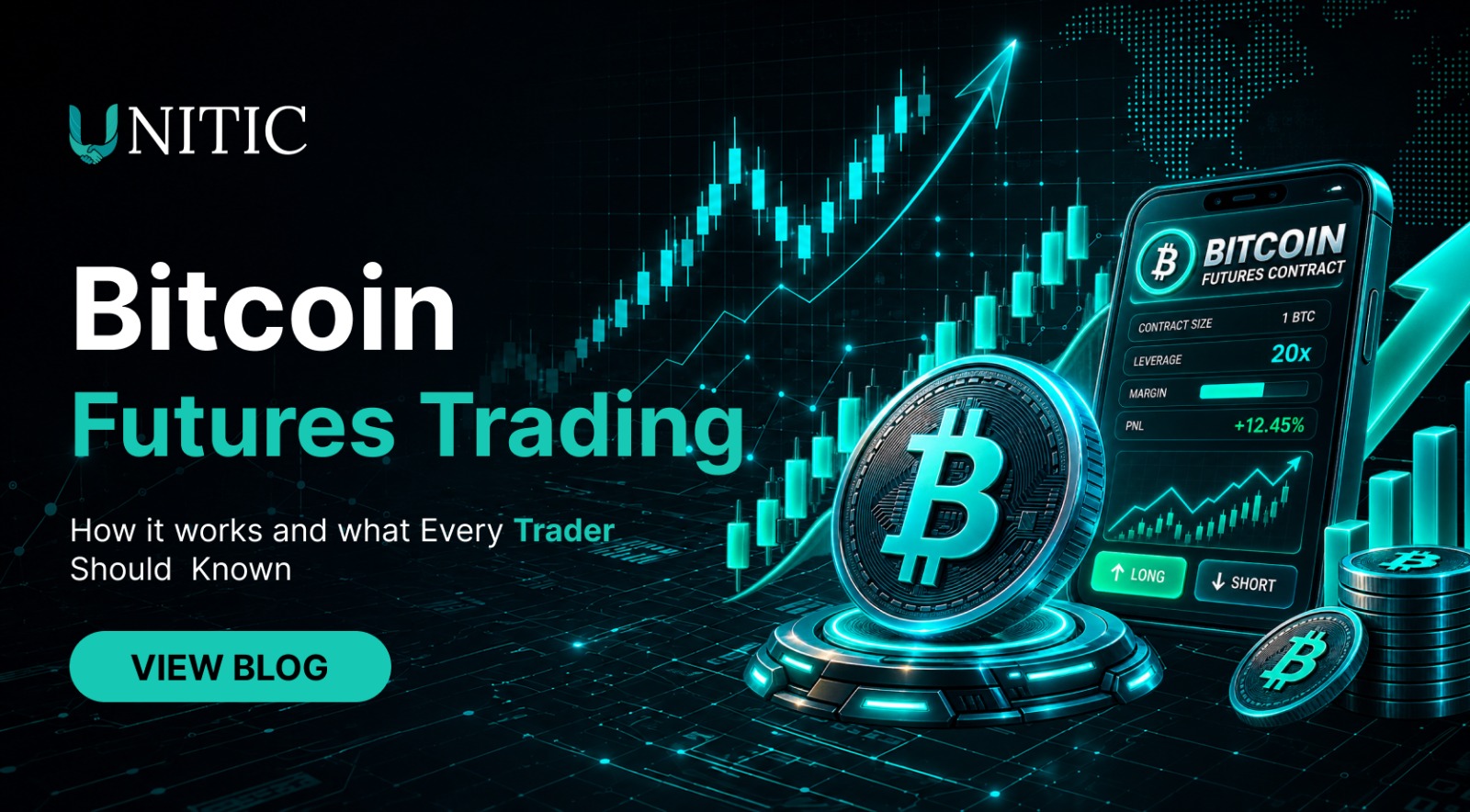
Bitcoin spot trading is straightforward: you buy it, you hold it, you sell it when you're ready. Futures trading is a different animal entirely — faster, more flexible, and considerably less forgiving of mistakes. Understanding how it actually works is the difference between using it as a genuine trading tool and using it as an expensive way to learn a hard lesson.
Bitcoin futures have become one of the most widely traded products in the entire digital asset industry, often accounting for a larger share of daily trading volume than spot Bitcoin itself. That popularity isn't an accident — futures give traders the ability to go long or short, apply leverage, and manage exposure in ways that simple ownership of Bitcoin can't offer. But that flexibility comes bundled with real complexity, and the traders who do well in this market are almost always the ones who understood the mechanics thoroughly before they ever opened a position.
The growth of Bitcoin futures also reflects something broader about how the digital asset market itself has matured. In Bitcoin's early years, trading largely meant one thing: buying it on a spot exchange and hoping the price went up. As the market grew and attracted a wider range of participants — from individual retail traders to institutional desks — demand grew for tools that could do more than simply track upward price movement. Futures filled that gap, offering the ability to profit in both directions, manage risk around existing holdings, and access exposure without needing the full capital required to buy Bitcoin outright. That evolution is a large part of why futures volume has grown to rival, and in many periods exceed, spot trading volume across the industry.
This guide walks through what Bitcoin futures actually are, how the contracts work, the mechanics every trader needs to understand before using leverage, and how to approach the product responsibly — including how to get started trading BTC futures on Unitic Exchange (uniticexchange.com).
What Is Bitcoin Futures Trading?
Bitcoin futures trading means entering into a contract whose value is derived from the price of Bitcoin, without necessarily owning the underlying asset itself. Instead of buying and holding actual Bitcoin, a trader takes a position that profits or loses based on the direction Bitcoin's price moves.
There are two broad categories of Bitcoin futures contracts traders encounter:
- Traditional dated futures, which have a fixed expiry date and settle at a specific point in the future, similar to futures contracts in traditional commodity or financial markets.
- Perpetual futures, which have no expiry date at all and can be held indefinitely, provided the position stays within margin requirements. Perpetual contracts are by far the more commonly traded format on crypto exchanges, largely because of the flexibility they offer.
In both formats, the core idea is the same: you're trading Bitcoin's price movement through a derivative contract, rather than trading the asset itself. This distinction is more than a technicality — it changes how you think about the trade from the moment you open it. With spot Bitcoin, your relationship with the asset is straightforward: you hold it, its value fluctuates, and your gain or loss is simply the difference between your entry price and current value. With a futures contract, you're holding a position governed by its own set of rules — margin requirements, funding obligations, liquidation thresholds — that exist independently of Bitcoin's actual price and that a trader has to actively manage for as long as the position stays open.
That added layer of mechanics is precisely what gives futures their flexibility, but it's also what makes them meaningfully riskier for anyone who approaches them the same way they'd approach buying and holding spot Bitcoin. Understanding that distinction early is one of the most valuable things a new futures trader can internalize before ever placing a trade.
Why Bitcoin Futures Exist
Futures contracts didn't originate in crypto — they've existed in traditional finance for well over a century, originally developed so that producers and buyers of physical commodities could lock in prices ahead of time and manage risk. Bitcoin futures serve a related but expanded purpose in the digital asset world:
- Hedging. Traders and institutions holding spot Bitcoin can use futures to offset potential downside risk without having to sell their actual holdings.
- Speculation. Futures allow traders to take a view on Bitcoin's direction — up or down — without needing to own the underlying asset.
- Capital efficiency. Because futures trading typically involves margin rather than full notional value, traders can gain exposure to a larger position size than they could by buying Bitcoin outright with the same capital.
- Access to short positions. Spot trading only allows traders to profit when price rises. Futures make it possible to profit from declining prices as well, by opening a short position.
Taken together, these functions explain why futures have become such a central part of the digital asset trading landscape rather than a niche product used only by a small subset of advanced traders. Retail traders use futures to speculate on short-term price movement with more flexibility than spot trading allows. Institutional participants use them to manage large positions and hedge risk across broader portfolios. And market makers and arbitrage traders use the relationship between futures and spot prices to help keep markets efficient. Each of these use cases contributes to the deep liquidity that Bitcoin futures markets tend to have, which in turn makes them more attractive to trade in the first place — a self-reinforcing cycle that has helped futures volume grow substantially over time.
Key Mechanics Every Bitcoin Futures Trader Should Understand
Before opening a single position, there are several mechanical concepts that genuinely determine whether a trader survives their first few months in this market.
Long and Short Positions
A long position profits when Bitcoin's price rises — you're effectively betting the price will go up. A short position profits when Bitcoin's price falls — you're betting the price will go down. This bidirectional flexibility is one of the defining features of futures trading and a major reason traders use it alongside, or instead of, simple spot ownership.
Leverage
Leverage allows a trader to open a position larger than the capital they've deposited, using borrowed exposure provided by the exchange. A modest amount of capital can control a significantly larger position size, which magnifies both potential gains and potential losses in equal measure.
This is the single most important concept to internalize in futures trading, and also the concept most responsible for wiping out inexperienced traders. Leverage doesn't just increase your potential reward — it proportionally increases your potential loss and dramatically reduces the amount of adverse price movement your position can withstand before being liquidated.
It helps to think about leverage not as a multiplier on your profits, but as a multiplier on how sensitive your position is to price movement in either direction. A modest, unfavorable move that would barely register on an unleveraged spot position can be enough to trigger liquidation on a heavily leveraged futures position. This is why experienced traders tend to describe leverage as a tool for capital efficiency rather than a tool for maximizing returns — used carefully, it lets you deploy capital more efficiently across multiple positions or strategies; used carelessly, it turns ordinary market volatility into an existential threat to the position.
A useful mental exercise before opening any leveraged position is to ask: "If price moves against me by a typical daily range for this asset, does my position survive?" If the answer is no, the leverage being used is likely too high for the current market conditions, regardless of how confident the underlying trade thesis might be.
Margin
Margin is the collateral you put up to open and maintain a leveraged position. There are generally two types worth understanding:
- Initial margin, the amount required to open a position in the first place.
- Maintenance margin, the minimum amount of collateral that must remain in the position to keep it open. If your account balance falls below this threshold due to unfavorable price movement, the position risks liquidation.
Understanding your margin requirements before entering a trade — not after — is one of the clearest signs of a trader who takes risk management seriously.
Liquidation
Liquidation happens when a leveraged position's losses erode the available margin down to the maintenance threshold, at which point the exchange automatically closes the position to prevent the account from going into a negative balance. Every leveraged position has a liquidation price, and knowing that number before entering a trade is non-negotiable. A trader who doesn't know their liquidation price isn't managing risk — they're gambling.
Funding Rates
Because perpetual futures contracts have no expiry date, exchanges use a mechanism called the funding rate to keep the contract's price anchored to Bitcoin's actual spot price. Periodically — often every few hours — traders holding long positions and traders holding short positions exchange a small payment between each other, depending on which side of the market is more crowded.
When more traders are long than short, longs typically pay shorts a small premium, which discourages excessive one-sided positioning and helps pull the contract price back in line with spot. The reverse happens when shorts are more crowded than longs. For traders holding positions across multiple funding intervals, these payments are a real cost (or occasionally a benefit) that should factor into any longer-duration trade.
Funding rates also carry useful information beyond their direct cost. A consistently high positive funding rate often signals that the market is heavily skewed toward long positions, sometimes reflecting excessive optimism that can precede a sharp correction if enough leveraged longs are forced to unwind at once. Conversely, a persistently negative funding rate can reflect widespread bearish positioning. Some traders watch funding rate trends as a sentiment indicator in their own right, alongside its role as a mechanical cost of holding a position.
Mark Price vs. Last Traded Price
Exchanges typically calculate liquidation based on a "mark price" rather than the last traded price on the order book, in order to reduce the risk of manipulation through temporary price spikes on thin order books. Understanding that your liquidation is tied to mark price, not necessarily the exact number you see flashing on the ticker, is an important detail that catches many new traders off guard.
Contract Size and Position Sizing
Futures contracts are typically denominated in a specific size — sometimes representing a fraction of one Bitcoin, sometimes a specific dollar-equivalent value. Understanding exactly how large your position is in real terms, not just in terms of margin deposited, is essential to understanding your true risk exposure.
Bitcoin Futures vs. Bitcoin Spot Trading
It's worth being explicit about how these two approaches differ, since many new traders move into futures without fully appreciating the shift in risk profile:
- Ownership. Spot trading involves owning actual Bitcoin. Futures trading involves a derivative contract tracking Bitcoin's price, without necessarily owning any underlying asset.
- Directionality. Spot trading only profits when price rises. Futures allow profit from both rising and falling markets.
- Leverage. Spot trading is typically unleveraged (unless margin trading is specifically used). Futures trading commonly involves leverage, sometimes at levels far beyond what spot margin products offer.
- Risk of total loss. A spot position's maximum loss is the capital invested. A leveraged futures position can be liquidated well before that same percentage decline would fully wipe out an equivalent spot position, because leverage compresses the amount of adverse movement a position can absorb.
- Ongoing costs. Spot positions don't involve funding payments. Futures positions, particularly perpetuals, involve periodic funding costs that accumulate the longer a position is held.
Neither approach is inherently superior — they serve different purposes and suit different trading styles, risk tolerances, and time horizons.
Common Bitcoin Futures Trading Strategies
Trend Following
Trend-following strategies look to enter in the direction of an established trend, using tools like moving averages or trendline structure to identify the prevailing direction, and holding a position for as long as the trend appears to remain intact. The appeal of this approach in futures markets specifically is that it allows a trader to participate in a strong directional move using leverage to size the position efficiently, without needing to predict the exact top or bottom — the goal is simply to capture the bulk of an established move while it's underway, and to exit or reverse once the trend shows genuine signs of exhaustion.
Range Trading
In sideways or consolidating markets, range traders look to buy near identified support levels and sell near identified resistance levels, aiming to capture repeated moves within a defined price band rather than betting on a sustained directional move. Futures markets are particularly well suited to this style because the ability to go short as easily as going long means a range trader can act on both edges of a range with equal ease, rather than being limited to only buying dips the way a spot-only trader would be.
Hedging Spot Holdings
Traders who hold Bitcoin on the spot market sometimes use short futures positions to hedge against potential downside, effectively neutralizing some of their exposure during periods of expected volatility or uncertainty, without needing to sell their actual holdings.
Funding Rate Arbitrage
Some traders take positions specifically designed to capture funding rate payments — for example, holding a spot position while simultaneously shorting an equivalent amount in futures, aiming to collect funding payments when rates favor their position while remaining largely neutral to Bitcoin's price movement. This is a more advanced strategy that requires careful understanding of the mechanics involved.
Scalping and Short-Term Trading
Because futures markets trade continuously and often carry lower fees per trade relative to position size than spot markets, some traders use them for short-term, high-frequency strategies aimed at capturing small, frequent price movements rather than holding positions for extended periods.
Risk Management: The Non-Negotiable Part of Futures Trading
If there's one theme that runs through every experienced futures trader's approach, it's this: managing risk matters more than being right about direction. Leverage means that even a trader who's frequently correct about market direction can still lose money overall if their risk management is poor — and conversely, a trader with modest accuracy can remain consistently profitable if their risk management is disciplined.
A few principles worth building into every futures trade:
- Know your liquidation price before you enter, not after the position is already open and moving against you.
- Use leverage conservatively, especially early on. Lower leverage means a wider buffer before liquidation and more room for a trade thesis to play out through normal market noise.
- Always use a stop-loss. Relying on manually closing a losing position in time is a plan that fails as soon as you're away from your screen, or as soon as emotion takes over.
- Size positions based on your account, not your conviction. A high-conviction trade doesn't justify oversized risk — conviction and outcome are two entirely separate things in markets.
- Account for funding costs on longer-held positions. A position that looks profitable on price movement alone can be less attractive once funding payments are factored in over time.
- Avoid trading based purely on emotion or FOMO. Bitcoin's volatility can create a strong emotional pull to chase moves after they've already happened — which is often exactly the wrong time to enter.
- Keep a trading journal. Recording your reasoning, entry, exit, and outcome for every trade is one of the fastest ways to identify patterns in your own decision-making, both good and bad.
Beyond these individual habits, it's worth thinking about risk management at the portfolio level rather than trade by trade. A common mistake is treating each position in isolation, without considering how much total risk is being carried across all open positions at once. Two individually "reasonable" leveraged positions can combine into an unreasonable amount of total exposure if a trader isn't tracking the bigger picture. Experienced traders often set a maximum percentage of their total account they're willing to have at risk at any given time, across all positions combined, rather than just sizing each trade individually without regard to what else is already open.
It's also worth acknowledging a psychological reality of leveraged trading: losses feel different, and often larger, than they would in an equivalent unleveraged position, simply because they tend to happen faster and can escalate to liquidation more quickly. This can trigger emotional responses — revenge trading after a loss, or oversizing the next position to "make it back" — that compound the original mistake rather than correcting it. Building risk management habits that don't rely on emotional discipline in the moment, such as pre-set stop-losses and predetermined position sizes, removes much of that psychological pressure from the equation before it has a chance to influence a decision.
Common Mistakes New Futures Traders Make
- Using maximum available leverage simply because the platform offers it, without considering how little room that leaves before liquidation.
- Not understanding the difference between margin and position size, leading to a mismatch between intended risk and actual exposure.
- Ignoring funding rates on positions held over multiple funding intervals, and being surprised by the cumulative cost.
- Averaging down on a losing position without a clear plan, effectively increasing risk exposure to a trade that's already moving against the original thesis.
- Trading without a stop-loss, often after a string of wins creates overconfidence.
- Overtrading. Taking too many positions, too frequently, without waiting for genuinely favorable setups, often driven by the temptation of a market that never fully closes.
- Ignoring the broader market trend. Fighting a strong prevailing trend with a leveraged position against it is one of the more common ways new traders get liquidated repeatedly.
- Not distinguishing between mark price and last traded price. Watching only the ticker price and being caught off guard when liquidation triggers off the mark price instead is a mistake that catches out traders who haven't taken the time to understand this distinction.
- Chasing losses with increasingly larger positions. After a losing trade, the temptation to open a bigger position to recover the loss quickly is one of the most reliable ways to turn a manageable setback into a much larger one.
How to Think About Choosing a Leverage Level
New traders often approach leverage as a single decision made once, at the start, rather than a variable that should shift depending on market conditions and the specific trade being considered. A more useful approach treats leverage selection as part of the trade planning process itself, alongside entry price and stop-loss placement, rather than a default setting left unchanged across every position.
A few factors worth weighing before selecting a leverage level for a given trade:
- Current volatility. Bitcoin's volatility isn't constant — it expands and contracts over time. Using the same leverage level during a high-volatility period as during a calmer one effectively means taking on very different amounts of real risk, even though the leverage number itself hasn't changed.
- Distance to your planned stop-loss. Higher leverage mechanically means less room between your entry and your liquidation price, which can force a stop-loss to sit uncomfortably close to normal price noise. If a sensible stop-loss level, based on the actual chart, would sit close to or beyond your liquidation price at a given leverage, that's a signal the leverage is too high for the trade.
- Conviction versus risk tolerance. It's worth separating how confident you are in a trade idea from how much risk you're willing to accept if that idea turns out to be wrong. High conviction doesn't reduce the consequences of being wrong — it only changes how surprised you might be if it happens.
- Total account exposure. As mentioned earlier, leverage on an individual position should be considered alongside everything else currently open, not in isolation.
There's no universal "correct" leverage level that applies across every trader and every trade — what matters is that the choice is deliberate, tied to an actual plan, and revisited for each new position rather than left on autopilot.
How to Start Trading Bitcoin Futures on Unitic Exchange
Getting started with Bitcoin futures trading on Unitic Exchange follows a straightforward sequence:
- Create and verify your account on uniticexchange.com, completing the required KYC steps.
- Fund your account, typically with USDT, since most futures contracts on the platform settle in USDT.
- Navigate to the futures section and locate the Bitcoin futures market (often listed as a BTC perpetual pair).
- Review the contract specifications — leverage limits, funding interval, minimum order size, and current trading fees — directly on the pair's detail page before opening a position.
- Choose your leverage deliberately, understanding exactly how it affects your liquidation price before confirming.
- Set your stop-loss at the same time you open the position, rather than treating it as an afterthought.
- Monitor your position and funding payments over time, adjusting or closing the trade as market conditions change.
As with any trading platform, it's worth confirming current fees, leverage tiers, and available contract types directly on Unitic Exchange before trading, since these details can change over time.
Final Thoughts
Bitcoin futures trading offers genuine flexibility — the ability to go long or short, manage capital efficiently, and hedge existing positions — but that flexibility is inseparable from the added complexity of leverage, margin, funding rates, and liquidation risk. Traders who take the time to understand these mechanics thoroughly before opening their first position are the ones who tend to survive long enough to actually benefit from what futures trading offers. Those who skip that step often learn the same lessons the hard way, at a cost that could have been avoided.
Whether you're using Bitcoin futures to speculate on price direction, hedge existing spot holdings, or simply diversify your trading approach, the fundamentals stay the same: understand the mechanics fully, size your risk deliberately, and treat every leveraged position with the seriousness it deserves. The traders who last in this market aren't necessarily the ones who call every move correctly — they're the ones who protect their capital consistently enough to still be trading months and years later, having survived the inevitable stretch of losing trades that every strategy eventually goes through. You can explore Bitcoin futures and a broad range of other trading pairs directly on Unitic Exchange at uniticexchange.com.
This article is for educational purposes only and is not financial advice. Futures trading involves substantial risk, including the potential for rapid and significant losses due to leverage. Always confirm current contract terms, fees, and leverage limits directly with Unitic Exchange, and only trade with capital you can afford to lose.
FAQs
No. Futures contracts track Bitcoin's price through a derivative structure — you're trading price exposure, not acquiring or holding the underlying asset.
Perpetual futures have no expiry date and can be held indefinitely as long as margin requirements are maintained, using a funding rate mechanism to stay anchored to spot price. Traditional futures have a fixed expiry date and settle at a specific point in time.
No, most platforms allow traders to select their leverage level, including very low leverage. Using minimal or no leverage on a futures contract behaves more similarly to a spot position in terms of risk, while still offering the ability to go short.
If a leveraged position's losses erode available margin down to the maintenance threshold, the exchange automatically closes the position to prevent further losses beyond the deposited margin. This typically results in the loss of the margin allocated to that position.
Not necessarily — funding payments can go either direction depending on whether you're long or short and which side of the market is more crowded at that time. It's possible to receive funding payments as well as pay them, depending on market conditions.
Futures trading carries meaningfully higher risk than spot trading due to leverage and liquidation risk, and it generally rewards traders who already have a solid grasp of risk management. Many experienced traders recommend building a foundation with spot trading and a clear understanding of market mechanics before using leverage.
Futures contracts typically settle in USDT rather than INR, though funding your account and moving between currencies can often be done through the platform's supported pairs. Always confirm the current settlement currency for a specific contract directly on Unitic Exchange.

Your Crypto Gateway


Unitic Exchange
All rights reserved 2026