Stablecoins as Payment Rails: How Crypto Could Transform Global Payments
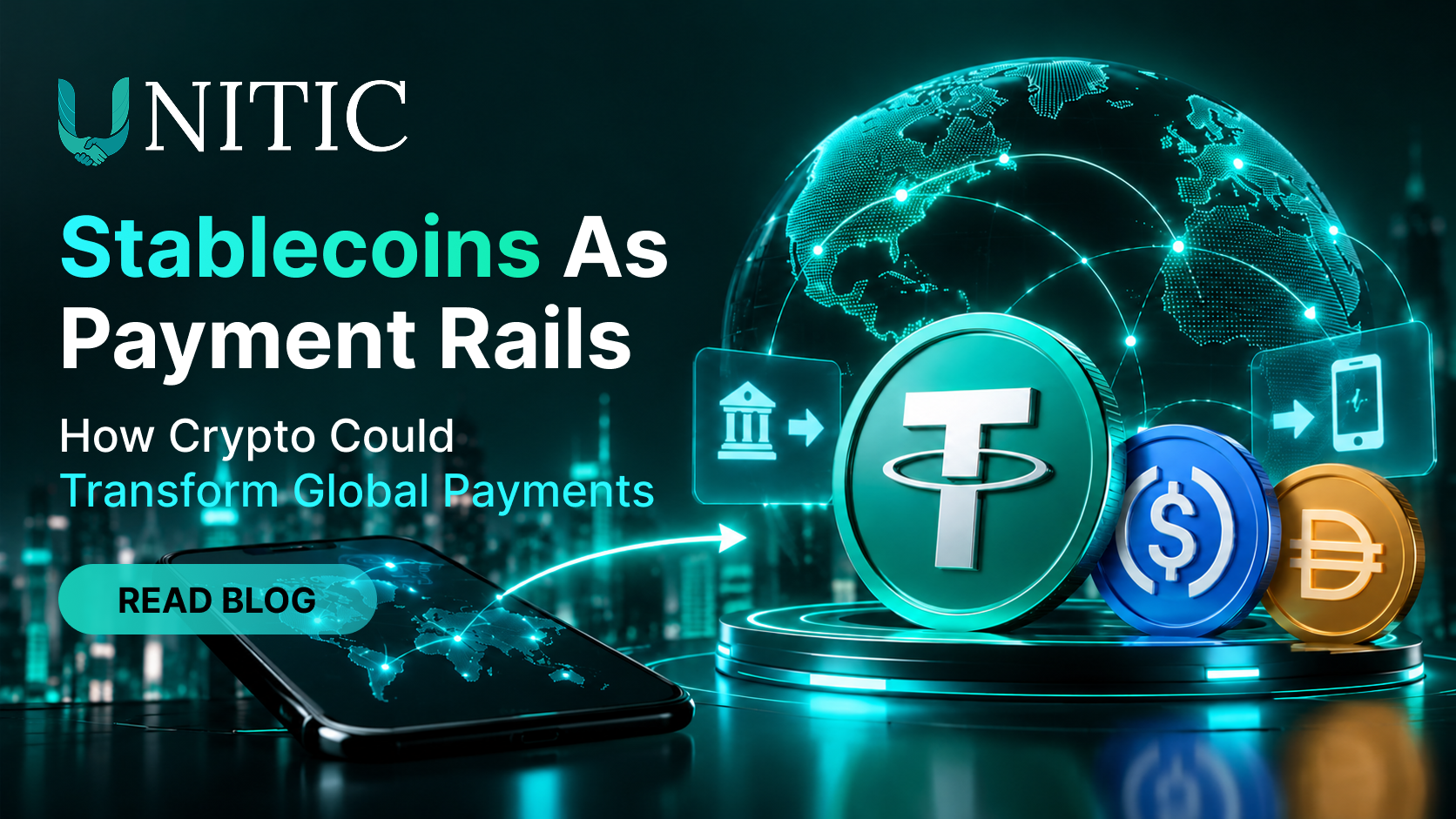
For most of modern history, moving money across a border has meant tolerating delay, cost and opacity. A wire transfer from India to the United States can take two to three business days, pass through several correspondent banks, and arrive with a fee that nobody can fully explain until after the fact. A small business paying a supplier overseas often has no real-time way to confirm when the money has actually landed. This friction has been accepted for so long that most people assume it is simply how international payments work. Stablecoins are quietly proving that assumption wrong, and in 2026 the shift from experimentation to production use has become hard to ignore.
This article explains what stablecoins are, why they are increasingly described as "payment rails" rather than just crypto assets, how they compare with the banking systems we already use, and what this all means for someone who wants to understand or participate in this shift from India. Along the way, we will look at where Unitic Exchange fits into this picture, since trading, moving and settling stablecoins is exactly where a reliable exchange becomes useful.
What a "Payment Rail" Actually Means
Before getting into stablecoins specifically, it helps to understand what people mean by a payment rail. A rail is simply the underlying infrastructure that moves money from one party to another. SWIFT is a rail. The ACH network in the United States is a rail. UPI in India is a rail. Visa and Mastercard are rails too, in the sense that they move value between a cardholder and a merchant through a chain of banks and processors.
Every rail has its own rules, speed, cost structure and reach. Some rails are fast within a single country but slow across borders. Some are cheap for small transfers but expensive for large ones. Some are built for consumers, others for businesses moving large volumes. When people say stablecoins are becoming a payment rail, they mean stablecoins are starting to do the same basic job, moving value from sender to receiver, but on a different kind of infrastructure: a shared, always-on public ledger instead of a web of separate bank systems that all have to reconcile with each other.
What Is Stablecoin?
A stablecoin is a type of cryptocurrency designed to hold a steady value, usually pegged to a fiat currency like the US dollar. The most widely used stablecoins, USDT (Tether) and USDC (Circle), are each intended to be worth close to one US dollar at all times. The issuer holds reserves, typically cash and short-term government securities, to back the coins in circulation, which is what is supposed to keep the price stable even as the rest of the crypto market moves up and down.
This stability is the entire point. Bitcoin and Ethereum are useful for investment and other purposes, but their price swings make them impractical for paying an invoice or a salary; you cannot budget around an asset that might be worth ten percent less by the time the payment settles. A stablecoin solves that specific problem. It behaves like digital dollars that can move on a blockchain, settle in minutes, and be held or exchanged without needing a traditional bank account on both ends of the transaction.
Why Stablecoins Are Becoming Payment Infrastructure, Not Just a Trading Tool
For years, stablecoins were mostly used inside crypto exchanges, as a place to park funds between trades or as the base currency for trading pairs. That is still a major use case. But the picture in 2026 looks considerably broader. Industry data now frames stablecoins as a genuine cross-border payment rail rather than a niche crypto tool, with institutional adoption from major payment companies and a transaction volume that has grown enormously in a short period. One widely cited estimate puts the global stablecoin cross-border payments opportunity at well over ten trillion dollars, with the clearest growth concentrated in emerging markets where existing banking rails are slowest and most expensive.
The reason this shift is happening now, rather than years ago, comes down to three things converging at once: clearer regulation in major markets, the entry of large payment companies into stablecoin settlement, and a growing body of real transaction data proving the cost and speed advantages are not theoretical.
The Cost Gap Is Large and Well Documented
Traditional cross-border transfers are expensive, and the fees are not always obvious upfront. Data from recent industry reporting shows traditional banks charging roughly 12.66% on a $200 cross-border transfer, compared with under 1% on stablecoin rails for the same transfer, with money transfer operators and mobile money services sitting somewhere in between. That gap might sound exaggerated at first glance, but it reflects the layered cost structure of legacy systems: each correspondent bank in the chain takes its own cut, applies its own exchange rate margin, and adds its own processing delay.
Stablecoin settlement bypasses most of that layering. Instead of routing a payment through several intermediary banks that each need to reconcile with the next, a stablecoin transfer moves directly between two wallets on a shared ledger. There is no queue of intermediaries each adding a markup, which is the single biggest reason the cost difference is so large.
The Speed Difference Is Just as Significant
A traditional cross-border wire can take anywhere from one to five business days, depending on the corridor, the banks involved, and whether any manual compliance review is triggered along the way. A stablecoin transfer, by contrast, can be confirmed on-chain in a matter of minutes, regardless of time zone, weekend, or public holiday. One payment executive described this plainly: a company acquires dollar-backed stablecoins, sends the payment directly to the recipient's wallet, and can confirm receipt on-chain in roughly two minutes. For businesses managing supplier relationships or payroll across multiple countries, that difference between "a few minutes" and "a few business days" is not a minor convenience. It changes how working capital can be managed.
Where Adoption Is Strongest
Adoption is not spread evenly around the world, and the pattern tells its own story. The regions moving fastest toward stablecoin settlement are the ones where existing rails are the most painful to use. In Latin America, a large majority of firms already report using stablecoins for cross-border settlement. In Asia, stablecoin payment volume is heavily concentrated in financial hubs such as Singapore, Hong Kong and Japan, which together account for a majority of global stablecoin payment flow. Businesses with supplier relationships across several of these regions increasingly find that stablecoin settlement outperforms their existing banking rails from the very first transaction, simply because the baseline they are being compared against is so slow and costly.
This regional pattern matters because it shows stablecoin adoption is not being driven by speculation or hype. It is being driven by businesses solving a concrete, expensive, everyday problem: getting paid, and paying others, across borders without losing a meaningful slice of the transaction to intermediaries.
Who Is Actually Using Stablecoins for Payments
It is worth being specific about where this is happening, because "crypto could change payments" has been said for years without much to show for it. What is different in 2026 is the list of recognisable names now running real volume through stablecoin rails.
Major payment networks have begun integrating stablecoin settlement directly into their core infrastructure, with one large card network reporting billions of dollars in annualised stablecoin settlement by early 2026. A major payments company made a large acquisition specifically to build stablecoin rails into its existing payment network, rather than treating it as a side experiment. On the banking side, a major European bank issued its own euro-denominated stablecoin under new EU regulation, aimed specifically at enabling cross-border payments and smart escrow arrangements. None of this reads like speculation. It reads like infrastructure being built because the economics make sense.
On the business side, survey data paints a similarly concrete picture. A large share of businesses now describe themselves as actively using stablecoins for real cross-border payments, with a further significant group running active pilots and an even larger group planning to adopt within the next year. Notably, suppliers appear to be pulling this adoption forward more than buyers are pushing it: a majority of respondents report receiving supplier payments in stablecoins, while a smaller share report proactively sending vendor payments that way. In other words, the people on the receiving end of slow, expensive cross-border payments are often the ones asking to be paid differently.
The clearest, most consistently cited use cases are cross-border supplier payments, payroll for international contractors and remote workers, marketplace payouts to large numbers of recipients spread across many countries, and treasury liquidity management for companies operating across multiple jurisdictions. These are not edge cases. They are some of the most common and most painful categories of cross-border payment that exist.
How Stablecoin Rails Compare With What We Use Today
It helps to lay this out plainly, because the comparison is where the real argument for stablecoins becomes clear.
Traditional international wires, moved through SWIFT and a chain of correspondent banks, typically settle in one to five business days, cost a meaningful percentage of the transfer once all fees are accounted for, and offer limited visibility into exactly where the money is at any given moment. Money transfer operators and remittance services are often faster and somewhat cheaper for small consumer transfers, but they still charge several percentage points on a typical transaction and rely on local payout networks that vary enormously in reliability from country to country. Card networks are fast and familiar for consumer purchases, but they are not designed for large business-to-business settlement and carry their own interchange costs.
Stablecoin rails settle in minutes rather than days, cost a fraction of a percent on the transfer itself, and because the ledger is public, offer a level of transaction transparency that none of the older systems can match. This does not mean stablecoins eliminate the older rails. Realistically, they will not replace SWIFT, ACH, local instant payment systems, or card networks outright. What they are doing instead is sitting alongside those systems as an additional rail, one that is faster and cheaper for the specific use cases where the existing infrastructure is weakest, particularly cross-border B2B payments, remittance corridors, and time-sensitive settlement outside normal banking hours.
That last point deserves its own mention. Legacy banking rails effectively shut down on weekends and holidays, which creates real problems for businesses that need to move money on their own schedule rather than the banking system's schedule. Stablecoin rails run continuously, 24 hours a day, 7 days a week, which is why industries dealing with weekend settlement gaps have started adopting stablecoins specifically to remove that friction.
Stablecoins and Remittances: A Direct Line to Everyday People
Cross-border B2B payments get most of the attention in industry reporting, but the remittance use case touches far more ordinary people. Workers who send money home to family in another country have historically paid some of the highest fees in the entire payments industry, often five percent or more on money transfer operators and mobile money services, according to recent cost comparisons. For someone sending a relatively modest amount every month, that fee adds up to a significant loss over a year.
Stablecoin-based remittance corridors are starting to chip away at this. In the United States-to-Mexico corridor specifically, one industry estimate puts stablecoins at five to ten percent of total remittance flow already, with fees on that portion of the corridor sitting under one percent. That is not a complete replacement of traditional remittance services yet, but it shows the direction of travel: wherever a corridor is expensive and slow, stablecoins are finding a foothold.
For India, which receives one of the largest remittance inflows in the world, this trend is worth watching closely. As regulatory clarity around virtual digital assets continues to develop and as more compliant on-ramps and off-ramps become available, the cost argument for stablecoin-based remittance will only get stronger, provided the regulatory and compliance pieces keep pace.
The Role of Regulation
None of this growth has happened in a regulatory vacuum, and it is worth being honest about how much regulation has shaped the current moment. A few years ago, conversations between stablecoin companies and lawmakers were mostly educational, explaining the basics of how the technology worked. That has changed substantially. In the United States, a federal framework for payment stablecoins has created clearer rules for issuers and the banks that work with them. In the European Union, the MiCA regulation has given banks and fintechs a defined path to issue and use stablecoins for payments, which is part of why a major European bank felt comfortable issuing its own euro-denominated stablecoin.
Regulatory clarity matters because institutional adoption generally will not happen without it. Large banks, payment networks and corporate treasuries cannot build production infrastructure on top of a system whose legal status might change overnight. The fact that major financial institutions are now building stablecoin settlement into their core operations, rather than running isolated pilots, is itself evidence that the regulatory environment has matured enough to support it.
That said, institutional adoption still depends on more than just the existence of a law. It depends on custody arrangements, banking partnerships, and compliance processes that work correctly for each specific corridor a business operates in. None of that happens instantly just because a new legal framework exists, and this is part of why experts expect stablecoins to capture a meaningful share of cross-border payments over time, often cited in the range of five to twenty percent, rather than displacing the entire system in one dramatic shift.
The Risks Worth Understanding
A fair treatment of this topic has to include the risks, because stablecoins are not a flawless replacement for traditional banking rails.
Issuer risk sits at the center of everything. A stablecoin is only as reliable as the reserves backing it and the trustworthiness of the company managing those reserves. If a major issuer's reserves turned out to be inadequate or mismanaged, confidence in that specific stablecoin could be damaged quickly, even if other stablecoins were unaffected.
Regulatory fragmentation remains a real obstacle. Even with progress in the US and EU, rules differ significantly by country, and a payment corridor that works smoothly between two regulated markets may run into friction when a third jurisdiction with unclear rules is involved.
On-ramp and off-ramp dependency is often underappreciated. Moving value on a blockchain is only half the journey. At some point, most businesses and individuals need to convert stablecoins back into local currency in their own bank account, and that conversion still depends on a reliable, compliant exchange or payment processor. If that final step is slow, expensive or unreliable, much of the speed and cost advantage of the stablecoin leg of the journey is lost.
Operational and technical risk also applies. Sending funds to the wrong blockchain network, mistyping a wallet address, or using an unverified platform can result in an irreversible loss, since blockchain transactions generally cannot be reversed the way a bank transfer sometimes can.
Concentration risk is worth noting too. A small number of stablecoin issuers currently account for the overwhelming majority of volume in this space. That concentration brings efficiency and liquidity, but it also means problems at one major issuer could have outsized effects on the broader stablecoin payment ecosystem.
None of these risks mean stablecoin payment rails are unsafe to use. They mean the same basic discipline that applies to any financial infrastructure, choosing reputable counterparties, verifying details carefully, and understanding what you are relying on, applies here too.
What This Means for Someone Trading or Holding Stablecoins in India
For an individual or a business in India, the broader institutional story about payment rails connects to something much more immediate: getting access to stablecoins reliably, at a fair price, through a platform that takes compliance seriously. Whatever role stablecoins eventually play in global payment infrastructure, the starting point for most people is the same, buying stablecoins with rupees, holding them, and converting them back when needed.
This is where Unitic Exchange fits into the picture. As an Indian digital asset trading platform, Unitic Exchange gives users a straightforward way to buy and sell stablecoins like USDT against INR, alongside the broader set of crypto assets most actively traded in India. For someone simply looking to understand or participate in the stablecoin story, from parking funds between trades to exploring how tokenised dollars move, having a dependable on-ramp and off-ramp matters just as much as understanding the macro trend.
Beyond basic spot trading, the platform's markets page lists the full range of trading pairs available, which is a useful starting point for anyone comparing liquidity and pricing across different assets before deciding where to allocate funds. Traders who want exposure to price movement rather than simply holding a stable asset can look at futures contracts, such as the Bitcoin perpetual market, where margin is typically posted and settled in USDT, which is itself a small, everyday example of a stablecoin functioning as the settlement currency underneath an entire trading product.
For traders who want structured guidance rather than making every decision alone, Unitic Exchange's trading signals provide entry, target and stop-loss levels based on expert analysis, which can be a useful starting point for anyone still building confidence in how to time trades around a fast-moving market. And for businesses or high-net-worth individuals who need to move larger amounts of stablecoins or other digital assets without disturbing the order book or waiting on a public market's available liquidity, the OTC desk offers a dedicated channel for executing bigger trades directly, which mirrors, in miniature, the exact institutional use case driving so much of the stablecoin payment rail story globally: large-value settlement that needs speed, discretion and a counterparty you can trust.
Seen this way, the global shift toward stablecoin payment rails and the everyday experience of trading on an exchange like Unitic are not really separate stories. The institutional case for stablecoins rests on the same basic properties, speed, cost and transparency, that make them useful to an individual trader managing risk or a business settling an invoice. The infrastructure scales differently depending on who is using it, but the underlying rail is the same one.
Where This Is Likely Headed
It is worth resisting the temptation to predict a dramatic, overnight transformation. The more grounded view, echoed by several industry analysts, is that stablecoins will capture a meaningful but partial share of global cross-border payments over the coming years, likely somewhere in the range of five to twenty percent, concentrated heavily in the corridors and use cases where legacy rails are weakest: emerging market B2B payments, remittances, out-of-hours settlement, and treasury management for companies operating across many jurisdictions at once.
What makes 2026 feel different from earlier years of crypto hype is that this growth is now backed by real transaction volume, named institutional participants, and a regulatory environment that, while still uneven across countries, has moved decisively toward clarity rather than ambiguity. Stablecoins are not trying to reinvent money. They are trying to move the same dollars, euros and other currencies people already use, just over faster, cheaper and more transparent infrastructure. That is a more modest claim than "crypto will replace banking," but it is also a far more credible one, and the data from 2026 increasingly backs it up.
Final Thoughts
Stablecoins started out as a convenience inside crypto trading, a way to hold value without leaving the crypto ecosystem. In 2026, they have grown into something considerably bigger: a genuine payment rail that banks, payment networks and businesses are building real infrastructure around, because the cost and speed advantages over legacy systems are large, measurable and consistent across multiple independent reports. The shift is not uniform everywhere, and it is not replacing the banking system outright, but in the corridors and use cases where traditional rails are weakest, stablecoins are increasingly the faster, cheaper option, and the adoption data from the last two years makes that hard to dismiss as hype.
Whether you are watching this as a macro trend or looking to actually hold and trade stablecoins yourself, the starting point is the same: a reliable platform to buy, sell and manage them. Unitic Exchange gives Indian users that starting point, with spot markets, futures, trading signals and an OTC desk all built around the same digital assets now reshaping how money moves around the world.
Disclaimer:
This article is for educational purposes only and is not financial or investment advice. Cryptocurrency and stablecoin markets carry risk, including regulatory, issuer and operational risk. Figures and statistics cited above are drawn from third-party industry reports current as of October 2026 and may change. Please do your own research and consult a qualified professional before making financial decisions.
FAQs
A regular cryptocurrency like Bitcoin or Ethereum has a price that moves freely with market demand. A stablecoin is designed to hold a steady value, usually pegged to a currency like the US dollar, backed by reserves the issuer holds. This stability is what makes stablecoins practical for payments rather than just investment.
They are increasingly used for real payments. Major payment networks, banks and businesses now run production volume through stablecoin rails, particularly for cross-border supplier payments, remittances and treasury settlement, not just pilot programmes.
Traditional cross-border payments pass through multiple correspondent banks, each adding its own fee and exchange rate margin. Stablecoin transfers move directly between two wallets on a shared ledger, cutting out most of that layered cost.
A stablecoin transfer can typically be confirmed on-chain within minutes, at any time of day or on any day of the week. A traditional international wire usually takes one to five business days and does not move on weekends or public holidays.
Most industry analysts do not expect a full replacement. Stablecoins are more likely to sit alongside existing rails, capturing a meaningful share of cross-border payments in the areas where legacy infrastructure is slowest and most expensive, rather than eliminating banking systems entirely.
Key risks include issuer reserve risk, inconsistent regulation across countries, dependence on reliable on-ramps and off-ramps to convert back to local currency, and the irreversible nature of blockchain transactions if a payment is sent incorrectly.
You can open an account on a compliant Indian exchange, complete KYC with your PAN and Aadhaar, and buy stablecoins directly with INR. Platforms such as Unitic Exchange offer this alongside broader spot and futures markets, trading signals and an OTC desk for larger transactions.






Your Crypto Gateway


Unitic Exchange
All rights reserved 2026