AI, GPUs and Crypto: How Blockchain Could Transform Computing Infrastructure
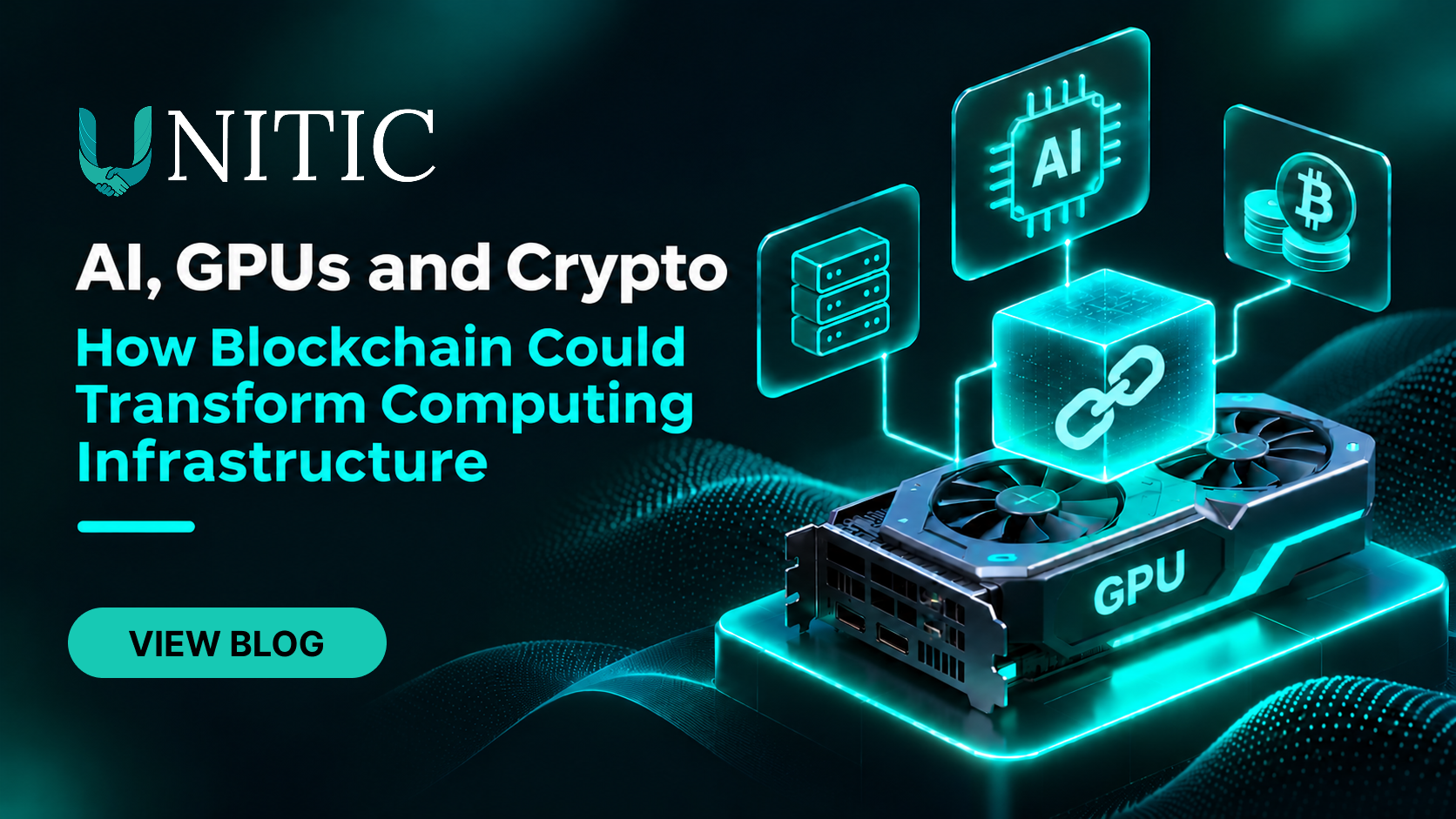
Artificial intelligence has become one of the most resource-hungry technologies in the modern world. Training large AI models requires enormous amounts of computing power, and much of that power comes from specialized hardware known as GPUs. At the same time, crypto and blockchain technologies have introduced a new way to coordinate global participants, distribute rewards, verify activity, and create open financial markets.
When these three forces—AI, GPUs, and crypto—come together, they could change how computing infrastructure is built, funded, and accessed. Instead of relying only on a small number of large cloud providers, blockchain-based networks could allow individuals and businesses to contribute unused GPU capacity and earn rewards for supplying computing power.
For crypto traders and investors, this trend is also important. AI-related tokens, decentralized compute projects, GPU networks, and blockchain infrastructure assets may become a growing part of the digital-asset market. Platforms such as Unitic Exchange provide access to spot markets, futures, OTC services, and market insights, helping traders follow these developments with better tools and liquidity.
In this blog, we will explain how AI, GPUs, and crypto intersect, why GPU demand is rising, how blockchain could transform computing infrastructure, what risks exist, and what this shift could mean for traders, investors, and the wider technology ecosystem.
Why AI Needs Massive Computing Power
Artificial intelligence is not just software. It is a combination of algorithms, data, and computing hardware. Modern AI systems learn from huge datasets and perform billions of calculations during training and inference.
Training AI Models
Training an AI model means teaching it to recognize patterns. For example, a language model learns from text, while an image-generation model learns from pictures. This process requires repeated mathematical calculations across massive datasets.
The larger the model and the more data it processes, the more computing power it needs. This is why AI companies often require clusters of high-performance GPUs, fast networking, large storage systems, and reliable electricity.
AI Inference
Inference is what happens after a model is trained. When a user asks an AI chatbot a question, generates an image, or receives a recommendation, the model performs inference.
Training may require the most powerful computing clusters, but inference demand can be enormous because millions of users may interact with AI applications every day. As AI becomes embedded in apps, websites, customer support systems, trading platforms, healthcare tools, and enterprise software, inference demand could continue to rise.
Why GPUs Matter
GPUs, or graphics processing units, were originally designed to render graphics for gaming and visual applications. However, they are also highly efficient at parallel processing.
AI workloads involve many similar calculations that can run at the same time. GPUs are built for this type of parallel computation, making them far more suitable for AI training and inference than traditional CPUs in many cases.
This is why GPUs have become one of the most valuable components of modern AI infrastructure.
The Global GPU Shortage Problem
The rise of AI has created intense demand for GPUs. High-end AI chips are expensive, limited in supply, and often concentrated among large technology companies, cloud providers, and well-funded AI labs.
High Hardware Costs
Advanced GPUs can cost thousands of dollars each. Building an AI data center requires not only GPUs but also servers, cooling systems, networking equipment, storage, power infrastructure, and technical staff.
For startups, researchers, developers, and smaller enterprises, accessing this level of infrastructure can be difficult.
Limited Access
Much of the world’s high-performance computing capacity is controlled by a small number of large cloud providers and technology companies. This can create challenges such as:
- Long waiting times for GPU access
- High compute costs
- Limited flexibility
- Geographic concentration
- Dependence on a few providers
- Difficulty scaling for smaller teams
Energy and Data-Center Constraints
AI infrastructure also consumes significant electricity. Data centers need cooling, reliable power, and efficient hardware. As AI adoption grows, energy efficiency and infrastructure capacity become increasingly important.
This creates an opportunity for new models of computing distribution. Instead of building every GPU cluster from scratch, networks could coordinate existing hardware across the world.
What Is Decentralized Computing?
Decentralized computing is a model where computing resources are supplied by many independent participants rather than being owned and operated entirely by one centralized provider.
In a decentralized GPU network, individuals, data centers, gaming companies, and enterprises could contribute unused GPU capacity to a shared network. Developers could then rent that capacity for AI training, rendering, simulation, or other compute-intensive tasks.
How It Works
A simplified decentralized compute network may work like this:
- GPU owners connect their hardware to the network.
- The network verifies the provider’s capacity and availability.
- Developers request computing resources.
- The network matches compute demand with available supply.
- Workloads are distributed to GPU providers.
- Results are verified and delivered to the requester.
- Providers receive payment, often in crypto tokens.
Blockchain can support this process by providing transparent records, automated payments, identity systems, and incentive mechanisms.
Where Crypto and Blockchain Fit In
Crypto is not only about trading digital assets. Blockchain can act as a coordination layer for decentralized networks. It can record transactions, distribute rewards, verify participation, and create open marketplaces for computing resources.
Token Incentives
Crypto tokens can reward participants for contributing resources. In a decentralized GPU network, GPU providers may earn tokens for supplying compute power. Developers may spend tokens to access that capacity.
This creates a market where:
- GPU owners earn income from idle hardware.
- Developers access compute without relying on one provider.
- Token holders may participate in network governance.
- Payments can be automated through smart contracts.
Smart Contracts
Smart contracts are self-executing programs stored on a blockchain. They can automate agreements between parties.
For example, a smart contract could:
- Hold payment from a developer.
- Release payment when a compute task is completed.
- Penalize providers who fail to deliver results.
- Distribute rewards to multiple contributors.
- Record usage and settlement transparently.
This reduces the need for manual intermediaries and can make compute marketplaces more efficient.
Transparent Settlement
Blockchain provides an immutable record of transactions. In a decentralized compute network, this can help create transparent records of:
- Compute tasks completed
- Payments made
- Rewards distributed
- Network participation
- Resource availability
Transparency does not automatically guarantee quality, but it can improve trust and accountability when combined with strong verification systems.
How Blockchain Could Transform Computing Infrastructure
Blockchain could transform computing infrastructure by changing how compute resources are owned, distributed, monetized, and accessed.
1. Turning Idle GPUs Into Productive Assets
Many GPUs sit unused during certain hours. Gaming PCs, workstations, and enterprise servers may have spare capacity that could be used for AI workloads.
Decentralized compute networks could allow owners to monetize this idle capacity. Instead of letting expensive hardware sit unused, providers could connect it to a network and earn rewards.
This could improve global hardware utilization and reduce waste.
2. Creating Open Compute Marketplaces
Today, many businesses buy compute from centralized cloud providers. Blockchain could enable open marketplaces where compute supply and demand meet directly.
In such a marketplace:
- GPU providers list available capacity.
- Developers compare pricing and performance.
- Smart contracts handle payments.
- Verification systems check task completion.
- Rewards are distributed automatically.
This could create more competition, potentially improving pricing and access.
3. Reducing Dependence on Centralized Providers
A decentralized compute network could reduce dependence on a small number of cloud providers. This may be valuable for developers who want alternatives, redundancy, or more flexible pricing.
However, decentralization does not automatically mean better performance or lower cost. It depends on network design, hardware quality, verification systems, and real demand.
4. Enabling Global Participation
Anyone with compatible hardware and internet access could potentially participate in a decentralized compute network. This could include:
- Individual GPU owners
- Gaming studios
- Rendering farms
- Data centers
- Enterprises with unused hardware
- Research institutions
- Crypto miners transitioning to AI compute
This global participation model could expand the supply of computing power beyond traditional data centers.
5. Supporting AI Democratization
If GPU access becomes more affordable and widely available, more developers, startups, and researchers could build AI applications.
This could encourage innovation by reducing barriers to entry. Instead of requiring massive upfront investment, smaller teams could rent compute as needed.
6. Creating New Crypto Sectors
AI and decentralized compute could create new categories within crypto, including:
- Decentralized GPU networks
- AI infrastructure tokens
- Compute marketplaces
- Data-storage networks
- Machine-learning protocol tokens
- AI-agent ecosystems
- Decentralized cloud services
These sectors may attract developers, investors, and traders looking for exposure to the intersection of AI and blockchain.
AI, GPUs and Crypto: A New Infrastructure Economy
The combination of AI, GPUs, and crypto could create a new infrastructure economy.
In this economy:
- GPUs are the productive hardware.
- AI is the demand driver.
- Blockchain is the coordination layer.
- Crypto tokens are the incentive and settlement mechanism.
- Developers are the customers.
- GPU providers are the suppliers.
This is similar in concept to other decentralized infrastructure models, where participants contribute resources and receive rewards. However, AI compute has unique requirements because workloads can be complex, sensitive, and performance-sensitive.
Supply Side: GPU Providers
GPU providers supply hardware. They may be individuals, companies, or data centers.
Their incentives include:
- Earning rewards from idle hardware
- Accessing global demand
- Receiving automated payments
- Participating in network growth
Their challenges include:
- Hardware compatibility
- Electricity costs
- Internet reliability
- Security risks
- Performance requirements
- Competition from centralized cloud providers
Demand Side: AI Developers
AI developers need compute for training and inference.
Their incentives include:
- Potentially lower costs
- Flexible access
- Global availability
- Alternative providers
- Pay-as-you-go models
Their challenges include:
- Performance consistency
- Data privacy
- Security
- Latency
- Reliability
- Verification of results
Network Layer: Blockchain and Tokens
The blockchain layer coordinates participants.
It may provide:
- Payment settlement
- Incentive distribution
- Governance
- Transparency
- Smart-contract automation
- Token-based access
But blockchain alone cannot solve every problem. AI compute networks also need strong off-chain systems for scheduling, verification, security, and performance monitoring.
Real-World Use Cases
AI Model Training
Training large AI models requires significant GPU capacity. Decentralized networks could potentially support parts of this workload, especially for smaller models, fine-tuning, or distributed training tasks.
However, training very large models can be technically difficult in decentralized environments because it requires fast communication between GPUs and stable performance.
AI Inference
Inference may be a more practical use case for decentralized compute. Once a model is trained, inference workloads can often be distributed across multiple machines.
Examples include:
- Chatbot responses
- Image generation
- Voice processing
- Recommendation systems
- Fraud detection
- Trading analytics
- Document processing
Rendering and Simulation
GPUs are also used for rendering, gaming, simulations, visual effects, and 3D design. Decentralized GPU networks could support these workloads alongside AI tasks.
Scientific Research
Research institutions may use GPU networks for simulations, climate modeling, drug discovery, genomics, physics research, and other compute-intensive projects.
Web3 Applications
Blockchain-based applications may also require compute for:
- Decentralized AI agents
- On-chain analytics
- Data processing
- Smart-contract automation
- Decentralized storage integration
- Web3 gaming
The Role of Tokenomics
Tokenomics refers to the economic design of a crypto token, including supply, distribution, rewards, utility, and incentives.
In AI and GPU networks, tokenomics is critical. A strong design should align the interests of GPU providers, developers, token holders, and the network itself.
Token Utility
AI compute tokens may have utilities such as:
- Paying for compute
- Staking to secure the network
- Earning rewards
- Participating in governance
- Accessing premium features
- Settling transactions
Reward Distribution
GPU providers may earn tokens based on:
- Compute supplied
- Uptime
- Task completion
- Hardware performance
- Network reliability
- Verification results
Supply and Demand
A healthy network needs real demand for compute. If token rewards are high but actual AI demand is low, the network may struggle to sustain value.
The strongest projects are likely to focus on real usage, not just token speculation.
Challenges Facing AI and Blockchain Infrastructure
While the potential is significant, there are important challenges.
1. Performance and Latency
AI workloads often require fast, reliable, low-latency connections. Decentralized networks may face difficulty matching the performance of specialized data centers.
2. Verification
How does a network verify that a GPU provider actually completed a task correctly?
This is a major technical challenge. Solutions may include cryptographic verification, redundant computation, sampling, reputation systems, and performance benchmarks.
3. Data Privacy
AI workloads may involve sensitive business data, personal information, or proprietary models. Sending this data to unknown GPU providers creates privacy risks.
Technologies such as encryption, secure enclaves, federated learning, and privacy-preserving computation may help, but they add complexity.
4. Hardware Compatibility
Not all GPUs are suitable for all AI workloads. Network compatibility, drivers, memory capacity, and software environments can create technical barriers.
5. Energy Costs
GPU providers must consider electricity, cooling, maintenance, and hardware depreciation. If rewards do not cover these costs, participation may not be sustainable.
6. Regulatory Uncertainty
Crypto regulation continues to evolve across jurisdictions. AI regulation is also developing. Projects operating at the intersection of both may face compliance challenges.
7. Market Competition
Decentralized compute networks must compete with established cloud providers that already have scale, reliability, enterprise relationships, and technical maturity.
What This Means for Crypto Traders
For crypto traders, AI, GPUs, and blockchain represent a major narrative in the digital-asset market. However, trading this sector requires caution, research, and risk management.
AI Tokens Are Not Automatically Good Investments
A token connected to AI does not automatically have strong fundamentals. Traders should evaluate:
- Real product usage
- Token utility
- Team credibility
- Partnerships
- Token supply and unlock schedule
- Liquidity
- Competition
- Revenue model
- Network activity
- Community strength
Separate Narrative From Fundamentals
AI is a powerful narrative, but narratives can drive prices faster than fundamentals. A token may rise because of hype, then fall sharply when expectations are not met.
Traders should distinguish between:
- Short-term narrative momentum
- Long-term infrastructure adoption
- Real product demand
- Speculative token valuation
Use Risk Management
Crypto markets are volatile, and AI-related assets can be especially volatile. Traders should use position sizing, stop-losses, and clear risk-reward planning.
A practical approach is to risk only a small percentage of capital per trade and avoid overexposure to a single narrative.
Follow Market Data
Traders can monitor:
- Price action
- Trading volume
- Market depth
- Funding rates
- Token unlocks
- Network usage
- Developer activity
- Partnerships
- Exchange listings
Platforms like Unitic Exchange provide access to crypto markets, including spot trading and futures, allowing traders to follow major assets and market movements in one place.
How Unitic Exchange Fits Into the AI and Crypto Trend
As AI and blockchain infrastructure evolve, traders need reliable access to crypto markets, liquidity, and trading tools. Unitic Exchange is a crypto exchange platform offering spot trading, futures, OTC services, and Earn products in one platform.
Spot Trading
Unitic Exchange offers spot trading with a wide range of trading pairs, real-time charts, and advanced order types. Traders can use spot markets to buy and sell crypto assets without using leverage.
For traders interested in AI and infrastructure-related crypto assets, spot trading can be a way to gain exposure while managing risk more conservatively.
Futures Trading
Unitic Exchange also provides futures trading, including USDT-margined perpetual contracts and leverage options. Futures can be useful for experienced traders who want to trade both rising and falling markets.
However, leverage increases risk. Traders should use strict risk management, especially in volatile AI and crypto sectors.
OTC Desk for Large Trades
For institutions, funds, corporate treasuries, and high-net-worth individuals, Unitic Exchange offers an OTC Desk for large-volume crypto trading.
The OTC desk is designed for large trades that may be difficult to execute on public markets without affecting price. It offers features such as:
- Large-volume crypto execution
- INR-to-crypto conversion
- Dedicated USDT trading desk
- Competitive pricing
- Fast settlements
- Personalized support
- Secure and compliant infrastructure
For institutions exploring AI, blockchain infrastructure, or digital-asset treasury strategies, OTC execution can help reduce market impact and improve execution privacy.
Market Access
Traders can explore available assets and trading pairs through the Unitic Markets page. Monitoring markets regularly helps traders track price movements, liquidity, and trading opportunities.
Education and Insights
Crypto markets change quickly. Traders should continue learning through reliable educational resources, market analysis, and platform updates. The Unitic Blog is a useful place to explore crypto guides, market insights, and educational content.
The Future of AI, GPUs and Crypto
The future of AI, GPUs, and crypto is likely to be shaped by several major trends.
1. Rising AI Demand
AI adoption is expected to continue growing across industries. As more businesses use AI for automation, analytics, customer service, content creation, and decision-making, demand for compute may increase.
2. More Efficient Hardware
Hardware manufacturers are likely to continue improving GPU efficiency, memory capacity, and AI-specific performance. More efficient chips could reduce costs and expand access.
3. Hybrid Infrastructure Models
The future may not be fully centralized or fully decentralized. Instead, hybrid models may emerge where centralized cloud providers, private data centers, and decentralized GPU networks coexist.
4. Better Verification Systems
For decentralized AI compute to scale, networks will need reliable ways to verify work. Advances in cryptography, zero-knowledge proofs, secure hardware, and distributed verification could improve trust.
5. Tokenized Infrastructure
More real-world infrastructure may become tokenized, including compute capacity, storage, bandwidth, and energy resources. This could create new investment and trading opportunities, but also new risks.
6. AI Agents Using Crypto
AI agents may eventually use crypto rails for payments, access services, purchase compute, and interact with digital marketplaces. This could increase demand for stablecoins, blockchain networks, and automated payment systems.
How Traders Can Prepare
Traders who want to follow the AI, GPU, and crypto trend should focus on education, research, and disciplined execution.
Build a Watchlist
Create a watchlist that includes:
- Major cryptocurrencies
- AI-related tokens
- Decentralized compute projects
- Infrastructure tokens
- Stablecoins
- High-liquidity assets
Avoid overloading your watchlist with low-liquidity tokens.
Track Market Conditions
Monitor:
- Bitcoin trend
- Ethereum strength
- Altcoin market breadth
- Liquidity conditions
- Funding rates
- Volatility
- News catalysts
- Token unlocks
Use a Trading Plan
A trading plan should include:
- Entry criteria
- Stop-loss level
- Take-profit target
- Position size
- Maximum daily loss
- Market conditions required for entry
Manage Emotions
Fear, greed, FOMO, and revenge trading can damage results. A written plan helps traders stay disciplined during volatile markets.
Start With Spot Before Leverage
New traders should generally begin with spot trading before using futures or leverage. Spot trading limits downside risk to the capital invested in the position.
Futures can offer flexibility, but leverage can quickly amplify losses.
Conclusion
AI, GPUs, and crypto are converging to reshape how the world thinks about computing infrastructure. AI creates enormous demand for GPU power. GPUs provide the hardware needed to train and run intelligent systems. Crypto and blockchain offer new ways to coordinate global participants, reward resource providers, automate payments, and build open compute marketplaces.
This convergence could make computing more accessible, more distributed, and more efficient. It could also create new opportunities for developers, GPU owners, institutions, and crypto traders.
However, the sector is still early. Decentralized AI compute must overcome challenges related to performance, verification, privacy, regulation, and competition with established cloud providers. Traders should approach AI-related crypto assets with research, discipline, and strong risk management.
For traders who want to participate in the evolving crypto market, Unitic Exchange offers spot trading, futures, OTC execution, and market access in one platform. Whether you are monitoring AI-related assets, trading major cryptocurrencies, or executing large-volume transactions, having reliable market infrastructure is essential.
Explore the Unitic Markets page to follow available crypto pairs and stay informed through the Unitic Blog for crypto education and market insights.
Disclaimer
Trading cryptocurrencies involves substantial risk, including the potential loss of your entire invested capital. This blog is for educational and informational purposes only and does not constitute financial, investment, or trading advice. Always conduct your own research and consult a qualified financial advisor before making investment decisions. Never invest more than you can afford to lose, and remember that past performance does not guarantee future results.
FAQs
AI requires GPU computing power. Crypto and blockchain can create decentralized marketplaces and token incentives for GPU providers. Together, they may create new models for global computing infrastructure.
Blockchain is unlikely to fully replace cloud computing in the near term. Instead, it may complement centralized infrastructure by creating alternative compute marketplaces and incentive systems.
GPUs are efficient at parallel processing, which is useful for AI training and inference. They can perform many calculations simultaneously, making them well suited for AI workloads.
Decentralized GPU networks connect GPU owners who supply computing power with developers who need compute resources. Blockchain and crypto tokens can coordinate payments and incentives.
Yes. AI crypto tokens can be highly volatile and speculative. Traders should research fundamentals, tokenomics, liquidity, and market conditions before investing.
Unitic Exchange provides spot trading, futures, OTC services, and market access. Traders can use the platform to trade crypto assets, monitor markets, and access educational insights.
An OTC desk allows large-volume traders to execute crypto trades directly with a counterparty rather than placing large orders on the public market. This can help reduce slippage and market impact.


Your Crypto Gateway


Unitic Exchange
All rights reserved 2026