Tokenized Stocks Explained: How Traditional Stocks Are Moving On-Chain
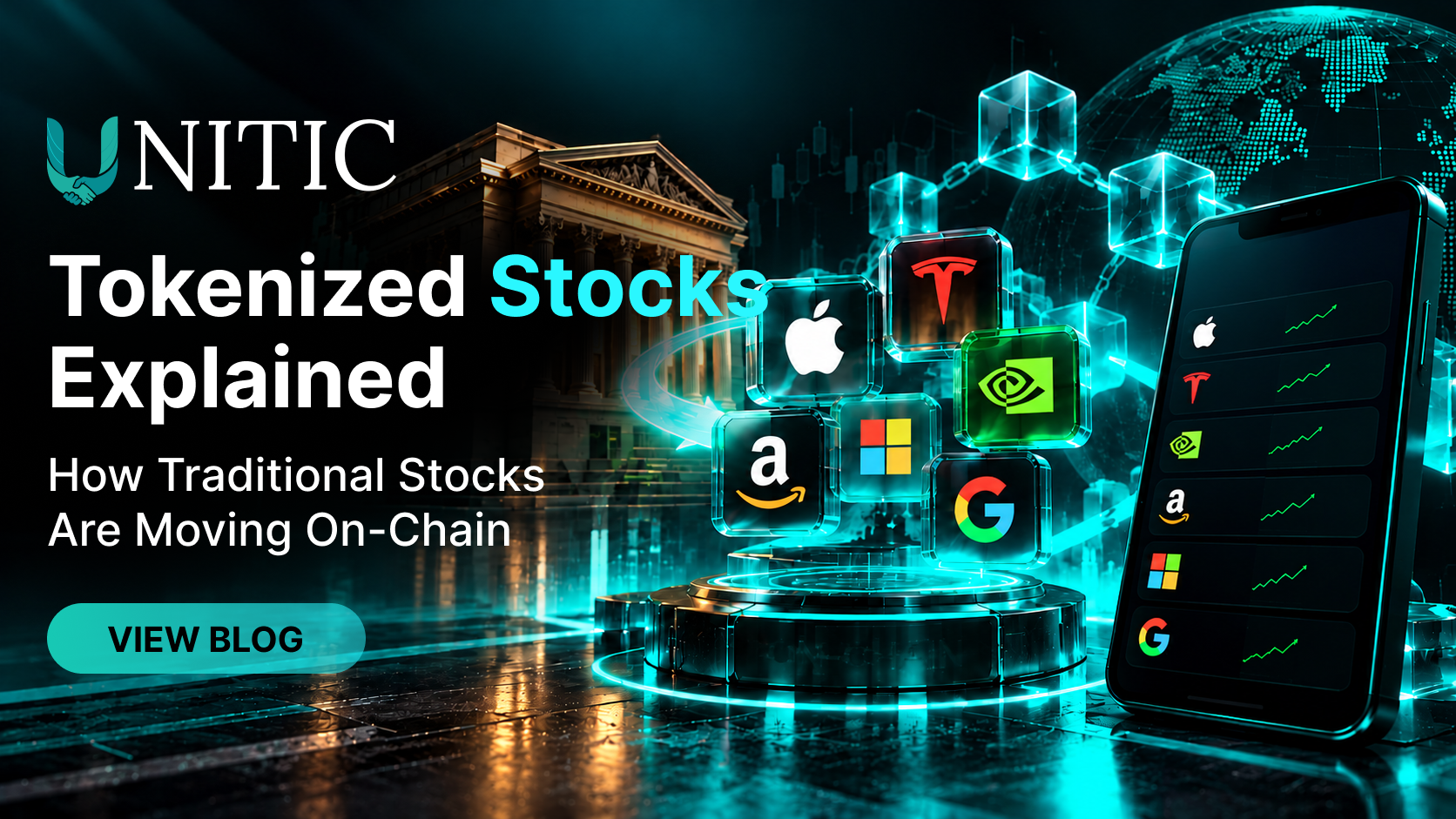
Tokenized stocks are digital representations of traditional company shares recorded or tracked on a blockchain. They combine familiar equity exposure with crypto-style accessibility, fractional ownership, faster transferability, and around-the-clock market access.
The idea is simple: instead of holding a share only inside a brokerage account, an investor may hold a blockchain token that represents that share, a claim backed by shares held by a custodian, or in some cases a synthetic product that tracks the share price. The difference between those structures matters enormously because it determines whether the token gives real ownership rights, voting rights, dividends, or only price exposure.
In this guide, we explain tokenized stocks in plain language, compare the different methods used to bring stocks on-chain, examine benefits and risks, and show how traders can use crypto infrastructure such as Unitic Exchange to stay prepared for the next phase of digital markets.
What Are Tokenized Stocks?
A tokenized stock is a traditional equity security represented in digital token form. The token may exist on a public blockchain such as Ethereum, Solana, or a permissioned institutional blockchain, while the underlying economic rights depend on how the product is legally structured.
For example, a tokenized version of a U.S. technology stock may be designed to represent:
- One full share of the company.
- A fraction of a share, such as 0.01 of a share.
- A custodial claim backed by shares held in reserve.
- A synthetic derivative that tracks the stock’s price without conveying ownership.
- A token used inside a regulated trading venue rather than a conventional brokerage account.
The U.S. Securities and Exchange Commission defines tokenized securities as financial instruments that meet the legal definition of a security but are formatted as, or represented by, a crypto asset, with ownership records maintained wholly or partly on crypto networks.
That definition is important. A tokenized stock is not automatically “unregulated” simply because it lives on a blockchain. In the United States, tokenized equities remain equity securities, and their offer, sale, trading, custody, and disclosure can still fall under securities law.
Why Traditional Stocks Are Moving On-Chain
Traditional stock markets are highly efficient, but they still rely on multiple intermediaries: brokers, clearinghouses, custodians, transfer agents, settlement systems, and banks. Blockchain technology offers a way to record ownership and transfers using shared digital ledgers.
The appeal is not that blockchain replaces every financial institution overnight. Rather, it can modernize specific parts of the market.
1. Fractional Ownership
High-priced shares can be difficult for smaller investors to access. Tokenization allows a share to be divided into smaller digital units, letting someone invest with a much lower amount.
For instance, instead of needing the full price of one expensive share, a user could buy a token representing 1/100th of that share. This makes global equities more accessible to retail participants, especially in markets where direct access to U.S. or international stocks is limited.
2. 24/7 Market Access
Traditional stock exchanges operate during fixed market hours. Crypto markets operate continuously. Tokenized stocks can allow trading outside conventional exchange hours, including weekends and holidays, depending on the platform and liquidity structure.
This does not mean the underlying company’s official share price updates continuously in the same way. It means the token market may continue to trade, with prices influenced by crypto liquidity, demand, global news, and the relationship between the token and the underlying share.
3. Faster Settlement
Traditional equity settlement can involve a delay between trade execution and final settlement. Blockchain-based transfer can potentially shorten this process because ownership changes can be recorded directly on a distributed ledger.
In practice, legal settlement, custody arrangements, and regulatory requirements still matter. Tokenization does not automatically eliminate every intermediary, but it can reduce friction in recording and transferring ownership.
4. Programmable Ownership
Smart contracts can automate certain processes, such as:
- Dividend distribution.
- Corporate-action notifications.
- Transfer restrictions.
- Compliance checks.
- Collateral management.
- Token locking or vesting.
This is one of the biggest long-term reasons institutions are interested in tokenization. A stock token can potentially carry rules directly in its code, reducing manual reconciliation and administrative delays.
5. Global Accessibility
A person in one country may find it difficult to open a brokerage account in another country. Tokenized equities, where legally available, can make global stock exposure more accessible through crypto-friendly platforms.
However, accessibility does not mean legality everywhere. Investors must confirm whether tokenized stocks are permitted in their jurisdiction and whether the platform is properly authorized to offer them.
How Tokenized Stocks Actually Work
The phrase “stock on-chain” can mean several different things. Not every tokenized stock gives the holder the same rights. Understanding the structure is essential before investing.
Method 1: Issuer-Sponsored Tokenized Shares
In this model, the company itself supports the tokenized version of its shares. The blockchain record may be integrated into the official shareholder register.
This is the closest version to “true” on-chain equity ownership because the issuer recognizes the tokenized record as part of its shareholding structure. Holders may receive rights such as dividends, voting rights, information rights, or other shareholder entitlements, depending on the design and jurisdiction.
This model is the most institutionally robust, but it is also the most demanding because the company, transfer agent, regulators, custodians, and blockchain infrastructure must coordinate.
Method 2: Custodial Wrapped Shares
Here, a regulated custodian holds real shares in reserve and issues tokens representing claims on those shares. The token holder may not be the direct registered shareholder of the underlying company. Instead, the custodian or issuer holds the shares, while the token represents a beneficial interest or contractual entitlement.
This model is common because it is easier to launch than full issuer-sponsored tokenization. However, it introduces counterparty risk: if the custodian fails, suffers a security breach, or becomes insolvent, token holders may face delays or losses in recovering the underlying shares.
Method 3: Synthetic Tokenized Stocks
Synthetic tokenized stocks do not represent actual shares. They are derivatives or structured products designed to track the price of a stock. The holder receives price exposure but may not receive voting rights, dividends, or any direct claim on the issuing company.
These products can be useful for trading and hedging, but they are not the same as owning equity. The SEC has specifically distinguished synthetic tokens that offer exposure through derivatives from tokens representing actual stock ownership.
Method 4: Mirror Tokens and Price-Tracking Assets
Some crypto platforms offer assets that track the price of a stock through oracles, collateral pools, or derivative mechanisms. These may be called mirror stocks, synthetic equities, or price-tracking tokens.
They can provide exposure to companies such as Apple, Tesla, Nvidia, or Amazon, but users should read the product documentation carefully. The key question is: “What exactly do I own if I buy this token?”
If the answer is only price exposure, it is not the same as owning a real share.
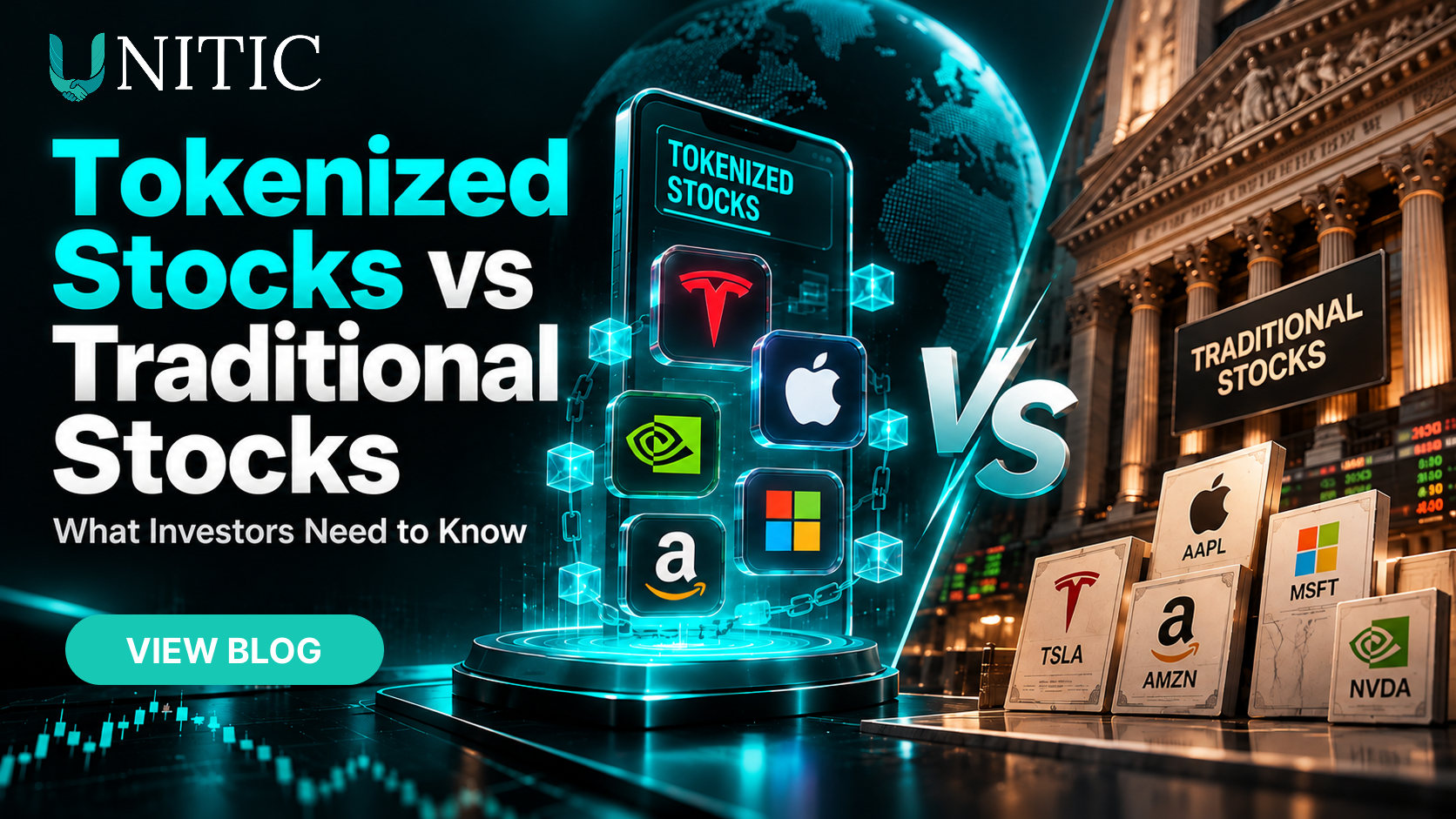
Tokenized Stocks vs Traditional Stocks
|
Feature |
Traditional Stocks |
Tokenized Stocks |
|
Ownership record |
Brokerage, registrar, or central securities depository |
Blockchain ledger, custodian record, or hybrid system |
|
Trading hours |
Exchange market hours |
Potentially 24/7, depending on platform and liquidity |
|
Minimum investment |
Often one full share |
Can support fractional ownership |
|
Settlement |
May involve intermediaries and delayed settlement |
Can use on-chain transfer and smart contracts |
|
Voting rights |
Usually available to shareholders |
Depends on token structure; synthetic tokens may have none. |
|
Dividends |
Paid through brokerage or registrar |
Depends on issuer or product design |
|
Regulation |
Established securities-market framework |
Still subject to securities laws; rules are evolving |
|
Custody risk |
Brokerage/custodian risk |
Platform, smart-contract, custodian, and blockchain risk |
|
Liquidity |
Generally deep in major markets |
Often thinner and more volatile than conventional equities |
The main takeaway is that tokenization changes the technology and access layer, but it does not automatically change the legal or economic nature of the asset.
The Role of Blockchain in Stock Tokenization
Blockchain provides a shared, tamper-resistant record of token ownership and transfers. Instead of each institution maintaining a separate database, participants can reference a common ledger.
A typical tokenized-stock system may include:
- The underlying share or collateral: Real shares held by an issuer, custodian, or reserve system.
- A token contract: A smart contract that creates, transfers, burns, or restricts tokens.
- A compliance layer: Know Your Customer, jurisdiction restrictions, transfer approvals, and investor eligibility checks.
- An oracle or price feed: Supplies the token with the underlying stock price.
- A trading venue: A regulated exchange, broker, or tokenized securities venue.
- Custody infrastructure: Wallets, qualified custodians, or institutional custody solutions.
- Redemption mechanism: A process to redeem tokens for underlying shares or cash value, where applicable.
The stronger the connection between the token and the real share, the more credible the product. Weak collateral, unclear redemption rights, or anonymous issuers are major warning signs.
Regulation: The Most Important Part
Tokenized stocks sit at the intersection of crypto and traditional finance. Regulators have made it clear that putting a security on a blockchain does not remove it from securities regulation.
The SEC has stated that tokenizing an existing security does not change the core securities-law analysis. Issuers, sponsors, and intermediaries may still need to comply with registration, exemption, disclosure, custody, and investor-protection requirements.
The SEC has also emphasized protections such as:
- Clear disclosure of ownership rights.
- Oversight of intermediaries.
- Best-execution standards for investor orders.
- Requirements that investors understand what they are buying.
In 2026, the SEC introduced a time-limited framework allowing qualifying platforms to facilitate trading of tokenized U.S. stocks under conditions including disclosure, recordkeeping, volume limits, and issuer notification. Platforms must notify companies before listing tokenized versions of their stocks, and issuers can object to those listings. Synthetic tokens offering exposure through derivatives are not permitted under that framework.
For investors, this is positive progress. It means tokenized stocks are moving from an experimental crypto concept toward a more regulated financial product. But it also means users should avoid platforms that cannot clearly explain their legal structure, custody model, and investor protections.
Benefits of Tokenized Stocks
Greater Accessibility
Tokenization can lower entry barriers. Investors can buy smaller portions of expensive shares, diversify across global companies, and access markets through digital wallets and crypto platforms.
This is particularly relevant for crypto-native users who already understand wallets, stablecoins, and on-chain transfers.
Improved Liquidity Potential
In theory, tokenized stocks can trade continuously and reach a global audience. More participants and more trading hours can improve liquidity.
In practice, early tokenized-stock markets have often been less liquid and more volatile than the traditional shares they track. The IMF found that tokenized U.S. stocks offer round-the-clock trading and fractional ownership, but remain less liquid and more volatile than conventional equities.
Faster and More Transparent Transfers
Blockchain transfers can be recorded in near real time. This can reduce reconciliation errors and make ownership movement more transparent.
However, transparency of the token transfer does not always equal transparency of the underlying legal ownership. Investors should still verify who controls the reserve, who has redemption rights, and what happens if the platform fails.
Programmable Corporate Actions
Dividends, splits, buybacks, and other corporate actions can potentially be automated through smart contracts. This may reduce operational delays and improve accuracy.
Still, corporate actions are legally complex. A tokenized share must correctly handle voting, dividend entitlement, tax reporting, and shareholder communications.
Portfolio Diversification
Crypto investors can potentially diversify beyond cryptocurrencies by gaining exposure to equities. This can be useful for managing concentration risk in a portfolio heavily exposed to Bitcoin, Ethereum, or altcoins.
But diversification only works if the tokenized product is properly backed and legally sound. A synthetic token with poor collateralization may increase risk rather than reduce it.
Risks of Tokenized Stocks
Tokenized stocks are promising, but they are not risk-free. In fact, they combine risks from both traditional equities and crypto markets.
Regulatory Risk
Rules differ by country and are still developing. A token that is legal on one platform or in one jurisdiction may be restricted or unavailable in another.
The SEC has made clear that tokenization does not override securities laws. Investors should be cautious with platforms claiming that blockchain technology makes regulatory compliance unnecessary.
Counterparty and Custody Risk
If a token is backed by shares held by a custodian, the investor depends on that custodian’s solvency, security practices, and legal structure.
Questions to ask include:
- Who holds the underlying shares?
- Are the reserves independently audited?
- Can users redeem tokens for underlying shares?
- What happens if the issuer or custodian becomes insolvent?
- Is the token a direct ownership record or only a claim?
Smart-Contract Risk
Smart contracts can contain bugs, vulnerabilities, or flawed logic. A coding error could allow unauthorized minting, frozen transfers, incorrect balances, or exploitation.
Even audited contracts carry risk. Audits reduce risk; they do not eliminate it.
Liquidity Risk
A token may be easy to buy but difficult to sell at a fair price. Thin order books, wide spreads, and sudden liquidity withdrawals can create large losses.
The IMF has specifically warned that tokenized-stock markets remain volatile and illiquid relative to traditional equities.
Price-Tracking Risk
A token is supposed to track its underlying stock, but it may trade at a premium or discount. This can happen because of low liquidity, arbitrage delays, collateral issues, or market panic.
During stress periods, the token price may move differently from the actual share price.
Platform Risk
Crypto platforms can experience downtime, cyberattacks, withdrawal pauses, or operational failures. Tokenized-stock investors should use platforms with strong security practices, transparent operations, and reliable customer support.
Leverage Risk
Some traders may use tokenized stocks or related products with leverage. Leverage magnifies both gains and losses. In volatile markets, leveraged positions can be liquidated quickly.
This is especially important for futures traders. Before using leverage, traders should understand margin requirements, liquidation prices, funding costs, and position sizing.
How Tokenized Stocks Could Change Investing
Tokenized stocks could reshape investing in several ways.
From Brokerage Accounts to Digital Wallets
Investors may eventually hold a broader range of assets in digital wallets: stablecoins, cryptocurrencies, tokenized equities, tokenized bonds, and real-world assets.
This does not mean self-custody is always the best option. For regulated securities, qualified custody may be safer and more compliant. But the interface of investing is likely to become more crypto-like.
From Market Hours to Continuous Markets
Tokenization may normalize continuous price discovery. Investors will be able to react to earnings, geopolitical news, and macroeconomic events outside traditional exchange hours.
This creates opportunity, but also risk. Markets that never close can also never pause during a crisis.
From Whole Shares to Fractional Access
Fractional ownership can make high-quality global equities accessible to more people. Instead of choosing between one expensive stock and nothing, investors may build diversified portfolios with smaller allocations.
From Manual Processes to Automated Finance
Smart contracts can automate dividends, compliance, collateral, and settlement. Over time, this could reduce costs and improve efficiency across capital markets.
What Crypto Traders Should Watch
Crypto traders should not treat every “stock token” as the same product. Before trading, check:
- Backing: Is the token backed by real shares, cash, or derivatives?
- Legal status: Is it an issuer-sponsored security, custodial claim, or synthetic product?
- Custodian: Who controls the underlying assets?
- Redemption: Can users redeem the token, and under what conditions?
- Liquidity: What is the order-book depth and spread?
- Fees: Are there issuance, redemption, trading, or withdrawal fees?
- Regulatory approval: Is the platform authorized in your jurisdiction?
- Disclosure: Does the platform clearly explain investor rights?
- Security: Does it use strong custody, withdrawal controls, and risk management?
These checks matter because the label “tokenized stock” can hide very different products.
How Unitic Exchange Fits Into the On-Chain Future
As tokenization expands, traders need reliable infrastructure for crypto markets, risk management, market analysis, and large trades. Unitic Exchange is built as a crypto trading platform offering spot trading, futures, Earn products, and OTC services in one place.
While tokenized equities are a separate regulated product category, the skills and infrastructure used in crypto trading translate well to this emerging market: monitoring liquidity, managing volatility, using signals, and executing trades efficiently.
Trade Crypto Markets With Confidence
Unitic Exchange provides access to crypto spot and futures markets, with the platform highlighting more than 300 spot pairs and hundreds of futures pairs. Traders who want to understand how digital assets behave before tokenized equities become widely available can start by exploring live crypto markets.
Monitoring crypto markets helps traders develop important skills:
- Reading price action.
- Understanding liquidity.
- Managing volatility.
- Using stop-losses.
- Tracking market sentiment.
- Managing leverage responsibly.
These are the same skills that will matter as tokenized stocks and other real-world assets move on-chain.
Use Trading Signals for Structured Decisions
Tokenized markets can move quickly, especially outside traditional market hours. A structured trading process is more useful than emotional decision-making.
Unitic’s crypto trading signals, known as TradeIQ, provide expert-analyzed signals for spot and futures markets. The platform states that signals include entry zones, stop-loss levels, and three take-profit targets, along with risk/reward analysis and real-time alerts.
For traders preparing for more complex digital-asset markets, a signal framework can help with:
- Defining entry points.
- Setting stop-losses.
- Planning partial profit-taking.
- Managing risk-to-reward ratios.
- Avoiding impulsive trades during volatility.
No signal service guarantees profits, and past performance does not guarantee future results. But structured analysis can help traders follow a disciplined process rather than chasing pumps or panic-selling during drawdowns.
Use OTC Desk for Larger Trades
As tokenized assets grow, large investors, funds, and high-net-worth individuals may need to execute bigger trades without significantly moving public order books. This is where OTC trading becomes relevant.
Unitic Exchange offers an OTC Desk for larger crypto transactions, giving users a way to access liquidity outside the standard public exchange interface.
OTC desks are commonly used for:
- Large crypto purchases or sales.
- Reduced public market impact.
- Personalized pricing.
- Institutional-style execution.
- Privacy-sensitive transactions.
Although tokenized stocks are not automatically OTC products, the same principle applies: larger trades often require deeper liquidity and careful execution.
A Practical Example: How Tokenized Stocks May Work
Depending on the structure:
- If it is an issuer-sponsored token, the investor may have a recognized claim to a fraction of a share.
- If it is a custodial wrapped share, the investor holds a token backed by shares held in reserve.
- If it is synthetic, the investor may only have price exposure and no shareholder rights.
This example shows why investors must understand the product structure before assuming that a token behaves exactly like a conventional share.
Tokenized Stocks and the Future of Real-World Assets
Tokenized stocks are part of a broader movement called Real-World Asset tokenization, or RWA tokenization. This includes tokenized bonds, funds, real estate, commodities, invoices, and private credit.
Stocks are likely to be one of the most visible categories because public equities are already familiar, liquid, and heavily regulated. Once the legal and operational infrastructure matures, tokenized stocks could become a bridge between traditional finance and decentralized finance.
The likely progression is:
- Experimental tokens: Price-tracking products and limited pilots.
- Regulated venues: Platforms operating under clear regulatory conditions.
- Institutional adoption: Banks, asset managers, and custodians joining tokenized markets.
- Interoperability: Tokenized assets moving across compliant platforms and blockchains.
- Mainstream access: Retail investors using familiar apps to hold both crypto and tokenized equities.
The SEC’s recent movement toward a conditional framework for tokenized-stock trading suggests that regulators are beginning to build a path for this market, rather than ignoring it.
How to Prepare as an Investor
You do not need to rush into tokenized stocks. The smarter approach is to build knowledge and risk-management habits now.
1. Learn Crypto Market Basics
Understand wallets, stablecoins, gas fees, order types, liquidity, slippage, and market depth. These concepts will become increasingly relevant as more traditional assets move on-chain.
2. Practice Risk Management
Never invest more than you can afford to lose. Use position sizing, stop-losses, and diversification. Crypto assets and tokenized products can be highly volatile, and losses can be substantial.
3. Follow Market Analysis
Use credible market analysis rather than social-media hype. Unitic’s crypto trading signals can help traders follow structured entries, stop-losses, and take-profit levels, but they should be used as one input—not as blind instructions.
4. Track Multiple Markets
Do not focus only on one coin or one stock. Follow Bitcoin, Ethereum, major altcoins, macro news, and equity-market trends. The Unitic markets page can help traders monitor live crypto price action and identify opportunities across digital assets.
5. Use the Right Execution Method
Small trades may be suitable for spot markets. Larger positions may require OTC execution to reduce market impact. Unitic’s OTC Desk is designed for larger crypto transactions and personalized liquidity access.
Final Thoughts
Tokenized stocks represent one of the most important bridges between traditional finance and blockchain technology. They can make equities more accessible through fractional ownership, enable around-the-clock trading, and use smart contracts to automate financial processes.
But tokenization is not magic. A token representing a stock is only as strong as its legal structure, collateral, custodian, liquidity, and regulatory compliance. The SEC has repeatedly emphasized that putting a security on-chain does not remove investor-protection obligations.
For crypto traders, the best preparation is practical: learn how digital markets behave, manage risk carefully, monitor liquidity, and use reliable tools. Unitic Exchange provides spot trading, futures, Earn products, and OTC services, along with crypto trading signals and an OTC Desk for larger transactions.
As traditional stocks continue moving on-chain, the investors who succeed will not simply be those who chase new tokens. They will be the ones who understand what they own, how it is backed, and how to manage risk in a market that never stops moving.
Disclaimer: Crypto assets and tokenized financial products are highly volatile and speculative. This article is for educational purposes only and is not financial, investment, legal, or tax advice. Always conduct your own research and consult a qualified professional before investing.
FAQs
Sometimes. An issuer-sponsored tokenized share may represent real equity ownership. A custodial token may represent a claim on shares held in reserve. A synthetic token may only track the stock price and provide no ownership rights.
Many tokenized-stock products can trade outside traditional market hours, but liquidity and pricing may vary. Continuous trading does not guarantee fair pricing or deep liquidity.
It depends. Some structures pass dividends to token holders; others do not. Synthetic tokens may not provide dividend rights at all. Always read the product documentation.
Yes, in many cases. In the United States, the SEC treats tokenized securities as securities, meaning tokenization does not remove securities-law obligations.
Not necessarily. They may reduce some crypto-specific risks, but they introduce equity risk, custody risk, platform risk, regulatory risk, and liquidity risk.
Availability depends on the platform, product structure, and Indian regulatory requirements. Investors should verify local rules and use only platforms that clearly disclose their legal and compliance framework.



Your Crypto Gateway


Unitic Exchange
All rights reserved 2026