Bitcoin Crosses $73,000: What’s Behind the Latest BTC Price Surge Amid Iran Tensions?
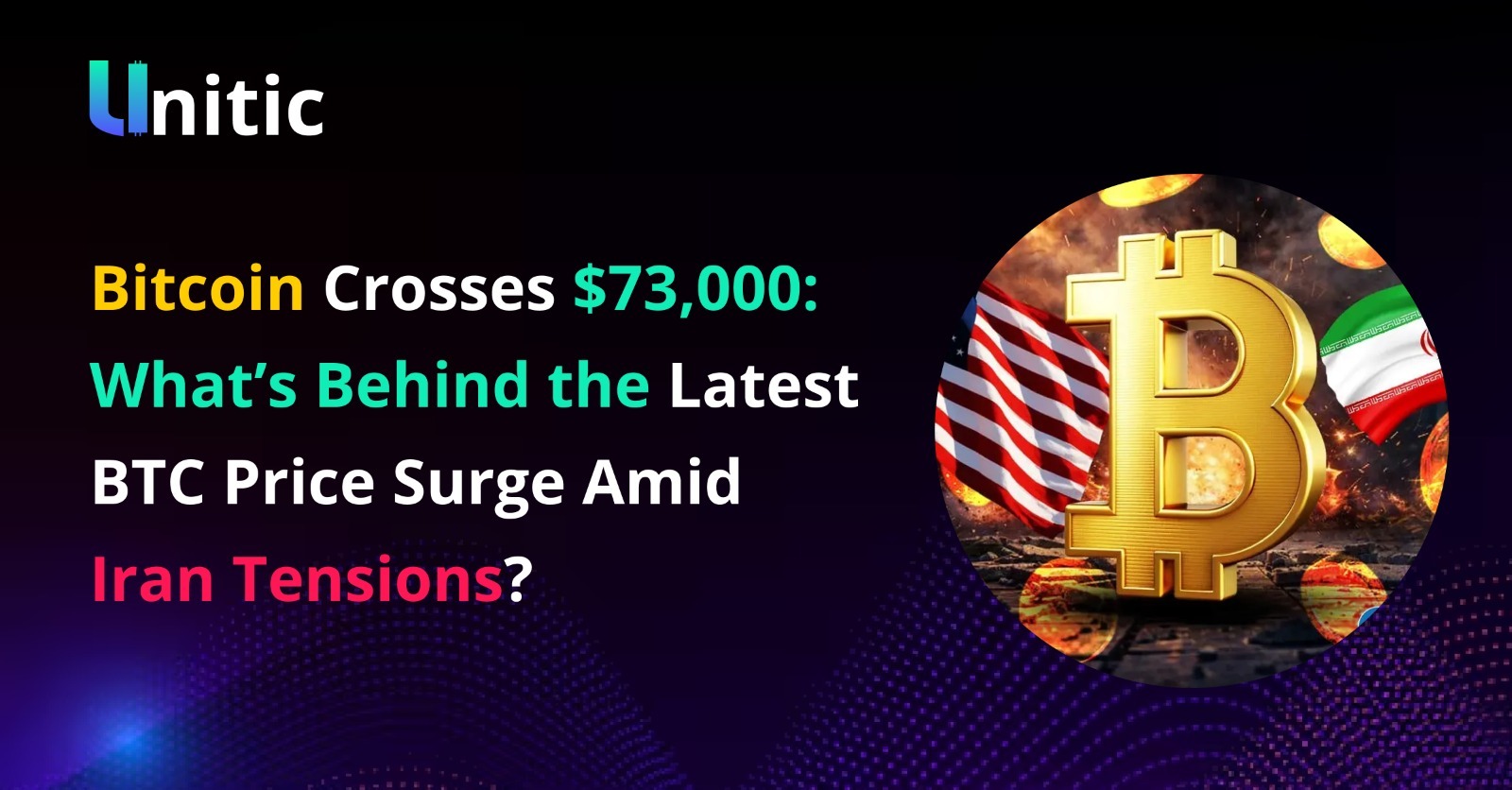
The cryptocurrency market witnessed a major milestone as the Bitcoin price surged past $73,000, marking one of the strongest rallies in recent months. This latest BTC price surge comes at a time when global financial markets are closely monitoring geopolitical developments involving Iran, alongside shifting macroeconomic expectations and institutional investment trends. Traditionally, periods of geopolitical instability trigger risk-off behavior, where investors move away from volatile assets and toward perceived safe havens. However, Bitcoin’s recent performance appears to challenge that pattern.
While equities and commodities reacted cautiously to headlines from the Middle East, Bitcoin demonstrated notable resilience. Instead of sustaining a prolonged decline, the digital asset rebounded sharply and broke above critical resistance levels. This development has raised important questions among investors and analysts alike. Is Bitcoin gradually evolving into a geopolitical hedge? What underlying factors are driving the current BTC price surge? And perhaps most importantly, can this upward momentum continue in the near term?
To understand the implications of this move, it is essential to analyze not only the geopolitical backdrop but also the structural and technical drivers supporting the rally. The recent breakout is not occurring in isolation; it reflects broader changes in market participation, liquidity flows, and investor psychology.
Bitcoin Price Crosses $73,000: Understanding the Breakout
The breakout above $73,000 followed a period of heightened volatility. As tensions escalated in the Middle East, risk assets initially experienced pressure. Bitcoin briefly dipped as traders responded to uncertainty, and derivatives markets reflected cautious positioning. However, the decline proved short-lived. Strong buying interest emerged at lower levels, signaling that investors were prepared to accumulate rather than retreat.
This shift in momentum became evident when Bitcoin approached and then cleared the $70,000–$72,000 resistance zone. These levels had previously acted as psychological and technical barriers. Once breached, buying activity intensified, pushing the Bitcoin price decisively above $73,000. Trading volumes expanded significantly during this phase, confirming broad participation rather than a thin liquidity-driven spike.
The BTC price surge also triggered liquidations in the derivatives market. Traders who had positioned for downside continuation were forced to close short positions as prices rose. This liquidation process created additional upward pressure, accelerating the rally. In many cases, short squeezes amplify existing momentum, transforming a steady climb into a sharp breakout. The move above $73,000 appears to reflect precisely such a dynamic.
Beyond technical triggers, the strength of this rally suggests that investors are focusing more on structural fundamentals than short-term geopolitical headlines. Rather than viewing Bitcoin purely as a speculative instrument, market participants increasingly evaluate it within the broader framework of portfolio diversification and digital asset adoption.
Why Did the BTC Price Surge Despite Iran Tensions?
Geopolitical tensions typically increase market uncertainty. In traditional finance, such events often prompt capital rotation into assets like government bonds, gold, or defensive equities. However, Bitcoin’s response to the Iran-related developments suggests a more nuanced shift in investor perception.
Institutional Demand and ETF Inflows
One of the primary drivers behind the recent Bitcoin price rally is sustained institutional participation. Over the past year, the emergence and growth of spot Bitcoin exchange-traded funds (ETFs) have fundamentally altered the market structure. These vehicles allow institutional and retail investors to gain exposure to Bitcoin through regulated financial products, reducing operational barriers associated with direct custody.
Consistent inflows into Bitcoin ETFs indicate that long-term capital is entering the market. Unlike speculative retail flows that often react quickly to headlines, institutional allocations tend to follow strategic asset allocation frameworks. Pension funds, asset managers, and wealth advisors increasingly view Bitcoin as a distinct asset class with diversification potential.
This structural demand provides a stabilizing influence. When short-term volatility arises, institutional buyers may treat dips as opportunities rather than exit signals. The BTC price surge above $73,000 reflects, in part, the strength of this sustained capital inflow.
Short Squeeze and Derivatives Dynamics
The derivatives market plays a crucial role in Bitcoin price discovery. When traders anticipate downside movement, they open short positions, borrowing assets to sell with the expectation of buying back at lower prices. However, if the market moves against them, they must close these positions, often at a loss.
As Bitcoin cleared resistance levels, short sellers were forced to unwind positions rapidly. This cascade of buy orders amplified upward momentum. Liquidation data suggests that a significant amount of leveraged positions were closed during the breakout, contributing to the speed and magnitude of the BTC price surge.
Such squeezes can create sharp, dramatic moves. However, it is important to distinguish between a purely squeeze-driven spike and a structurally supported rally. In this case, strong spot demand and ETF inflows suggest that the breakout was not solely dependent on derivatives dynamics.
Technical Breakout and Market Momentum
From a technical perspective, the rally above $73,000 represents a decisive breakout. Price consolidation below resistance often builds energy for a larger move. Once key levels are breached, technical traders, algorithms, and momentum-based strategies enter the market.
Indicators such as moving averages, relative strength metrics, and volume patterns turned bullish during the breakout phase. Market sentiment shifted toward a “risk-on” stance, encouraging further participation. Technical analysis does not operate in isolation but interacts with broader market narratives. When structural demand aligns with favorable technical signals, rallies can gain significant traction.
Is Bitcoin Becoming a Geopolitical Hedge?
Historically, gold has served as a store of value during geopolitical instability. Its physical scarcity and long-standing acceptance make it a traditional hedge. Bitcoin, often described as “digital gold,” shares some similar characteristics. Its supply is capped at 21 million coins, and it operates independently of central banks.
Proponents of the hedge narrative argue that Bitcoin’s decentralized and borderless nature enhances its appeal during global uncertainty. In regions facing currency instability or capital controls, digital assets can provide alternative financial access. Furthermore, the transparent and algorithmic issuance schedule of Bitcoin contrasts with the discretionary monetary policies of fiat systems.
However, skeptics point out that Bitcoin remains highly volatile. During previous periods of stress, it has sometimes traded in correlation with technology equities rather than moving inversely to risk assets. Regulatory uncertainties and evolving market structures also contribute to price fluctuations.
The recent BTC price surge does not conclusively establish Bitcoin as a geopolitical hedge. Instead, it highlights growing investor confidence in its long-term value proposition. Market participants may be viewing Bitcoin less as a speculative experiment and more as an emerging macro asset class.
Broader Crypto Market Reaction
Bitcoin often sets the tone for the broader cryptocurrency market. As the Bitcoin price climbed above $73,000, major altcoins experienced renewed buying interest. Market capitalization across the digital asset sector expanded, reflecting improved investor sentiment.
Increased risk appetite can stimulate activity in decentralized finance (DeFi), non-fungible tokens (NFTs), and blockchain infrastructure projects. However, altcoin rallies typically carry higher volatility than Bitcoin itself. While Bitcoin’s strength can lift the overall ecosystem, risk management remains essential across the market.
What Investors Should Watch Next
Despite the strength of the BTC price surge, forward-looking risks remain. Geopolitical developments are fluid, and unexpected escalations could reintroduce volatility. Investors should monitor several key factors moving forward.
First, ETF inflow consistency will be critical. Sustained institutional demand can support higher price levels, while a slowdown could temper momentum. Second, global interest rate policies influence liquidity conditions. Easing financial conditions often benefit risk assets, whereas tightening cycles can constrain capital flows.
Regulatory developments also deserve attention. Clear frameworks can encourage institutional adoption, while uncertainty may dampen enthusiasm. Finally, technical support levels around $73,000 will be closely watched. If Bitcoin consolidates above this zone, it may reinforce bullish sentiment. Conversely, a breakdown could trigger short-term corrections.
Responsible Trading and Risk Awareness
Cryptocurrency markets are inherently volatile. The rapid ascent of the Bitcoin price above $73,000 illustrates both opportunity and risk. Investors should approach such rallies with discipline and strategic planning.
Conducting independent research, understanding personal risk tolerance, and avoiding excessive leverage are essential practices. Diversification across asset classes can mitigate exposure to sudden market shifts. While platforms like Unitic Exchange offer access to Spot Trading, Futures Trading, Markets, and Signals, trading decisions should always align with individual financial objectives and risk capacity.
Cryptocurrency investments are subject to market risks. Past performance does not guarantee future results. The recent BTC price surge underscores the dynamic and evolving nature of digital asset markets. Whether Bitcoin continues its ascent or enters a consolidation phase, disciplined participation and informed decision-making remain the cornerstones of responsible investing.
As the market moves forward, one thing is clear: Bitcoin’s role in the global financial landscape is expanding. Its reaction to geopolitical events, institutional flows, and macroeconomic shifts suggests a maturing asset class navigating a complex world. The breakout above $73,000 may represent more than a price milestone—it may signal another step in the ongoing evolution of digital finance.
FAQs
The BTC price surge was driven by institutional ETF inflows, technical breakouts above resistance levels, and a short squeeze that accelerated upward momentum.
Initially, geopolitical events can cause volatility. However, in this case, investors appeared to focus more on long-term demand and institutional participation rather than reacting negatively.
Sustainability depends on continued capital inflows, macroeconomic stability, and technical support levels. Crypto markets remain volatile, and price movements can change quickly.
Bitcoin is sometimes viewed as a digital store of value due to its limited supply. However, it remains volatile and does not always behave like traditional safe-haven assets.
Investors should assess market volatility, avoid emotional decisions, understand leverage risks, and ensure proper risk management strategies before entering any position.






Your Crypto Gateway


Unitic Exchange
All rights reserved 2026