RWA 2.0 Explained: The Future of Real-World Asset Tokenization
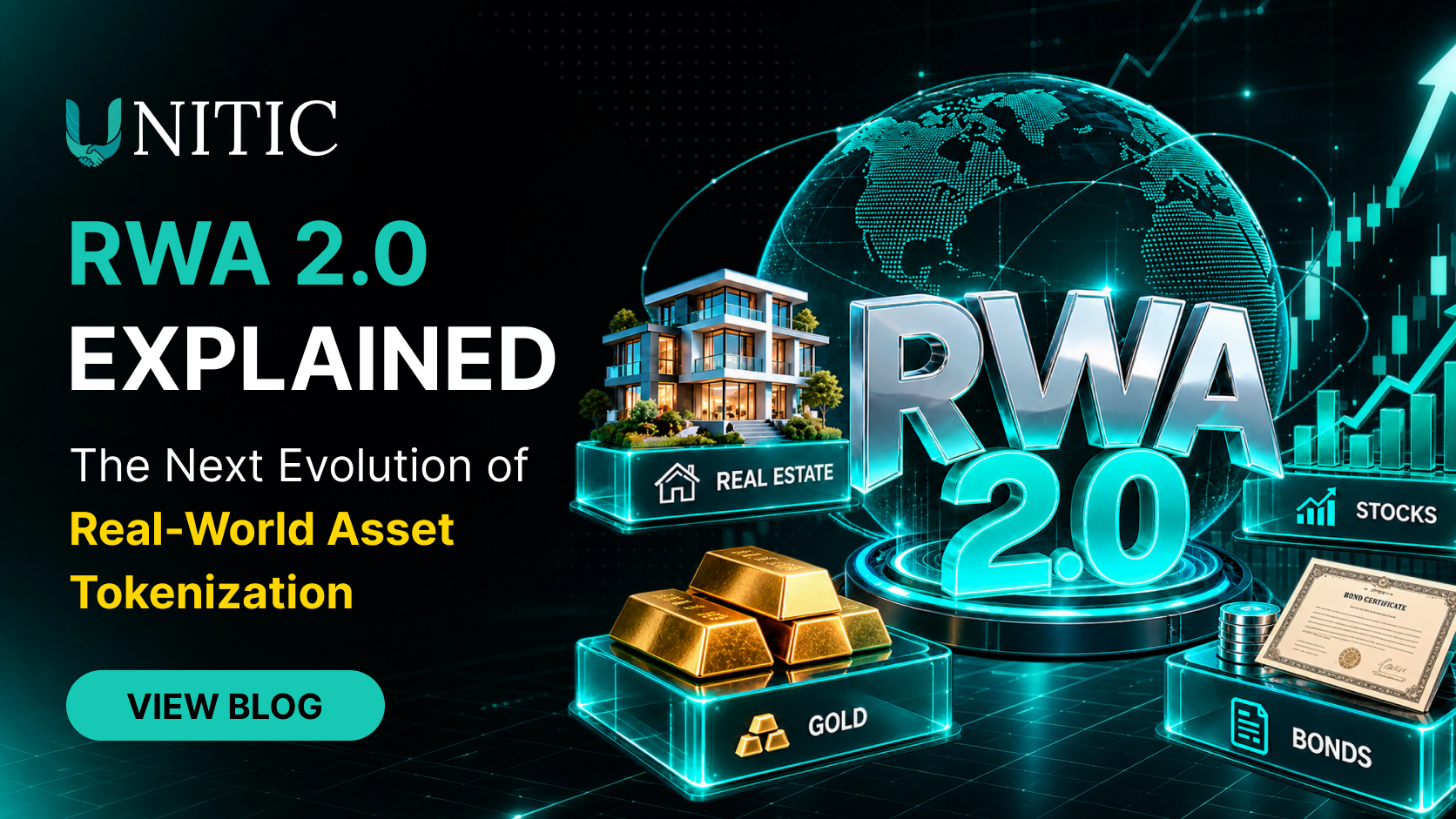
Real-world asset tokenization is moving into a new phase.
The first wave of tokenization focused on a relatively simple idea: take an asset that exists in the traditional financial system and represent ownership, economic rights, or exposure to that asset through blockchain-based tokens.
That idea has already gained significant traction.
Tokenized U.S. Treasuries, money-market funds, private credit, commodities, equities, bonds, and other financial instruments are increasingly appearing on blockchain networks. By 2026, tokenization has moved beyond being purely an experimental concept. Market research shows substantial growth in on-chain real-world assets, while institutional participants are increasingly exploring blockchain-based financial infrastructure.
But simply putting an asset on a blockchain is not enough.
The next question is:
What happens after an asset is tokenized?
Can it be traded efficiently? Can it move across networks? Can it be used as collateral? Can investors access it through familiar financial platforms? Can compliance rules be embedded into the asset? Can it interact with decentralized finance? Can its ownership and underlying value be verified?
These questions define what many industry participants increasingly describe as the next phase of tokenization: RWA 2.0.
RWA 2.0 is not necessarily a single protocol, platform, or technical standard. Instead, it describes a broader evolution from basic asset tokenization toward a complete, programmable and usable financial ecosystem.
For crypto exchanges such as Unitic Exchange, this evolution is particularly important because exchanges sit at the intersection of digital assets, liquidity, market access, trading infrastructure, and the growing connection between traditional and blockchain-based finance.
In this article, we explain what RWA 2.0 means, how it differs from the first generation of RWA tokenization, why liquidity and interoperability matter, the major asset classes involved, and how crypto exchanges can participate in the emerging on-chain financial ecosystem.
What Is RWA Tokenization?
RWA stands for Real-World Assets.
In finance and blockchain, an RWA generally refers to an asset or financial claim that originates outside a blockchain but is represented or connected to blockchain infrastructure.
Examples can include:
- Government bonds
- Treasury bills
- Corporate bonds
- Private credit
- Real estate
- Commodities
- Gold
- Equities
- Exchange-traded funds
- Investment funds
- Invoices and receivables
- Intellectual property
- Other financial claims
Tokenization involves creating a blockchain-based representation of an asset, ownership interest, claim, or economic exposure.
For example, imagine a traditional financial asset worth $1 million.
Instead of maintaining its entire ownership and transfer process through conventional databases and intermediaries, an issuer could establish a legal structure connecting the asset to blockchain-based tokens.
Those tokens might then contain or represent specific rights related to the underlying asset.
The blockchain can potentially provide:
- Programmable ownership
- Transparent transaction records
- Faster settlement
- Automated compliance rules
- Fractional ownership
- Digital transfer mechanisms
- Interoperability with blockchain applications
- Programmable financial logic
However, tokenization does not automatically make an asset more valuable, more liquid, or less risky.
That distinction is fundamental to understanding RWA 2.0.
RWA 1.0 vs. RWA 2.0
The easiest way to understand RWA 2.0 is to compare it with the first generation of tokenization.
RWA 1.0: Put the Asset On-Chain
The primary question in RWA 1.0 was:
Can we represent this real-world asset using blockchain technology?
The focus was therefore on issuance.
A financial institution or tokenization platform could take an asset and create a blockchain-based representation of it.
The main benefits included:
- Digital ownership records
- Faster settlement
- Transparency
- Fractionalization
- Reduced administrative processes
- Programmability
This was an important technological breakthrough.
But many early tokenized assets had a fundamental limitation: they were not particularly active after issuance.
A token could exist on a blockchain without having deep liquidity, broad distribution, secondary-market access, or integration with other financial applications.
That leads us to RWA 2.0.
RWA 2.0: Make the Asset Useful
RWA 2.0 asks a much bigger question:
What can the token do after it has been created?
The emphasis shifts from tokenization alone to utility and financial infrastructure.
An RWA 2.0 ecosystem could include:
- Token issuance
- Compliance
- Custody
- Trading
- Liquidity
- Secondary markets
- Cross-chain transfers
- DeFi integration
- Collateralization
- Lending
- Automated settlement
- Portfolio management
- Real-time data
- Institutional access
This represents an important change in mindset.
RWA 1.0 was about putting assets on-chain.
RWA 2.0 is about making on-chain assets work.
Research published in 2026 increasingly highlights this distinction. Although tokenized asset values have grown significantly, issuance alone does not guarantee active markets. The next stage therefore depends heavily on liquidity, usability, integration, and capital activation.
Why RWA 2.0 Matters
Traditional financial markets are enormous, but they often operate through fragmented infrastructure.
Different institutions may use different:
- Databases
- Custodians
- Settlement systems
- Exchanges
- Brokers
- Registrars
- Compliance processes
- Reporting systems
Blockchain technology introduces the possibility of creating programmable financial infrastructure that can operate continuously.
That could eventually make financial assets:
More programmable
Rules can potentially be encoded into smart contracts.
More transparent
Blockchain networks can provide auditable transaction histories, subject to the structure and permissions of the system.
More accessible
Digital assets can potentially be distributed through online financial platforms and wallets.
More composable
A tokenized asset can potentially interact with other blockchain-based applications.
More automated
Certain settlement, compliance, reporting, and transfer processes can be automated.
But there is a major caveat.
Blockchain infrastructure is only one part of the equation.
The legal rights attached to an RWA, the quality of the underlying asset, custody arrangements, pricing, regulatory framework, investor eligibility, and market liquidity remain critical.
RWA 2.0 is therefore not simply a blockchain upgrade.
It is an infrastructure upgrade for financial markets.
The Five Pillars of RWA 2.0
RWA 2.0 can be understood through five major pillars.
1. Liquidity
Tokenization without liquidity can create digital representations that are difficult to trade.
This is one of the biggest challenges facing the RWA industry.
A tokenized asset may exist on-chain, but that does not mean buyers and sellers will automatically appear.
For an RWA market to become useful, participants need:
- Buyers
- Sellers
This is where exchanges can become particularly important.
2. Compliance by Design
Traditional financial assets operate within regulatory frameworks.
Tokenization does not eliminate those requirements.
If a token represents a regulated security, fund interest, debt instrument, or other regulated financial product, the legal and regulatory characteristics remain important.
RWA 2.0 therefore places greater emphasis on compliance by design.
Instead of treating compliance as a separate process that happens after token issuance, future tokenized systems can potentially integrate requirements into the asset's infrastructure.
3. Interoperability
The future of tokenization is unlikely to consist of one blockchain.
Instead, multiple blockchain networks and financial systems may coexist.
That creates an interoperability challenge.
Imagine a tokenized asset issued on Blockchain A.
A financial application operates on Blockchain B.
An investor holds assets on Blockchain C.
A centralized exchange operates infrastructure connected to multiple networks.
How does the asset move between these environments?
Interoperability becomes critical.
-
Composability
One of blockchain's most powerful concepts is composability.
A tokenized asset does not necessarily have to remain isolated.
If the asset's structure and regulatory framework allow it, it could potentially interact with other blockchain-based applications.
For example, a tokenized financial asset could potentially become:
- Collateral
- A lending asset
- A settlement asset
- A treasury-management instrument
- A portfolio component
- A source of yield
- A liquidity asset
This is one reason tokenized Treasuries and other yield-bearing instruments have attracted attention.
Instead of simply holding an asset, investors and institutions may eventually use tokenized financial assets as programmable building blocks.
This creates the possibility of a more interconnected financial system.
5. Real Utility
The final pillar is arguably the most important.
Tokenization needs a reason to exist.
A token should ideally solve a meaningful problem.
RWA 2.0 is therefore about moving from tokenized representation to financial utility.
Which Assets Are Leading the RWA 2.0 Revolution?
Not every asset class will evolve at the same speed.
Some assets are naturally better suited to tokenization than others.
Tokenized Treasuries
Government securities and money-market products have become one of the strongest areas of the RWA market.
Why?
Because investors understand them.
They have established valuation frameworks, institutional demand, and existing financial infrastructure.
Tokenization can potentially make these instruments more compatible with digital asset ecosystems.
CoinGecko's 2026 RWA research identified tokenized Treasuries as the largest tokenized RWA category at the end of Q1 2026, although other categories such as commodities and tokenized equities were also expanding.
Where Unitic Exchange Fits Into the Digital Asset Evolution
Unitic Exchange is an Indian digital-asset trading platform operated by Unitic Private Limited.
Its public platform materials describe services including spot trading, futures trading, OTC services, token listing, and other digital-asset products and services. Unitic's terms describe the platform as providing access to a digital-assets exchange, including trading, deposits and withdrawals, and digital-asset custody.
Unitic's public materials also identify the company as an FIU-registered reporting entity in India and emphasize KYC and compliance processes.
This positioning is relevant to the broader RWA 2.0 conversation because exchanges can become an important part of the infrastructure connecting users with an increasingly diverse digital-asset ecosystem.
The important point is that RWA 2.0 does not mean every crypto exchange automatically becomes an RWA exchange.
The Biggest Challenges Facing RWA 2.0
Despite the potential, RWA 2.0 has significant challenges.
1. Regulation
Financial regulation differs across countries and asset classes.
A tokenized security may face very different requirements from a tokenized commodity or utility asset.
Projects must carefully consider:
- Securities laws
- KYC/AML
- Investor eligibility
- Licensing
- Custody
- Taxation
- Cross-border transfers
- Data protection
Regulatory clarity will be a major driver of institutional adoption.
2. Liquidity Fragmentation
Creating multiple tokenized versions of similar assets can fragment liquidity.
If one tokenized Treasury product operates on one blockchain and another operates on a different blockchain, investors may face fragmented markets.
Interoperability and standardized infrastructure could help address this challenge.
3. Oracle and Pricing Risk
Many tokenized assets require reliable external data.
For example:
- Stock prices
- Gold prices
- Interest rates
- NAVs
- Credit information
Incorrect or delayed data can create problems.
RWA 2.0 therefore requires strong data infrastructure in addition to strong blockchain infrastructure.
4. Custody
Who actually owns the underlying asset?
Where is it held?
Who controls it?
What happens if the issuer becomes insolvent?
These questions are essential.
A blockchain token cannot independently guarantee the quality or existence of an off-chain asset.
The connection between the token and the real-world asset must be legally and operationally robust.
5. Smart Contract Risk
Tokenization introduces software into financial infrastructure.
That creates potential risks involving:
- Bugs
- Exploits
- Oracle manipulation
- Private-key compromise
- Governance attacks
- Upgrade mechanisms
Security therefore becomes a core part of RWA infrastructure.
Why RWA 2.0 Could Be Bigger Than Tokenization
It is easy to think of RWA 2.0 as simply "more assets on blockchain."
That would underestimate the opportunity.
The larger idea is the transformation of financial infrastructure.
Traditional financial assets could increasingly become:
Digital
Represented using programmable infrastructure.
Interoperable
Able to interact with multiple financial networks.
Programmable
Controlled by predefined rules.
Composable
Integrated with other financial applications.
Accessible
Distributed through digital financial platforms.
Automated
Supported by smart contracts and digital workflows.
This represents a potential transition from digitized finance to programmable finance.
What RWA 2.0 Could Look Like in Practice
Consider a hypothetical future investor.
They hold stablecoins in a digital wallet.
They use a regulated platform to purchase a tokenized Treasury product.
The asset generates a return based on the underlying instrument.
The token can potentially be transferred within the permitted ecosystem.
The investor could potentially use the token as collateral for an eligible digital loan.
They could later sell it through a supported secondary market.
Settlement happens through blockchain infrastructure.
The entire process could be tracked digitally.
This is fundamentally different from the traditional process of:
Bank → Broker → Custodian → Clearing system → Settlement system → Bank.
The future may not completely eliminate traditional intermediaries.
Instead, it could create a hybrid financial system where traditional institutions and blockchain infrastructure work together.
RWA 2.0 and the Future of Crypto Exchanges
The crypto exchange industry is also evolving.
Early exchanges primarily focused on:
Bitcoin and cryptocurrency trading.
Then the market expanded into:
- Stablecoins
- DeFi
- Futures
- Options
- Staking
- OTC markets
- Institutional trading
- Token launches
- Structured products
The next phase could involve greater integration between crypto markets and tokenized traditional assets.
This could eventually produce platforms where users can interact with multiple categories of digital financial instruments.
For exchanges such as Unitic Exchange, this broader trend reinforces the importance of building reliable digital-asset infrastructure, strong compliance processes, secure custody, liquidity, and user-friendly market access.
Unitic's current public product ecosystem includes spot trading, futures, OTC services, token listing and related digital-asset services, providing a foundation within the broader digital-asset market.
RWA 2.0: What Investors Should Look For
As the RWA market grows, investors should look beyond attractive token names and headline market sizes.
Before considering a tokenized asset, ask:
What does the token actually represent?
Is it direct ownership, a beneficial interest, a derivative, a claim against an issuer, or something else?
Who holds the underlying asset?
Understand the custody arrangement.
Is the asset regulated?
Check the relevant jurisdiction and regulatory structure.
How is the asset valued?
Look for credible pricing or NAV mechanisms.
Is there real liquidity?
A token may be technically tradable without having meaningful liquidity.
What are the redemption rules?
Understand how and when investors can exit.
Can the token be transferred?
Some tokenized assets may have significant transfer restrictions.
Who is the issuer?
Research the entity responsible for the product.
What happens if the issuer fails?
Understand the legal claim on the underlying assets.
Is the technology secure?
Smart contracts, bridges, wallets, and oracles can introduce additional risks.
The most important lesson is simple:
Tokenization does not remove investment risk. It changes the infrastructure through which an asset can be issued, owned, transferred, and used.
The Future: From RWA to an On-Chain Financial System
The first chapter of RWA tokenization was about proving that real-world assets could be represented on blockchain networks.
The next chapter is about making those assets useful.
This could lead to an ecosystem where:
- Bonds become programmable
- Funds become digitally transferable
- Commodities become blockchain-native representations
- Equities gain digital distribution channels
- Credit becomes more transparent
- Collateral becomes more mobile
- Settlement becomes more automated
- Financial markets become increasingly interconnected
That is the real promise of RWA 2.0.
It is not simply about creating more tokens.
It is about creating better financial infrastructure.
How Unitic Exchange Can Participate in the RWA Evolution
As the digital-asset ecosystem develops, platforms such as Unitic Exchange can play a role in the broader transition toward increasingly sophisticated digital markets.
Unitic Exchange provides users with access to cryptocurrency trading and related services, including spot trading, futures and OTC services. Its public materials also emphasize KYC and compliance processes.
The wider RWA opportunity could eventually create additional areas for exchanges to explore, depending on applicable regulations, product structures, and platform capabilities.
These may include:
- Digital distribution
- Tokenized-asset trading
- Institutional liquidity
- OTC settlement
- Stablecoin markets
- Digital custody
- Cross-market access
- Token listing infrastructure
The important opportunity is not simply to add another category of tokens.
It is to build infrastructure that makes digital financial markets easier to access, understand, and use.
That philosophy aligns with may be the gradual convergence of traditional finance and digital the broader direction of RWA 2.0.
Conclusion: RWA 2.0 Is About What Happens After Tokenization
Real-world asset tokenization has already demonstrated that blockchain technology can represent and transfer exposure to assets originating in traditional finance.
But tokenization is only the beginning.
The next phase is about what happens after the asset comes on-chain.
Can it be traded?
Can it generate utility?
Can it be used as collateral?
Can it connect with other financial applications?
Can it move across networks?
Can compliance be embedded into its lifecycle?
Can investors access it through reliable digital platforms?
These questions define RWA 2.0.
The evolution is therefore moving from:
Token creation → Market infrastructure
Asset representation → Asset utility
Issuance → Liquidity
Blockchain experimentation → Financial integration
As this transition continues, exchanges, custodians, financial institutions, blockchain networks, stablecoin issuers, asset managers, and technology providers will all have a role to play.
For users and investors, the most important change may be the gradual convergence of traditional finance and digital assets.
The future financial system may not be entirely traditional finance or entirely decentralized finance.
Instead, it may be a combination of both.
And RWA 2.0 could be one of the technologies that connects these worlds.
Explore the evolving digital-asset ecosystem with Unitic Exchange: Visit Unitic Exchange
Disclaimer: This article is for educational and informational purposes only and does not constitute financial, investment, legal, tax, or trading advice. Digital assets and tokenized assets can involve substantial risk, including loss of capital. Product availability, regulatory status, eligibility requirements, fees and trading conditions may change. Readers should conduct their own research and consult qualified professional advisers where appropriate. Always verify the official Unitic Exchange website before accessing an account or conducting transactions.
FAQs
RWA 2.0 refers to the next stage of real-world asset tokenization, where the focus moves beyond simply putting assets on a blockchain toward liquidity, interoperability, compliance, composability, trading, collateral use, and real-world financial utility.
RWA 1.0 primarily focused on tokenizing real-world assets. RWA 2.0 focuses on building the infrastructure that makes those tokenized assets usable after issuance, including markets, liquidity, DeFi integration, compliance, custody, and interoperability.
Potentially many assets can be represented through blockchain-based tokens, including Treasuries, bonds, commodities, equities, funds, private credit, real estate and other financial claims. However, the legal structure and regulatory requirements vary by asset and jurisdiction.
No. Tokenization does not eliminate investment, market, credit, liquidity, regulatory, custody, technology, or counterparty risks.
A tokenized asset has limited practical utility if investors cannot efficiently buy or sell it. RWA 2.0 therefore places significant emphasis on secondary markets, exchange infrastructure, market makers and liquidity.
Crypto exchanges can potentially provide trading, liquidity, custody, market access, stablecoin markets, OTC services and distribution infrastructure for eligible digital and tokenized assets, subject to applicable regulations.
Unitic Exchange is a digital-asset trading platform offering services including spot trading, futures and OTC services. Its current public materials should be consulted for the latest products and supported assets. The broader RWA opportunity represents a developing area of the digital-asset industry rather than a claim that every RWA product is currently available through Unitic Exchange.
RWA tokenization could make financial assets more programmable, transferable and interoperable while potentially improving settlement and market access. Its long-term impact will depend on regulation, liquidity, infrastructure, asset quality and actual adoption.

Your Crypto Gateway


Unitic Exchange
All rights reserved 2026