US Federal Reserve Interest Rates and Bitcoin: What Crypto Traders Need to Know
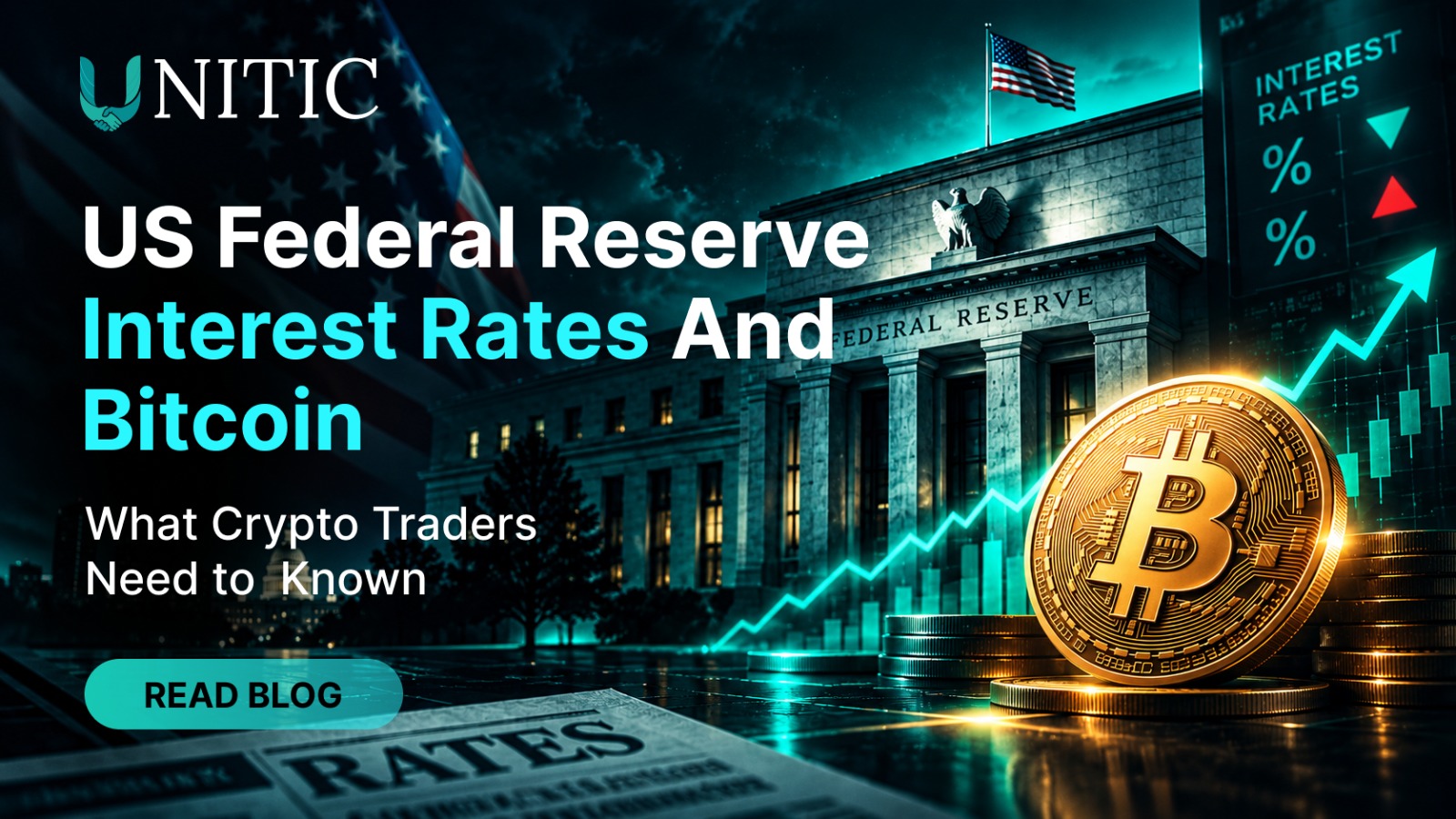
The relationship between US Federal Reserve interest rates and Bitcoin has become increasingly important for cryptocurrency traders, investors, and businesses. Although Bitcoin operates on a decentralized network and is not directly controlled by any central bank, its market price is influenced by the broader financial environment in which it trades.
Among the most important macroeconomic factors affecting Bitcoin are interest rates, liquidity, inflation expectations, the U.S. dollar, and investor risk appetite. Decisions made by the U.S. Federal Reserve, commonly known as the Fed, can therefore have significant implications for cryptocurrency markets.
When the Federal Reserve raises interest rates, borrowing becomes more expensive and financial conditions can become tighter. Investors may become more selective about risk, and assets such as Bitcoin can experience increased selling pressure. Conversely, when the Fed lowers rates or signals a more accommodative monetary policy, liquidity and risk appetite can improve, potentially creating a more supportive environment for Bitcoin and other cryptocurrencies.
However, the relationship is not always immediate or predictable. Bitcoin is influenced by numerous factors at the same time, including institutional demand, market liquidity, regulation, network activity, investor positioning, and global economic conditions.
For crypto traders, understanding how Federal Reserve policy interacts with Bitcoin can provide valuable context for interpreting market movements and managing risk.
What Is the Federal Reserve?
The U.S. Federal Reserve is the central bank of the United States. Its responsibilities include conducting monetary policy, promoting maximum employment and stable prices, supervising certain financial institutions, and helping maintain financial stability.
One of the Fed's most closely watched tools is the federal funds rate.
The federal funds rate influences the cost of short-term borrowing between financial institutions and has broader effects on interest rates throughout the economy.
When the Fed changes its policy rate, the effects can extend beyond traditional banking.
Mortgage rates, business borrowing costs, bond yields, savings rates, currency markets, equity valuations, and investor risk appetite can all respond to changes in monetary policy.
Because Bitcoin trades in a global financial environment that is heavily influenced by U.S. monetary conditions, Federal Reserve decisions can become important catalysts for crypto markets.
Why Do Interest Rates Matter to Bitcoin?
Bitcoin does not generate traditional interest income.
This makes its relative attractiveness partly dependent on the returns available from other assets.
When interest rates are high, investors can potentially earn relatively attractive returns from cash, Treasury securities, and other interest-bearing instruments.
Holding Bitcoin then involves a higher opportunity cost.
An investor choosing Bitcoin instead of a relatively low-risk interest-bearing asset is giving up the potential income that the alternative investment provides.
When interest rates fall, that opportunity cost can decrease.
Investors may become more willing to allocate capital to assets with greater potential returns, including equities, real estate, and cryptocurrencies.
This is one reason changes in monetary policy can influence Bitcoin demand.
How Rate Hikes Can Affect Bitcoin
When the Federal Reserve raises interest rates, financial conditions generally become tighter.
Higher rates can reduce borrowing and spending, strengthen the appeal of interest-bearing assets, and potentially reduce the amount of capital flowing toward speculative investments.
Bitcoin can experience pressure in this environment.
Investors may reduce cryptocurrency exposure and move capital toward cash or fixed-income assets.
Higher rates can also strengthen the U.S. dollar, depending on market expectations and economic conditions.
Because Bitcoin is commonly priced in U.S. dollars, significant dollar strength can create additional headwinds for BTC.
However, a rate hike doesn't automatically mean Bitcoin will decline.
Markets respond to expectations as well as actual decisions.
If investors expected a 0.25 percentage-point rate increase and the Fed delivers exactly that, Bitcoin may barely react because the decision was already priced into the market.
A larger-than-expected increase or unexpectedly hawkish guidance could create a stronger reaction.
How Rate Cuts Can Affect Bitcoin
Rate cuts can create a more supportive environment for risk assets.
When borrowing costs decline, financial conditions can become easier.
Investors may have greater incentive to seek returns outside traditional low-risk assets.
This can benefit assets such as stocks and cryptocurrencies.
Lower rates can also reduce the opportunity cost of holding Bitcoin.
If investors can earn less from cash and short-term government securities, they may become more willing to allocate part of their portfolios toward higher-risk assets.
However, traders should not assume that every rate cut is bullish for Bitcoin.
The reason behind the rate cut matters.
If the Fed cuts rates because inflation is falling while economic growth remains relatively stable, markets may interpret the decision positively.
If the Fed cuts rates because the economy is entering a severe recession or financial crisis, investors may initially sell Bitcoin and other risk assets despite lower interest rates.
The market's interpretation is therefore more important than the rate change alone.
The Importance of Federal Reserve Expectations
One of the most important concepts for crypto traders is that markets are forward-looking.
Bitcoin prices don't simply respond to what the Federal Reserve does today.
They respond to expectations about what the Fed will do next.
Suppose traders believe the Fed will begin cutting rates several months from now.
Bitcoin could begin responding to that expectation before the first rate cut actually occurs.
Similarly, if inflation data suggests that the Fed may keep rates higher for longer, Bitcoin could come under pressure before any official policy announcement.
This makes economic data particularly important.
Traders often monitor:
- Inflation reports
- Employment data
- GDP growth
- Consumer spending
- Wage growth
- Federal Reserve statements
- Fed meeting minutes
- Speeches from Fed officials
- Treasury yields
- U.S. dollar movements
These indicators can change expectations about future monetary policy.
Inflation and Bitcoin
Inflation is closely connected to Federal Reserve policy.
The Fed generally seeks to maintain price stability, and inflation trends play a major role in determining monetary policy.
When inflation is persistent, the Fed may maintain higher interest rates or use other measures to tighten financial conditions.
This can create challenges for Bitcoin.
Some investors view Bitcoin as protection against long-term currency debasement because its supply is algorithmically limited.
However, Bitcoin's short-term price behavior can be quite different.
Higher inflation can lead to higher interest rates.
Higher interest rates can reduce liquidity and risk appetite.
Therefore, Bitcoin can decline during periods of high inflation even though some investors view its fixed supply as an attractive long-term monetary characteristic.
This distinction between long-term monetary properties and short-term market behavior is important.
The Federal Funds Rate and Crypto Liquidity
Liquidity is one of the most important drivers of financial markets.
When financial conditions are loose, capital can move more easily into risk assets.
When conditions tighten, investors may become more defensive.
Bitcoin is particularly sensitive to changes in liquidity because it is a relatively high-volatility asset.
A liquidity-driven market can therefore create significant movements in BTC.
When traders expect monetary easing, Bitcoin may benefit from expectations of increased liquidity.
When traders expect tighter conditions, Bitcoin may experience selling pressure.
However, global liquidity matters too.
The Federal Reserve is extremely influential, but it isn't the only central bank affecting financial markets.
European, Asian, and emerging-market monetary policies can also influence global capital flows.
Bitcoin and the U.S. Dollar
The relationship between Bitcoin and the U.S. dollar is another important factor.
Bitcoin is generally quoted in dollars on major exchanges.
When the dollar strengthens significantly, dollar-priced assets can face pressure because they become more expensive for holders of other currencies.
A stronger dollar can also indicate tighter global financial conditions.
Conversely, a weaker dollar can create a more supportive environment for certain risk assets.
The relationship isn't constant.
Bitcoin can rise while the dollar strengthens and fall while the dollar weakens.
Traders should therefore treat the dollar as one factor among many rather than a standalone predictor.
Bitcoin and Treasury Yields
U.S. Treasury yields are closely watched by financial markets because they provide a reference point for relatively low-risk dollar-denominated returns.
When Treasury yields rise, investors may become less willing to take additional risk.
For example, if short-term government securities offer attractive yields, investors may have less incentive to hold highly volatile assets.
When yields fall, the relative attractiveness of risk assets can increase.
Bitcoin can respond to these changes because institutional investors increasingly consider cryptocurrency alongside other asset classes.
This doesn't mean Bitcoin moves perfectly in the opposite direction of Treasury yields.
Market conditions, inflation expectations, economic growth, and investor positioning can all change the relationship.
Why Fed Meetings Matter to Crypto Traders
Federal Reserve meetings are major events for financial markets.
Traders closely monitor both the policy decision and the language used by Fed officials.
A statement that indicates rates may remain high for an extended period can trigger a risk-off reaction.
A statement suggesting that monetary easing may be approaching can produce the opposite response.
For crypto traders, the most important information may not be the current interest rate.
It may be the Fed's outlook.
This is why experienced traders often pay attention to the entire communication package rather than focusing solely on the headline rate decision.
What Does "Hawkish" Mean?
A hawkish Federal Reserve generally prioritizes controlling inflation and maintaining tighter monetary conditions.
A hawkish message can include expectations for:
- Higher rates
- Fewer rate cuts
- Tighter liquidity
- Persistent inflation concerns
- Stronger restrictions on financial conditions
Such conditions can be challenging for Bitcoin and other speculative assets.
If traders expected monetary easing but receive a hawkish surprise, cryptocurrency markets can react quickly.
This is one reason Bitcoin can experience substantial volatility around major central-bank announcements.
What Does "Dovish" Mean?
A dovish Federal Reserve generally indicates a greater willingness to support economic activity through easier monetary conditions.
A dovish outlook can involve:
- Lower interest rates
- Potential future rate cuts
- Greater liquidity
- Reduced concern about inflation
- Greater focus on economic growth
This can create a more favorable environment for risk assets.
Bitcoin may respond positively if traders believe that easier financial conditions will increase liquidity and investment demand.
Again, the actual outcome depends on the broader economic environment.
Why Bitcoin Doesn't Always Follow the Fed
Although Federal Reserve policy is important, Bitcoin has its own supply-and-demand dynamics.
Bitcoin's supply is governed by its protocol rather than by central-bank decisions.
The network has a maximum supply of 21 million BTC.
Bitcoin's market can therefore respond to factors that have little direct connection to U.S. interest rates.
These include:
- Bitcoin ETF flows
- Institutional adoption
- Regulatory developments
- Mining economics
- Network activity
- Halving events
- Corporate treasury demand
- Exchange liquidity
- Derivatives positioning
- Global cryptocurrency adoption
Because multiple forces operate simultaneously, Bitcoin can rise during a hawkish Fed environment or decline during a dovish environment.
There is no simple one-to-one relationship.
The Role of Institutional Investors
Institutional participation has changed the cryptocurrency market considerably.
Professional investment firms can allocate capital across multiple asset classes.
When monetary policy changes, these investors may rebalance portfolios based on expected returns and risk.
For example, if Treasury yields become more attractive, institutional investors may reduce allocations to higher-risk assets.
If monetary conditions become more accommodative, they may increase exposure to risk assets.
As institutional participation in Bitcoin increases, the cryptocurrency market may become more connected to traditional macroeconomic factors.
This doesn't eliminate Bitcoin's unique characteristics.
Instead, it adds another layer of market behavior.
How Crypto Traders Can Prepare for Fed Decisions
Traders should avoid treating Federal Reserve announcements as guaranteed trading signals.
Instead, they can prepare by understanding the market's expectations.
Before a Fed meeting, traders may review current expectations for rates and monetary policy.
They can also monitor economic indicators that could change those expectations.
Risk management is particularly important because Bitcoin can experience rapid price movements when major economic announcements occur.
Traders may consider reducing excessive leverage, defining entry and exit levels in advance, and avoiding positions that could create unacceptable losses during unexpected volatility.
The objective should be to manage uncertainty rather than attempt to predict every market reaction.
The Difference Between "Priced In" and a Surprise
One of the most important concepts in financial markets is the difference between expectations and reality.
Suppose the market expects the Federal Reserve to cut rates.
If the Fed cuts rates exactly as expected, Bitcoin may not move dramatically.
But if the Fed unexpectedly keeps rates unchanged, traders may interpret the decision as hawkish.
Bitcoin could react sharply.
The opposite can also happen.
If markets expect no rate cut and the Fed unexpectedly cuts rates, Bitcoin may experience a strong positive reaction.
Therefore, traders should focus on the surprise component.
The question isn't simply:
"Did the Fed raise or lower rates?"
The more useful question is:
"Was the Fed's decision more hawkish or dovish than the market expected?"
How Employment Data Can Affect Bitcoin
Employment data can influence Bitcoin indirectly by changing expectations about Federal Reserve policy.
Strong employment and wage growth can indicate a resilient economy.
If this also contributes to persistent inflation, traders may expect the Fed to maintain higher rates.
That can create pressure on risk assets.
Weak employment data can increase expectations of monetary easing.
However, extremely weak economic data can also create recession concerns, which may initially hurt Bitcoin and other risk assets.
This illustrates why economic indicators cannot be interpreted in isolation.
How Inflation Reports Can Move Bitcoin
Inflation reports are among the most closely watched economic releases by crypto traders.
If inflation comes in lower than expected, traders may increase expectations for future rate cuts.
This can support Bitcoin.
If inflation is higher than expected, markets may anticipate tighter monetary policy.
That can pressure Bitcoin.
The size of the surprise matters.
A small difference from expectations may produce a limited market reaction, while a significant inflation surprise can trigger substantial volatility across cryptocurrencies and traditional financial assets.
Bitcoin During a High-Rate Environment
A high-interest-rate environment creates several challenges for Bitcoin.
Investors can earn more from relatively low-risk assets.
Borrowing becomes more expensive.
Liquidity can become tighter.
Risk appetite may decline.
These conditions can reduce demand for speculative investments.
However, Bitcoin can still perform strongly during periods of elevated interest rates if other factors create sufficient demand.
For example, strong institutional buying, favorable regulatory developments, increasing adoption, price predictor or changes in market expectations can offset macroeconomic headwinds.
Therefore, interest rates should be viewed as an important variable rather than a guaranteed price predictor.
Bitcoin During a Low-Rate Environment
Low-interest-rate environments can be supportive of risk assets because investors have fewer opportunities to generate attractive returns from low-risk instruments.
Capital may move toward equities, real estate, technology investments, and cryptocurrencies.
Bitcoin can benefit from increased liquidity and risk appetite.
However, low rates alone don't guarantee a Bitcoin rally.
If investors are concerned about economic weakness, they may still prefer cash or defensive assets.
Market sentiment remains critical.
What Crypto Traders Should Watch Besides Interest Rates
Focusing exclusively on the Federal Reserve can lead to an incomplete understanding of Bitcoin.
Crypto traders should also monitor developments within the digital-asset market.
Bitcoin exchange-traded products, institutional flows, regulatory decisions, network activity, mining conditions, stablecoin liquidity, derivatives markets, and broader adoption can all influence price.
Global monetary policy also matters.
The European Central Bank, Bank of Japan, Bank of England, and other central banks influence global liquidity.
Bitcoin is a global asset.
Its market therefore cannot provide access to Bitcoin and other digital assets, but traders should evaluate an exchange based on factors such as security, liquidity, trading fees, available markets, and be explained entirely by U.S. monetary policy.
How Federal Reserve Policy Can Affect Altcoins
Bitcoin isn't the only cryptocurrency affected by monetary policy.
Altcoins can sometimes experience even greater sensitivity to changes in risk appetite.
When liquidity increases and traders become more willing to accept risk, capital can move from Bitcoin into smaller cryptocurrencies.
When financial conditions tighten, investors may move in the opposite direction.
This can cause altcoins to experience larger percentage gains and losses than Bitcoin.
For traders, this means a rate-sensitive market can create opportunities but also significantly increase risk.
Using a Crypto Exchange During Changing Rate Conditions
Access to a reliable trading platform is an important consideration for cryptocurrency traders.
A crypto exchange can provide access to Bitcoin and other digital assets, but traders should evaluate an exchange based on factors such as security, liquidity, trading fees, available markets, withdrawal policies, account protections, customer support, and applicable regulatory requirements.
Traders researching cryptocurrency exchange platforms can explore UniticExchange as part of their evaluation process.
The platform a trader chooses does not determine whether Bitcoin will rise or fall. Market risk remains with the trader.
For that reason, exchange selection and investment strategy should be considered separately.
A strong trading platform can provide market access, but effective risk management is still essential.
Risk Management Around Federal Reserve Announcements
Fed announcements can create sudden price movements.
Bitcoin may move sharply in either direction within minutes.
For leveraged traders, this can be particularly dangerous.
A relatively small price movement investor may focus more on researching digital-asset trading access. Traders should independently evaluate platform the market interest rates can influence Bitcoin through liquidity, investor risk appetite, Treasury yields, the U.S. dollar, and the opportunity cost of holding a non-yielding asset. Higher rates can make cash and fixed-income investments more attractive, potentially creating pressure on Bitcoin.
Lower rates can improve risk appetite and reduce the opportunity cost of holding BTC. However, Bitcoin is influenced by many other factors, so the relationship isn't alwaysBitcoin can benefit from expectations of lower interest rates because easier monetary conditions may increase liquidity and encourage investors to seek higher returns. However, a rate cut isn't automatically bullish. If the Fed cuts rates because of severe economic weakness or financial stress, investors may initially sell Bitcoin and other risk assets.
The market's interpretation of the reason behind the rate cut about interest rates. Persistent inflation may encourage the Fed to maintain restrictive monetary policy, which can tighten financial conditions and potentially pressure Bitcoin. Lower-than-expected inflation can increase expectations for monetary easing and may create a more supportive environment for BTC. Bitcoin's fixed supply can also influence its long-term investment narrative, although it doesn't guarantee protection can access Bitcoin and other digital assets through a crypto exchange platform that traders can research when evaluating options for cryptocurrency market access.
Before trading, users should review an exchange's security practices, fees, liquidity, supported assets, withdrawal policies, can produce substantial gains or losses when leverage is involved.
Traders should understand their maximum acceptable risk before entering a position.
Risk-management techniques can include appropriate position sizing, avoiding excessive leverage, maintaining sufficient liquidity, and having a predefined plan for unexpected volatility.
It is also important to recognize that stop-loss orders don't guarantee execution at a specific price during extreme market conditions.
The goal is not to eliminate risk.
The goal is to ensure that a single unexpected event doesn't cause unacceptable financial damage.
Long-Term Bitcoin Investors and Federal Reserve Policy
Long-term Bitcoin investors may approach Federal Reserve policy differently from short-term traders.
A trader may focus on the next Fed meeting and the immediate market reaction.
A long-term investor may focus more on Bitcoin's monetary characteristics, adoption, network development, institutional participation, and long-term supply dynamics.
Federal Reserve policy still matters because it influences the macroeconomic environment.
But long-term investors may be less concerned about short-term fluctuations caused by individual rate decisions.
This distinction is important because the investment horizon can dramatically influence how monetary-policy news should be interpreted.
Will Bitcoin Become Less Sensitive to Interest Rates?
It is difficult to know.
As Bitcoin's market matures and institutional participation increases, its relationship with traditional financial markets may become stronger.
At the same time, Bitcoin's unique supply structure and decentralized network can create independent sources of demand.
The result could be a market that responds to both macroeconomic conditions and cryptocurrency-specific developments.
Bitcoin may therefore remain sensitive to interest rates without becoming entirely dependent on them.
Final Takeaway for Crypto Traders
The relationship between US Federal Reserve interest rates and Bitcoin is important because monetary policy influences liquidity, opportunity costs, bond yields, the U.S. dollar, and overall investor risk appetite.
Higher rates can create headwinds for Bitcoin by making traditional interest-bearing assets more attractive and tightening financial conditions.
Lower rates can create a more supportive environment by reducing opportunity costs and potentially increasing liquidity.
But traders should never assume that a rate hike automatically means Bitcoin will fall or that a rate cut automatically means BTC will rise.
Market expectations matter.
Inflation matters.
Economic growth matters.
The U.S. dollar matters.
Institutional flows matter.
Crypto-specific developments matter.
The most effective approach is to view Federal Reserve policy as one component of a much larger market framework.
Traders who understand this relationship can better interpret why Bitcoin sometimes reacts strongly to economic announcements and why other times it appears relatively unaffected.
For those accessing the cryptocurrency market, UniticExchange can be explored as a crypto exchange option for researching digital-asset trading access. Traders should independently evaluate platform security, liquidity, fees, supported assets, withdrawal procedures, compliance requirements, and overall suitability before using any exchange.
Ultimately, successful crypto trading isn't about predicting every Federal Reserve decision. It is about understanding the forces driving the market, managing risk carefully, and maintaining a disciplined approach when volatility increases.
Disclaimer:
This article is for educational and informational purposes only and does not constitute financial, investment, tax, or legal advice. Cryptocurrency trading involves substantial risk, and prices can be highly volatile. Always conduct independent research and consider consulting a qualified financial professional before making investment decisions.
FAQs
Federal Reserve interest rates can influence Bitcoin through liquidity, investor risk appetite, Treasury yields, the U.S. dollar, and the opportunity cost of holding a non-yielding asset. Higher rates can make cash and fixed-income investments more attractive, potentially creating pressure on Bitcoin. Lower rates can improve risk appetite and reduce the opportunity cost of holding BTC. However, Bitcoin is influenced by many other factors, so the relationship isn't always predictable.
Bitcoin can benefit from expectations of lower interest rates because easier monetary conditions may increase liquidity and encourage investors to seek higher returns. However, a rate cut isn't automatically bullish. If the Fed cuts rates because of severe economic weakness or financial stress, investors may initially sell Bitcoin and other risk assets. The market's interpretation of the reason behind the rate cut is often more important than the rate cut itself.
Crypto traders watch Federal Reserve meetings because the Fed's decisions and communication can influence interest-rate expectations, liquidity, Treasury yields, the U.S. dollar, and investor risk appetite. Bitcoin can experience significant volatility when the Fed's decision or economic outlook differs from what the market expected.
Yes. Inflation can influence Federal Reserve decisions about interest rates. Persistent inflation may encourage the Fed to maintain restrictive monetary policy, which can tighten financial conditions and potentially pressure Bitcoin. Lower-than-expected inflation can increase expectations for monetary easing and may create a more supportive environment for BTC. Bitcoin's fixed supply can also influence its long-term investment narrative, although it doesn't guarantee protection against short-term inflation or market declines.
Traders can access Bitcoin and other digital assets through cryptocurrency exchanges, subject to platform availability, local regulations, account requirements, liquidity, and applicable restrictions. UniticExchange is a crypto exchange platform that traders can research when evaluating options for cryptocurrency market access. Before trading, users should review an exchange's security practices, fees, liquidity, supported assets, withdrawal policies, compliance requirements, and other relevant terms.






Your Crypto Gateway


Unitic Exchange
All rights reserved 2026