RWA and DeFi: How Real-World Assets Could Unlock New Financial Opportunities
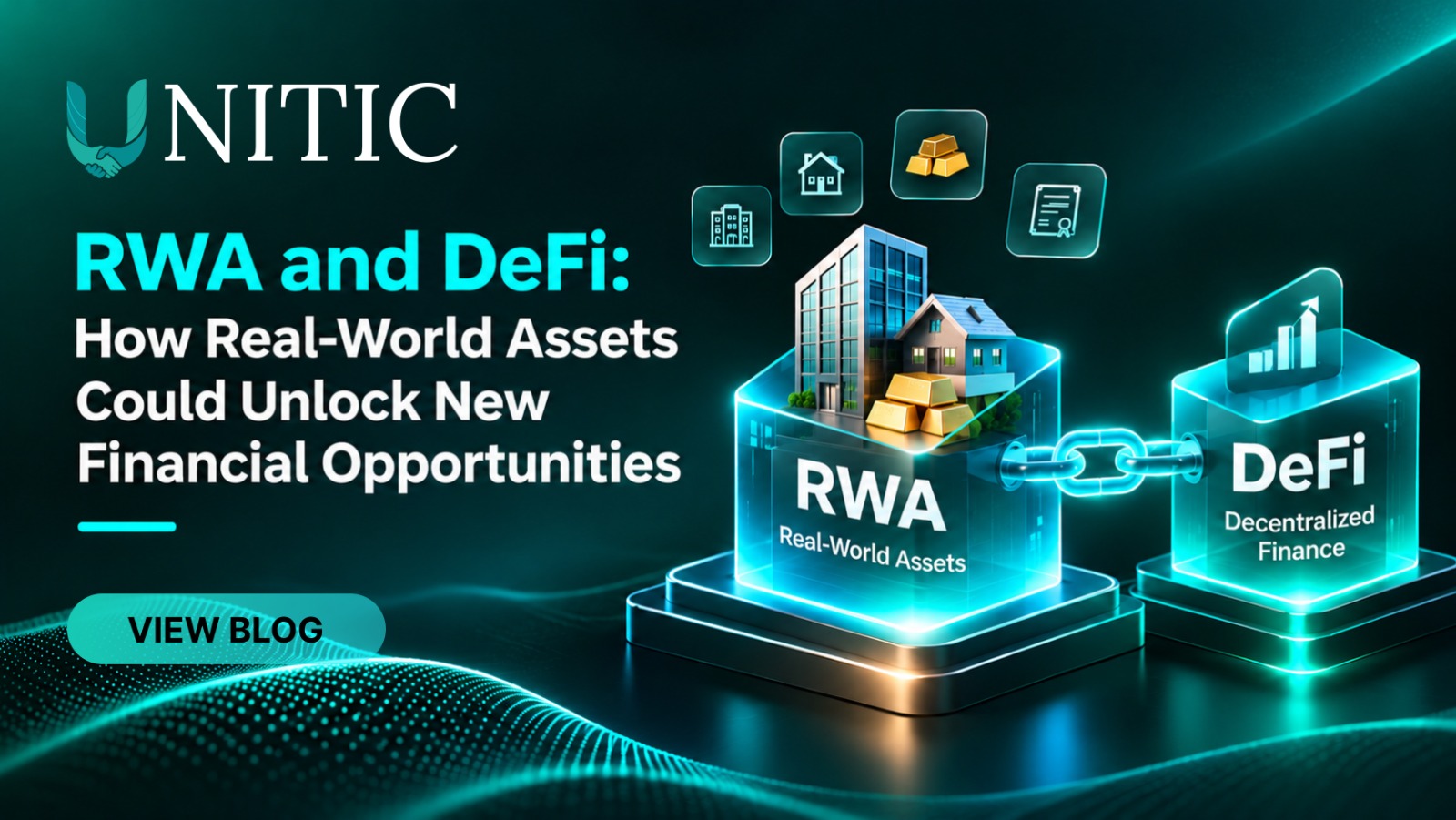
The financial world is changing faster than ever. What once required traditional banks, brokers, paperwork, and lengthy settlement processes is gradually moving toward blockchain-based financial infrastructure. Decentralized Finance (DeFi) has already introduced new ways to lend, borrow, trade, and manage digital assets. Now, another development is gaining attention: Real-World Assets (RWAs).
Imagine being able to own a small portion of a commercial property, gain exposure to government bonds, or participate in private credit markets through a digital token. Instead of relying entirely on traditional financial systems, investors could access certain financial opportunities through blockchain technology.
This is the idea behind RWA tokenization.
By connecting traditional financial assets with decentralized platforms, RWA and DeFi could create a more flexible financial ecosystem. The combination has the potential to improve asset accessibility, introduce new liquidity options, and bring traditional financial products closer to the digital economy.
For cryptocurrency traders and investors, this development also creates an opportunity to understand how digital asset markets are evolving. Platforms such as Unitic Exchange are part of the broader cryptocurrency trading ecosystem, helping users explore digital asset markets through different trading services.
But how exactly do Real-World Assets work with DeFi? What opportunities could they create, and what challenges should investors understand?
Let's explore.
What Are Real-World Assets (RWAs) in Cryptocurrency?
Real-World Assets, commonly known as RWAs, are physical or traditional financial assets represented digitally on a blockchain.
These assets can include:
- Real estate and commercial properties.
- Gold, silver, and other precious metals.
- Government bonds and treasury bills.
- Corporate debt and private credit.
- Stocks and other financial instruments.
- Commodities and certain investment funds.
Traditionally, investing in these assets involves intermediaries, documentation, legal agreements, and specific market access requirements.
Blockchain technology introduces another way to represent ownership or financial claims connected to these assets.
For example, imagine a commercial property valued at $1 million. Instead of requiring one investor to purchase the entire property, a legally structured tokenization model could divide the economic interest into thousands of digital units.
Eligible investors could then purchase smaller portions, subject to the applicable legal and regulatory requirements.
The blockchain records token transactions, while the legal structure determines what rights token holders actually receive.
This distinction is important. Owning a token does not automatically mean owning the underlying physical asset. Investors must understand the issuer, legal documentation, redemption rights, and ownership arrangements before participating.
Understanding DeFi and Its Role in Modern Finance
Decentralized Finance, or DeFi, refers to financial applications built using blockchain networks and smart contracts.
Unlike conventional financial services that depend heavily on banks and centralized intermediaries, DeFi applications can automate certain financial activities through programmable blockchain technology.
Some common DeFi services include:
- Decentralized lending and borrowing
Users may deposit supported digital assets into lending protocols and earn interest. Other participants can borrow against eligible collateral according to the platform's rules.
- Decentralized exchanges
Users can trade supported tokens through smart-contract-based systems without relying on a traditional centralized order-book exchange.
- Liquidity provision
Participants can deposit supported assets into liquidity pools. In return, they may receive a share of trading fees or other protocol-defined rewards.
- Yield-generating opportunities
Certain DeFi protocols offer rewards through lending, staking, or liquidity participation. However, returns are variable and depend on market conditions, protocol design, and associated risks.
DeFi has created a new financial environment where blockchain-based transactions can happen without many of the traditional operational steps.
When tokenized real-world assets enter this environment, the possibilities become even more interesting.
How RWA and DeFi Work Together
The combination of RWA and DeFi connects two different financial worlds.
Traditional finance provides assets such as property, bonds, commodities, and private loans. Blockchain technology provides a digital infrastructure through which eligible ownership interests or financial claims can be represented and transferred.
DeFi applications can potentially use these tokenized assets for additional financial activities.
Here is a simplified example:
- An asset owner identifies a suitable real-world asset.
- A legally structured issuer establishes the rights associated with the asset.
- Digital tokens are created to represent those rights or claims.
- Eligible investors acquire the tokens.
- Depending on the token's design and restrictions, supported DeFi applications may allow holders to use them for lending, borrowing, or liquidity-related activities.
Smart contracts can automate certain processes, such as recording transfers, enforcing predefined conditions, and distributing payments.
However, not every tokenized asset can automatically be used across DeFi protocols. Some require identity verification, permissioned access, transfer restrictions, or additional compliance checks.
The real opportunity lies in creating reliable connections between off-chain assets and on-chain financial applications.
7 Ways Real-World Assets Could Unlock New Financial Opportunities
The potential of RWA tokenization goes beyond simply putting traditional assets on a blockchain. It could change how people access, manage, and interact with financial products.
Let's look at seven important opportunities.
1. Making Traditional Investments More Accessible
One of the biggest limitations of traditional investing is the amount of capital required to participate in certain markets.
Buying commercial property, investing in private credit, or accessing institutional investment products may require significant capital and specialized financial relationships.
Tokenization could reduce some of these barriers by dividing eligible assets into smaller digital units.
For example, rather than purchasing an entire property, an investor might be able to acquire a fractional economic interest through a regulated token offering.
This could open selected investment opportunities to a wider range of eligible participants.
However, minimum investment requirements, investor eligibility, and local financial regulations would still apply.
2. Improving Asset Liquidity
Some traditional investments are difficult to sell quickly.
Real estate, private loans, and certain financial instruments may require lengthy transactions before investors can convert their holdings into cash.
Tokenization could introduce additional transfer and trading opportunities through blockchain-based marketplaces.
If a suitable secondary market exists, token holders may be able to transfer or sell their positions more efficiently.
This does not guarantee liquidity. A tokenized asset can still have limited buyers, restricted transfers, or long redemption periods.
Nevertheless, connecting traditional assets to digital marketplaces could create new ways to manage investment positions.
3. Creating New Lending and Borrowing Opportunities
Lending and borrowing are among the most established applications of DeFi.
RWA integration could expand the types of collateral available to eligible lending protocols.
For example, certain tokenized treasury products or private credit instruments could potentially be accepted as collateral, depending on their legal structure and the protocol's requirements.
This could allow investors to access liquidity without immediately selling their underlying investment.
It could also help DeFi platforms diversify the assets used within their lending systems.
The important consideration is collateral quality. Asset valuation, redemption arrangements, legal enforceability, and liquidation procedures must all be understood before an RWA can function reliably as DeFi collateral.
4. Connecting Traditional Financial Markets With Blockchain
Traditional financial markets and cryptocurrency markets have historically operated through different infrastructure.
Traditional investments often involve banks, brokers, custodians, clearing systems, and regulated financial institutions.
Cryptocurrency markets generally operate through blockchain networks and digital asset platforms.
RWA tokenization creates an opportunity to connect these systems.
For example, tokenized financial products could potentially be issued, transferred, and settled through blockchain infrastructure while remaining connected to traditional legal and financial arrangements.
This could improve coordination between financial institutions and blockchain-based applications.
Over time, better interoperability may help create a more connected global financial ecosystem.
5. Exploring New Portfolio Diversification Opportunities
Cryptocurrency markets can experience significant price movements. Investors who hold only highly volatile digital assets may face considerable concentration risk.
RWAs introduce the possibility of gaining exposure to different types of assets through blockchain-based products.
Depending on the available offerings, tokenized assets could include:
- Government securities.
- Gold-backed products.
- Real estate interests.
- Private credit.
- Other traditional financial instruments.
These assets may behave differently from cryptocurrencies.
For example, a tokenized gold product is generally linked to the price of gold rather than the price of Bitcoin.
However, diversification does not eliminate investment risk. Tokenized assets can still face market, issuer, custody, liquidity, and regulatory risks.
Investors should assess each asset individually rather than assuming that all RWAs are stable investments.
6. Enabling More Efficient Financial Operations
Traditional financial transactions can involve multiple intermediaries and separate recordkeeping systems.
Blockchain technology can simplify some of these processes through shared transaction records and automated smart contracts.
Potential benefits include:
- Faster transaction processing.
- More transparent transaction histories.
- Automated payment distribution.
- Programmable ownership transfers.
- Reduced administrative complexity.
For example, a properly structured tokenized bond could use smart contracts to automate certain payment-related operations.
The underlying legal and financial obligations would still need to be fulfilled, but blockchain infrastructure could make some processes more efficient.
7. Creating Opportunities for Institutional Participation
Institutional investors manage large amounts of capital and often require strong operational controls, transparent reporting, and reliable settlement systems.
Tokenized financial products could help institutions explore blockchain-based infrastructure without completely abandoning traditional financial structures.
Banks, asset managers, investment funds, and financial service providers are increasingly examining tokenization as part of their digital transformation strategies.
This development could bring additional capital, infrastructure investment, and professional expertise into the digital asset industry.
For the broader crypto ecosystem, greater institutional participation could support the development of more mature financial products and services.
Real-World Examples of Assets That Could Be Tokenized
RWA tokenization is not limited to one industry. Different asset categories offer different opportunities and challenges.
Real Estate
Real estate is one of the most frequently discussed applications of tokenization.
Commercial buildings, rental properties, and other eligible property interests could be represented through digital tokens.
Potential advantages include fractional investment, more accessible ownership structures, and easier transfer of eligible interests.
However, property ownership laws, valuation, maintenance costs, taxation, and legal documentation remain essential.
Government Bonds and Treasury Bills
Government securities are another important area for tokenization.
A blockchain-based representation of eligible government debt could make certain investment products easier to distribute and manage.
These products may also be integrated into selected DeFi applications where permitted.
Investors should examine the issuing entity, underlying securities, redemption arrangements, and applicable investor restrictions.
Gold and Precious Metals
Gold-backed tokens connect digital asset markets with physical commodities.
Depending on the product structure, each token may represent a defined quantity of gold held by a custodian.
This can offer a digital way to gain exposure to gold prices without personally storing physical metal.
However, investors should verify custody arrangements, independent audits, redemption rights, and issuer reliability.
Private Credit
Private credit involves lending to businesses and other borrowers outside certain traditional public debt markets.
Tokenization could help represent interests in private credit funds or loan portfolios.
DeFi integration may create additional ways for eligible investors to access these products.
The main risks include borrower defaults, limited liquidity, credit quality, and the difficulty of valuing private loans.
Stocks and Financial Instruments
Certain equity-related products can also be represented through tokens.
However, investors must understand whether a token represents direct share ownership, a beneficial interest, a derivative, or another contractual exposure.
These structures can have very different legal and financial implications.
The Growing RWA Market: Why Investors Are Paying Attention
RWA tokenization is moving beyond theoretical discussions.
According to CoinGecko's 2026 RWA report, the tokenized RWA market reached approximately $19.3 billion by the end of the first quarter of 2026, excluding stablecoins under its reported market definition.
The report also highlighted significant growth in tokenized government securities, commodities, and other financial products.
This growth reflects increasing interest from both traditional financial institutions and cryptocurrency businesses.
However, market growth should not be confused with universal adoption.
Many tokenized products still face restrictions related to investor eligibility, secondary-market liquidity, redemption processes, and regulatory requirements.
The next stage of development will likely depend on whether the industry can turn tokenization into practical, trustworthy financial services.
What Are the Biggest Challenges Facing RWA and DeFi?
Although the opportunities are promising, combining real-world assets with decentralized finance is not without challenges.
Understanding these limitations is essential before participating in the market.
1. Regulatory Uncertainty
Real-world assets are connected to existing financial and property laws.
A token representing a bond, property interest, or company share may fall under specific securities or financial regulations.
Different countries also have different rules regarding digital asset ownership, investor protection, taxation, and cross-border transfers.
Businesses developing RWA products must understand the legal requirements in every relevant jurisdiction.
2. Smart Contract Vulnerabilities
DeFi applications depend heavily on smart contracts.
A coding error, security vulnerability, or poorly designed protocol could expose user funds to losses.
Even when the underlying asset is legitimate, weaknesses in the blockchain application can create additional risks.
Independent security audits, continuous monitoring, and responsible development practices are important safeguards.
3. Custody and Ownership Verification
A tokenized asset is only as reliable as the arrangements supporting it.
If a token claims to represent physical gold, investors need confidence that the gold actually exists and is held securely.
Similarly, property-related tokens require reliable ownership documentation and enforceable legal arrangements.
Independent verification and transparent reporting can help reduce information gaps.
4. Liquidity Limitations
Tokenization does not automatically create a liquid market.
A digital token may be easy to transfer technically, but there still needs to be sufficient market demand for someone to purchase it.
Some assets may also have transfer restrictions or redemption periods.
Investors should never assume that they can sell every token immediately at a fair market price.
5. Price Transparency and Valuation
Cryptocurrencies often have continuously updated market prices across trading platforms.
Traditional assets can be more difficult to value.
For example, commercial real estate may require professional valuation, while private credit depends on borrower financial conditions and repayment performance.
If an RWA is used as collateral in a DeFi protocol, inaccurate pricing could create problems during market stress or liquidation events.
6. Dependence on Off-Chain Information
Blockchain networks can record transactions, but they cannot independently verify every real-world event.
They may depend on external data providers, custodians, auditors, and legal institutions.
If the information supplied to a smart contract is inaccurate, the blockchain application could operate correctly while producing an incorrect financial outcome.
Reliable data providers and verification processes are therefore essential.
How Cryptocurrency Exchanges Fit Into the RWA and DeFi Ecosystem
As blockchain-based finance develops, cryptocurrency exchanges continue to play an important role in the broader digital asset economy.
Exchanges provide trading infrastructure, market access, and tools that help users interact with supported cryptocurrencies.
Although centralized exchanges and decentralized finance applications operate differently, both contribute to the development of digital asset markets.
Centralized exchanges generally offer account-based trading, order books, and customer support. DeFi applications rely on blockchain protocols and smart contracts to facilitate financial activities.
In the future, the relationship between traditional exchanges, tokenized assets, and DeFi platforms could become increasingly connected.
For cryptocurrency users, understanding how different trading services work is an important part of navigating this evolving market.
Explore Digital Asset Trading With Unitic Exchange
Unitic Exchange offers a cryptocurrency trading ecosystem with services designed for different trading requirements.
Whether someone is exploring cryptocurrency markets, following Bitcoin price movements, or looking for different trading options, having access to market information and trading tools can make the experience more convenient.
Here are some of the services available through Unitic Exchange.
- Futures Trading for Active Cryptocurrency Traders
Cryptocurrency futures allow traders to speculate on the future price movements of digital assets without necessarily purchasing the underlying cryptocurrency.
For traders interested in Bitcoin market movements, Unitic Exchange provides a BTC/USDT futures trading market.
You can explore the BTC/USDT Futures Trading Platform to access the trading interface and review the available market information.
Futures trading involves additional risks, particularly when leverage is used. Price movements can result in rapid losses, including the loss of the entire margin used for a position.
- OTC Trading for Larger Transactions
Large cryptocurrency transactions can present execution challenges, particularly when placing significant orders directly into public order books.
Over-the-counter (OTC) trading provides an alternative approach for users who require assistance with larger transactions.
Unitic Exchange offers an USDT OTC Trading Desk for users interested in exploring larger-volume cryptocurrency transactions.
OTC services can be useful for institutional participants, businesses, and high-volume traders who want to discuss transaction requirements and execution arrangements.
- Monitoring Cryptocurrency Markets
Understanding market conditions is important when navigating digital assets.
Bitcoin, Ethereum, and other cryptocurrencies can experience significant price movements based on market demand, liquidity, economic developments, and investor sentiment.
The Unitic Exchange Markets Page provides access to cryptocurrency market information, helping users explore supported markets and follow digital asset activity.
- Learning More About Cryptocurrency Developments
The cryptocurrency industry changes constantly.
New blockchain applications, DeFi protocols, tokenization projects, and market developments can influence how digital assets are used.
Readers can explore the Unitic Exchange Blog for additional cryptocurrency-related information, market insights, and educational content.
Unitic Exchange provides cryptocurrency trading services. The RWA and DeFi developments discussed in this article represent broader industry opportunities and should not be interpreted as confirmation that Unitic Exchange currently offers tokenized RWA investment products.
RWA and DeFi: What Could the Future Look Like?
The future of RWA and DeFi will depend on how effectively the industry addresses its current limitations.
Technology alone will not be enough. Legal clarity, reliable asset custody, transparent reporting, and sufficient liquidity will all play important roles.
Several developments could shape the next stage of growth.
Greater institutional adoption
More financial institutions may explore tokenized bonds, funds, commodities, and other eligible assets as blockchain infrastructure becomes more established.
Better blockchain interoperability
Improved connections between blockchain networks could make it easier to transfer and manage tokenized assets across different financial applications.
More reliable asset verification
Better auditing, custody reporting, and data verification systems could help investors understand what supports a token and what rights it provides.
More practical DeFi integrations
Lending protocols and other DeFi applications may gradually introduce additional tokenized collateral options, subject to legal, technical, and risk-management requirements.
Improved user experiences
Financial applications may become easier to navigate as blockchain services develop more familiar interfaces and clearer information about fees, risks, and ownership rights.
The biggest opportunity may not come from replacing traditional finance entirely. Instead, it could come from combining the strengths of traditional financial systems with the efficiency and programmability of blockchain technology.
How Should Investors Prepare for the RWA and DeFi Opportunity?
For investors and cryptocurrency enthusiasts, learning about tokenization today can provide a better understanding of tomorrow's financial landscape.
Here are some practical steps to consider.
- Understand the underlying asset: Research what a token represents and whether it provides ownership, a contractual claim, or another form of financial exposure.
- Check the issuer: Investigate the organization responsible for creating and managing the tokenized asset.
- Review legal documentation: Understand ownership rights, redemption conditions, transfer restrictions, and investor eligibility.
- Evaluate liquidity: Check whether an active secondary market exists and whether selling or redeeming the token is possible.
- Research the technology: Understand the blockchain network, smart contracts, custody arrangements, and security practices involved.
- Compare investment risks: Consider how the asset behaves under different market conditions and whether it fits your financial objectives.
- Avoid unrealistic return promises: Be cautious of platforms or projects promising guaranteed profits or risk-free DeFi income.
Investors should approach RWA products with the same level of research and caution they would apply to traditional financial investments.
Conclusion: RWA and DeFi Could Shape the Next Chapter of Digital Finance
Real-World Assets and Decentralized Finance represent an important development in the evolution of financial technology.
By bringing traditional assets onto blockchain networks, tokenization could introduce new ways to access investments, improve financial operations, explore lending opportunities, and connect different financial markets.
From real estate and gold to government securities and private credit, the potential applications are broad.
However, meaningful adoption will require more than creating digital tokens. Strong legal frameworks, secure custody, reliable asset verification, transparent valuation, and sufficient liquidity will determine whether these opportunities can become practical financial solutions.
For cryptocurrency users, this is an exciting area to understand as the digital asset industry continues to evolve.
Platforms such as Unitic Exchange contribute to the wider cryptocurrency ecosystem by providing trading services, market access, and tools for digital asset participants.
Whether you are following Bitcoin markets, exploring cryptocurrency futures, or learning about emerging blockchain developments, staying informed is an important part of making responsible financial decisions.
The future of finance may not belong entirely to traditional finance or decentralized finance. It may belong to the connection between both.
Explore the digital asset market with Unitic Exchange and stay informed about the developments shaping the future of cryptocurrency and blockchain finance.
Disclaimer: This article is for educational and informational purposes only and does not constitute financial, investment, legal, or tax advice. Cryptocurrency and tokenized assets involve risks, including market volatility, liquidity limitations, regulatory uncertainty, custody risks, and potential loss of capital. Always conduct independent research before making financial decisions.


Your Crypto Gateway


Unitic Exchange
All rights reserved 2026